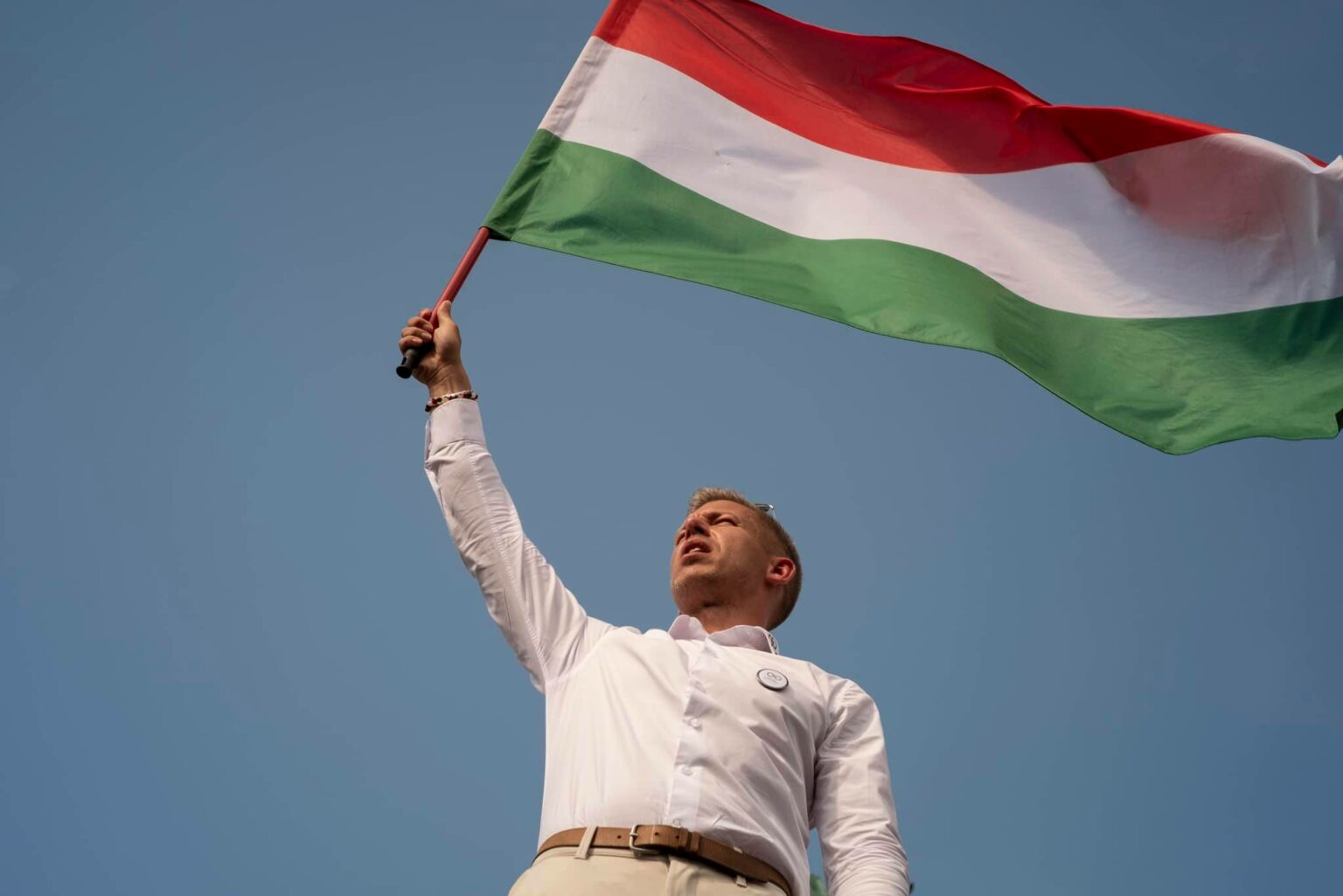
Hungarians are heading to the polls on April 12, 2026, and for the first time in sixteen years, the result isn't a foregone conclusion. Viktor Orban, the man who turned Hungary into a textbook case of "illiberal democracy," is looking over his shoulder. He’s not watching the usual fractured left-wing opposition. He’s watching Peter Magyar.
Magyar isn't a liberal outsider or a "Brussels puppet," no matter how hard the state media tries to sell that narrative. He’s a former Fidesz insider, the ex-husband of former Justice Minister Judit Varga, and a man who knows exactly where the bodies are buried. His Tisza Party isn't just nipping at Orban’s heels—it's leading in the polls. Recent data shows Tisza at around 48%, while Orban’s Fidesz has slipped to 39%.
If you've followed Hungarian politics at all since 2010, you know how insane those numbers are. Orban has spent over a decade gerrymandering districts, seizing control of 80% of the media, and building a legal fortress that makes him nearly impossible to unseat. Yet, here we are.
The insider who flipped the script
What makes Magyar dangerous to the status quo isn't just his charisma; it’s his pedigree. He comes from a prominent conservative family. His great-uncle was Ferenc Madl, a former president. His grandfather was a famous judge. He has the "conservative bona fides" that Orban’s traditional base respects.
Magyar broke away in early 2024 following a massive scandal involving a presidential pardon in a child abuse case. He didn't just leave; he torched the bridge on his way out. He began posting about the "mafia state" and the massive wealth accumulated by Orban’s inner circle, specifically naming people like the Prime Minister’s son-in-law, István Tiborcz.
When Magyar speaks about corruption, it hits differently. He’s not a protester shouting from the street; he’s a guy who sat at the dinner tables where these deals were made. He’s using Orban’s own playbook—nationalism, family values, and a focus on sovereignty—but he’s stripping away the systemic graft that has come to define the Fidesz era.
The economic reality Orban can't hide
Orban’s strength has always been his "peace and security" brand. He’s the guy who keeps the lights on and the migrants out. But the lights are getting expensive. Hungary’s economy has been a mess lately. After a 0.8% contraction in 2023, growth has been a dismal 0.5% through 2024 and 2025.
The budget deficit is hovering around 5%, way above the EU’s 3% limit. Inflation has eaten into the savings of the very people Orban claims to protect. Meanwhile, €20 billion in EU funds remain frozen because of Orban's constant bickering with Brussels over the rule of law.
Magyar’s pitch is simple:
- Stop the war with Brussels.
- Unlock the frozen billions.
- Fix the crumbling schools and hospitals.
- Prosecute the "robber barons" of the Fidesz elite.
It’s a "reset" that 45% of current Fidesz voters say they actually want. That’s the silent killer for Orban. It’s not just that the opposition is energized; it’s that his own side is bored and broke.
A rigged game vs a massive wave
Don't think for a second that Orban is going down without a fight. The Hungarian electoral system is designed to keep Fidesz in power even if they lose the popular vote. Between gerrymandered districts and the "winner compensation" system, Orban can still pull a majority in the 199-seat National Assembly with less than 45% of the vote.
Then there’s the "external" vote. Ethnic Hungarians living in neighboring countries like Romania and Serbia get to vote by mail. In 2022, over 90% of those votes went to Fidesz. This acts as a structural bonus of about 4 to 6 seats—enough to tip a close election.
Magyar’s strategy has been to flood the zone. He’s spent the last year touring rural villages that haven't seen an opposition politician in a decade. He’s betting that a "landslide of the fed-up" can overcome the math of a rigged system.
What happens on April 13
There are basically three ways this plays out on Monday morning.
- The Tisza Landslide: Magyar wins big enough to ignore the gerrymandering. He forms a government and starts a "legal blitz" to dismantle the Fidesz state before Orban can sabotage it from the shadows.
- The Fidesz Squeeze: Orban loses the popular vote but keeps a slim majority thanks to the electoral system. He then faces a Hungary that is effectively ungovernable, with a massive, angry majority in the streets.
- The Radical Kingmaker: If neither gets a majority, the radical right party Mi Hazánk (Our Homeland) could hold the balance of power. They’re ideologically closer to Orban, which could lead to a "zombie" Fidesz government that’s even more nationalist and anti-EU than before.
Magyar has already stated he wants to adopt the Euro and bring Hungary back into the European Public Prosecutor’s Office (EPPO) to track how EU money is spent. That alone would be a seismic shift in Central European geopolitics.
If you’re watching this from the outside, don't ignore it. This election is a test of whether a deeply entrenched, illiberal system can be defeated from within by one of its own. It's the most important political experiment in Europe right now.
If you want to stay ahead of the results, watch the turnout numbers in rural strongholds like Debrecen and Miskolc on Sunday afternoon. If the villages start turning against the "Viktatorship," it’s game over for the old guard.