A federal judge in Massachusetts just dismantled a central pillar of the Trump administration’s strategy to throttle renewable energy development. By striking down a series of executive hurdles designed to bury solar and wind projects in a mountain of red tape, Chief Judge Denise J. Casper of the U.S. District Court for the District of Massachusetts sent a clear signal. The administration cannot simply invent new regulatory layers to kill industries it dislikes.
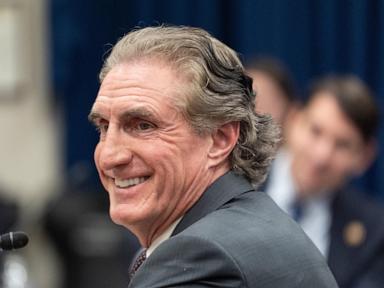
The ruling, issued Tuesday, specifically targeted a requirement that all solar and wind projects on federal lands and waters receive personal sign-off from Interior Secretary Doug Burgum. This "elevated review" was not a standard safety check. It was a bottleneck. By centralizing power in a single office, the administration effectively mothballed dozens of multi-billion-dollar projects that had already cleared years of environmental and technical scrutiny. Casper’s preliminary injunction halts these policies, providing a lifeline to developers who warned that further delays would cause "irreparable harm" and cost them crucial, expiring tax credits.
The Strategy of Intentional Friction
To understand why this ruling matters, you have to look past the political rhetoric of "energy dominance." For the last year, the Interior Department has operated on a philosophy of selective bureaucracy. While the administration moved with lightning speed to approve new oil and gas leases and revive the Keystone XL pipeline, it simultaneously applied a different set of rules to renewables.
In July 2025, the Interior Department justified the personal approval mandate as a way to end what it called "preferential treatment" given to green energy under the previous administration. In practice, however, it was a manual kill switch. Every lease, right-of-way, and biological opinion for a wind farm had to sit on the Secretary’s desk.
This was not about oversight. It was about friction. In a world where capital is expensive and project timelines are measured in decades, a six-month delay is often enough to kill a project's viability. The court saw through the smoke. Casper noted that the plaintiffs—a coalition of solar and wind developers—were likely to succeed in proving that these actions violated federal statutes and ignored longstanding agency processes.
A Second-Class Status for Renewables
The lawsuit challenged six specific agency actions that plaintiffs argued placed wind and solar technologies into "second-class status." This wasn't just a metaphor. The administration had been systematically dismantling the infrastructure of the green transition.
- Capacity Density Limits: New rules were introduced to limit how many turbines or panels could be placed in a specific area, effectively making many projects too small to be profitable.
- Permitting for Incidental Harm: Regulations regarding wildlife, such as the incidental take of eagles, were tightened for wind farms while being loosened for traditional energy infrastructure.
- Database Access: Planning databases used by developers to identify viable sites were suddenly restricted or "updated" with data that favored fossil fuel extraction.
This wasn't a standard policy shift. It was a scorched-earth campaign. The administration’s lawyers argued that the freeze on wind and solar was merely a "pause" to allow for a review of national security and reliability. But the court found those explanations lacking. In a similar case in December 2025, another federal judge called a separate wind ban "arbitrary and capricious," noting that the government failed to offer any reasoned explanation for freezing billions of dollars in private investment.
The Financial Cliff
The timing of this judicial intervention is critical. The American energy sector is currently navigating a legislative minefield. Last year, the Republican-controlled Congress passed a law phasing out tax credits for renewable energy while boosting support for coal and oil.
For developers, the math is brutal. If they don't break ground by specific dates, their projects become insolvent. By holding these permits hostage in the Secretary's office, the administration was essentially running out the clock. If the court hadn't stepped in, these developers would have been left with millions in sunk costs and no way to recoup their investment under the new tax regime.
This is the real-world impact of "weaponized permitting." It isn't just a debate about climate change or carbon footprints. It is a battle over who gets to participate in the American economy. When a government uses the permitting process as a partisan tool, it creates a level of sovereign risk that makes investors nervous—not just in renewables, but across the board.
The Limits of Executive Power
The Interior Department’s response has been a masterclass in deflection. A spokesperson stated that America "sets the global standard for energy production" and does it "cleaner, safer, and more reliably than anywhere in the world." That may be true, but it doesn't address the legal reality: a President cannot unilaterally rewrite federal law through a memorandum.
The Administrative Procedure Act (APA) exists to prevent this exact scenario. It requires agencies to provide a "reasoned explanation" for their actions. You can't just change the rules because you have a different philosophy. You have to prove that the old rules were flawed and that the new ones are better. The Trump administration’s legal team has struggled to do this, largely because their primary motivation—the "President's direction"—is not a valid legal justification for ignoring established statutes.
This ruling is a significant victory for the Alliance for Clean Energy New York, MAREC Action, and the other plaintiffs, but it is not the end of the war. The administration has already shown a willingness to appeal these decisions and pivot to new tactics. We have seen them invoke the "God Squad"—a rare Cabinet-level committee—to bypass the Endangered Species Act for offshore drilling. We have seen them rescind the 2009 endangerment finding to strip the EPA of its authority to regulate greenhouse gases.
The Grid Crisis Looms
While the legal battles rage in Massachusetts and D.C., the reality of the American power grid remains unchanged. Demand for electricity is surging, driven by the massive power needs of artificial intelligence and the slow but steady electrification of transport.
Blocking wind and solar projects doesn't just hurt "green" companies; it threatens the reliability of the entire grid. Without new generation capacity coming online, the U.S. faces a future of higher costs and potential shortages. The administration argues that fossil fuels are the only way to meet this demand, but even the most optimistic coal and gas projections don't account for the speed at which AI is changing the load profile of the country.
The Massachusetts ruling forces the Interior Department to put its "pens back to paper." It mandates that the government resume the work of governing, rather than obstructing. Whether the administration will comply in good faith or find a new way to stall is the question that will determine the next decade of American energy.
The message from the bench is clear. The Secretary’s desk is not a graveyard for industries the President dislikes. If the administration wants to stop the transition to clean energy, they will have to do it through Congress, not through a silent veto in a mahogany-paneled office.
The industry is now watching to see if the Interior Department attempts to slow-walk the court's order. Developers are ready to move. The capital is waiting. All that stands in the way is a government that has forgotten that the power to regulate is not the power to destroy.