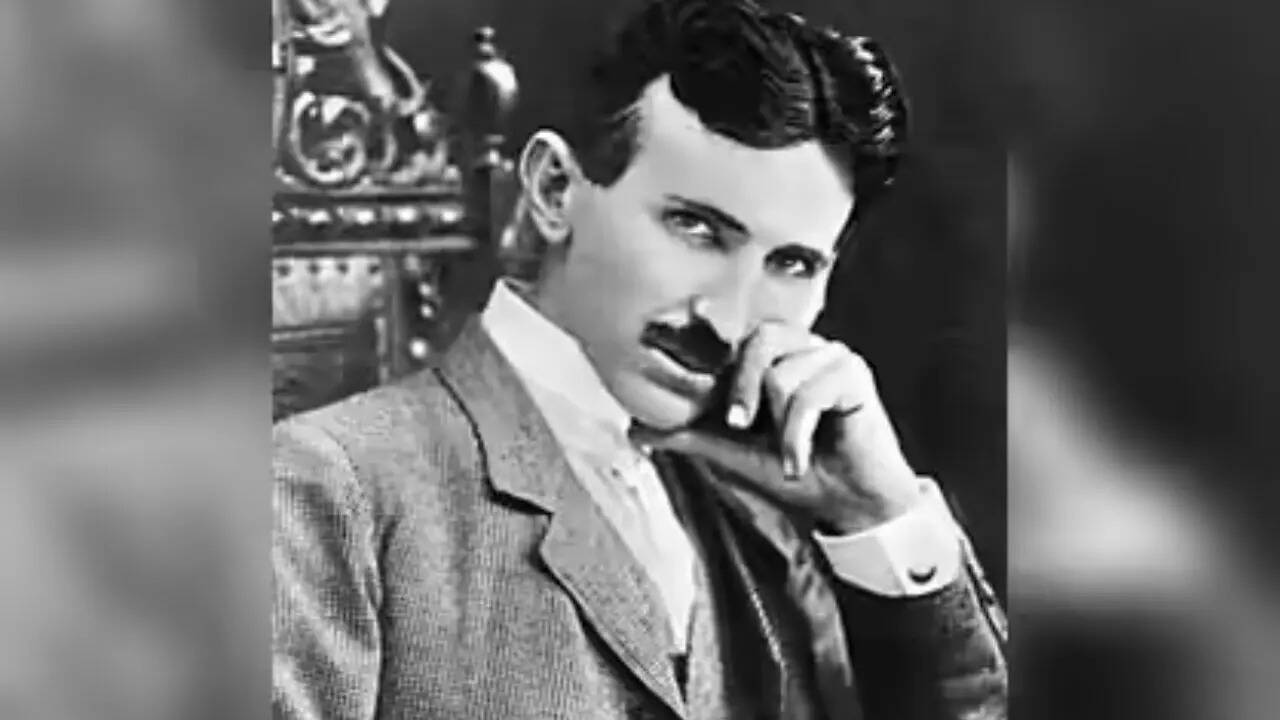
Nikola Tesla slept two hours a night. He spoke eight languages, talked to pigeons, and designed the alternating current system that powers your house right now. He was a certified genius. He was also, by modern medical standards, deeply struggling with his mental health.
When Tesla said that one has to be sane to think clearly, but one can think deeply and be quite insane, he wasn't just throwing out a clever phrase. He lived it. Most internet articles treat this Nikola Tesla quote like a quirky Instagram caption about being a "mad scientist." That completely misses the point.
Tesla was drawing a sharp, brilliant line between two entirely different ways the human brain processes reality. Understanding this distinction changes how we look at creativity, problem-solving, and the actual price of high-level intellectual work.
The Difference Between Clear Thinking and Deep Thinking
We tend to use "clear" and "deep" as synonyms for smart. Tesla didn't. To him, they were practically opposites.
Clear thinking is linear. It is logical, orderly, and safely anchored to the consensus reality around you. A clear thinker looks at A, connects it to B, and arrives at C. You need sanity for this because sanity is your connection to shared human rules. If you lose that connection, your chain of logic breaks. You can't balance a ledger, build a standard bridge, or run an efficient meeting if you can't think clearly.
Deep thinking operates in a completely different dimension.
Deep thinking doesn't care about established rules or consensus. It descends into the sub-basement of a problem, down where the foundations aren't poured yet. When you think deeply, you abandon the safety of the surface. You dismantle concepts and piece them back together in ways that look utterly unhinged to onlookers.
Tesla spent years visualizing complex electrical machinery in his mind before a single piece of metal was cut. He claimed he could run test engines in his head for weeks, checking them for wear and tear. To his contemporary peers at Thomas Edison’s lab, that didn't sound like advanced engineering. It sounded like a man losing his grip on reality.
The Scientific Link Between Madness and Creativity
Tesla’s observation matches what modern neuroscience tells us about the brain. Psychologists often study a trait called latent inhibition. It's basically the brain's filter.
Right now, your brain is filtering out the hum of your refrigerator, the texture of your clothes, and the random thoughts bouncing around your head. This filter keeps you sane and lets you think clearly about the task at hand.
A study from Harvard University led by Dr. Shelley Carson found that highly creative achievers are much more likely to have low latent inhibition. Their filters are broken. They see everything, feel everything, and register every weird, disconnected data point.
If you have a low filter and a lower IQ, it can lead to psychosis. But if you have a low filter combined with a high IQ, you get breakthrough creative genius. You process the world deeply because you aren't ignoring the background noise. You see connections where everyone else just sees chaos.
Tesla's brain lacked a standard filter. He suffered from intense visual flashes and hypersensitivity to sound. He wrote in his autobiography that he could hear a clock ticking three rooms away. His deep thinking was a direct byproduct of a nervous system that couldn't shut the world out.
Why the Tech World Loves the Mad Scientist Myth
The tech sector loves to romanticize this Tesla quote because it excuses bad behavior. We see it constantly in Silicon Valley. Founders sleep on factory floors, tweet cryptic nonsense at 3:00 AM, and treat their employees like dirt, all under the guise of being a deep-thinking genius.
There's a massive difference between Tesla's neurological reality and modern corporate eccentricity. Tesla wasn't acting weird for a personal brand. He was genuinely tormented by obsessive-compulsive traits. He was terrified of germs, hated the sight of pearls, and required every action he performed to be divisible by three.
When we strip away the romanticism, we find a harsh truth. Deep thinking can break you. The same mental machinery that allowed Tesla to conceptualize the induction motor also made it impossible for him to live a normal human life. He died alone in a room at the New Yorker Hotel, broke and talking to birds.
We shouldn't celebrate the insanity part. We should respect the immense effort it took to drag clear, usable inventions out of that deep, chaotic ocean.
How to Apply Tesla’s Logic Without Losing Your Mind
You don't need to develop severe OCD to benefit from Tesla’s framework. The goal is to learn how to switch between these two modes of thought intentionally, rather than getting stuck in one.
Most people fail because they try to do both at the same time. They try to invent a radically new business model while simultaneously worrying about formatting their PowerPoint slides perfectly. That kills the depth.
Separate your thinking phases completely.
When you need to solve a complex problem, enter the deep phase. Turn off the filters. Stop worrying about whether an idea is realistic, affordable, or socially acceptable. Write down the bizarre connections. Sketch the impossible designs. Look at the problem like a crazy person would.
Then, when the raw concept is on paper, click the switch. Bring back the sanity. Turn on your clear thinking mode to judge, refine, and execute the idea. Use strict logic to see if your deep theory actually holds water in the real world.
Tesla’s genius wasn't just that he thought deeply. It was that he eventually found a way to translate those deep, borderline-insane visions into clear blueprints that ordinary engineers could build. He bridged the gap between the abyss and the grid.
Stop scrolling through superficial quote feeds looking for inspiration. Treat your brain like the dual-engine machine it is. Know when to run cleanly on the surface, and know when it’s time to dive into the dark where the real answers hide. Open up a blank notebook right now, pick your hardest problem, and write down the three most unrealistic, insane solutions you can imagine. Start there.