Air raid sirens in Ukraine aren't new. But when the US Embassy in Kyiv issues an urgent, 24-hour warning about a potentially catastrophic strike, the atmosphere changes instantly. On Sunday morning, May 24, 2026, a massive combined bombardment of drones and missiles slammed into the Ukrainian capital. The panic wasn't just about standard cruise missiles. It was driven by intelligence from Western and Ukrainian agencies indicating that Russia was preparing a deployment of its prized hypersonic intermediate-range ballistic missile, the Oreshnik.
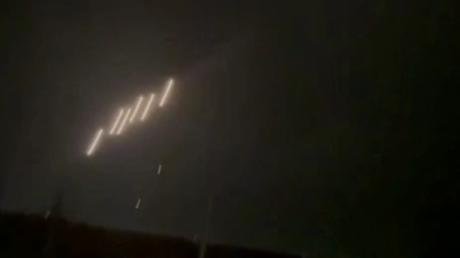
Videos quickly circulated online showing explosions illuminating the early morning sky over Kyiv. This marks a critical escalation in the airspace over Ukraine. Everyone wants to know if the Oreshnik actually hit the capital and what this weapon really means for the trajectory of the war.
The reality of this weapon is heavily clouded by Kremlin propaganda and Western panic. If you think this is just another missile, you are missing the bigger picture.
The Reality Behind the Kyiv Blasts
On the ground in Kyiv, residents spent the early hours of Sunday sheltering in metro stations as explosions shook the city. The Ukrainian Air Force had explicitly warned of a potential Oreshnik launch from the Kapustin Yar test site in Russia. Monitoring channels tracked high-speed targets, and while the exact composition of the debris is still being analyzed by military forensics, the psychological objective of the strike was achieved long before the first explosion.
This escalation didn't happen in a vacuum. Just days earlier, Russian President Vladimir Putin publicly ordered his military command to draw up retaliation options. The pretext was a drone strike on a student dormitory in Russian-controlled Luhansk, which Moscow blamed on Ukraine. Kyiv denied the accusation, but the Kremlin used it as immediate justification for a massive combined strike.
The Oreshnik has only been used in combat twice before. The first occurred in November 2024 against a military industrial facility in Dnipro. The second occurred in January 2026, when Russia bypassed central Ukraine entirely to hit the western region of Lviv, right on NATO's doorstep.
What the Oreshnik Actually Is
Strip away the political rhetoric and look at the engineering. The Oreshnik—Russian for "hazel tree"—is not an entirely new, revolutionary design built from scratch. Western intelligence analysts, including data tracked by the US intelligence community, indicate the Oreshnik is essentially a modified, two-stage variant of the RS-26 Rubezh intercontinental ballistic missile. It shares identical combat support vehicles with the broader Yars missile family.
What makes it distinct is its deployment mechanism. The Oreshnik utilizes Multiple Independently Targetable Reentry Vehicles. This technology was previously reserved almost exclusively for strategic nuclear weapons.
When the missile approaches its target, it splits. It unleashes six distinct warheads, each packed with smaller submunitions. On camera, this creates a terrifying visual of multiple glowing streaks descending from the upper atmosphere at speeds reaching Mach 10.
Putin claims the weapon travels at over 13,000 kilometers per hour, making it impossible to intercept with conventional air defense systems like the Patriot. While it is theoretically true that intercepting a terminal-phase ballistic missile traveling at those speeds is highly unlikely for theater defenses, the true purpose of the missile isn't just raw destruction.
During its previous combat tests, Russia used inert or dummy warheads. The physical damage to the infrastructure was caused almost entirely by the sheer kinetic energy of a multi-ton object slamming into the earth at hypersonic speeds. It acts as a kinetic hammer rather than a traditional explosive device.
The Strategy of Intimidation
Russia isn't firing these multi-million-dollar missiles simply to destroy local infrastructure. They have cheaper Kh-101 cruise missiles and Shahed drones for that. The Oreshnik is a diplomatic weapon delivered via ballistic trajectory.
The strategy focuses heavily on Western leadership. By deploying a weapon that bridges the gap between conventional theater warfare and strategic nuclear delivery systems, Moscow is testing the red lines of Washington, London, and Paris. President Volodymyr Zelenskyy noted that using these systems creates a dangerous precedent for global security. European Commission leadership has similarly flagged the deployment as a blatant attempt to break Western political resolve.
The deployment of the system on combat duty in Belarus further solidifies this strategy. By moving the launch platforms closer to central Europe, the Kremlin ensures that flight times to Warsaw, Berlin, or Vilnius are reduced to mere minutes.
What Happens Next on the Ground
If you are looking for practical indicators of how this changes the security landscape, watch the deployment patterns of Western air defense systems. Ukraine cannot afford to waste its limited stockpile of anti-ballistic missiles on every incoming drone swarm.
For residents and professionals operating within Ukraine, safety relies on strict adherence to early warning protocols. The US Embassy security alerts have proven highly accurate regarding these specific ballistic windows.
- Monitor Specific Launch Corridors: Pay attention to alerts tracking activity at the Kapustin Yar test site. Ballistic launches from this zone offer less than fifteen minutes of warning before impact in central Ukraine.
- Differentiate Threat Profiles: Understand that traditional concrete shelters protect against drone debris and cruise missile shrapnel, but deep underground metro systems remain the only reliable defense against high-velocity kinetic ballistic strikes.
- Track Western Air Defense Shipments: The arrival of specialized anti-ballistic system upgrades will be the only effective military countermeasure to neutralize the terminal phase of these weapons.
The Oreshnik threat will not stop diplomacy, but it completely alters the stakes of airspace defense. The coming days will reveal the full structural damage from the Sunday morning strike, but the political fallout has already settled across European capitals.


