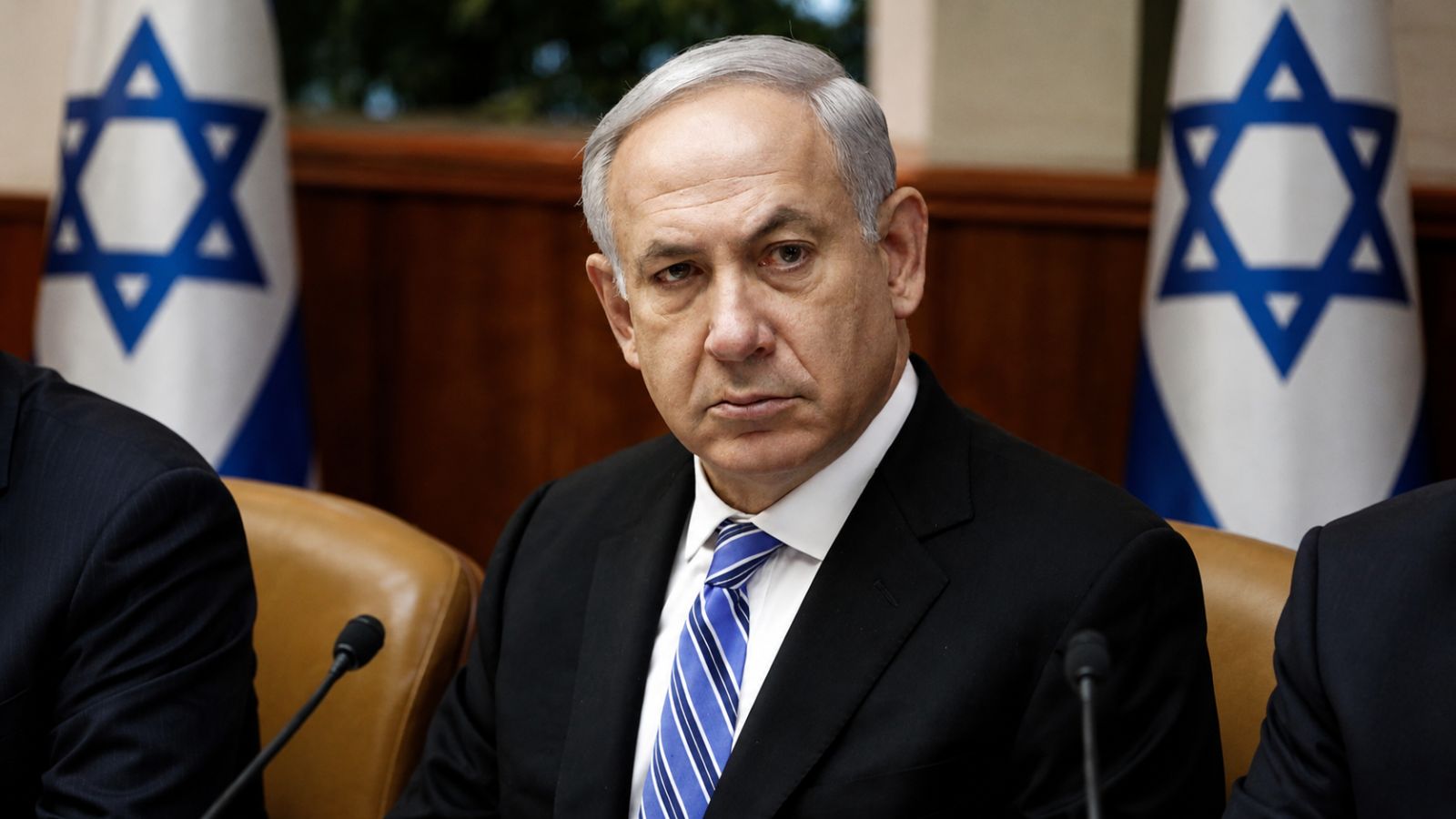
Benjamin Netanyahu dropped a rhetorical bomb on the US-Israel alliance during a talk with reserve combat officers in Gush Etzion. He explicitly stated that Israel needs to free itself from its military dependence on the United States. He wasn't just talking about a minor shift in policy either. He called for a completely independent domestic weapons-production system.
It's a shocking statement from a leader whose entire defense strategy has historically relied on American taxpayer dollars and Washington's supply chains. US Vice President JD Vance reminded everyone that two-thirds of the defensive weapons protecting Israel have been supplied and financed by the US. So why is Netanyahu suddenly trying to cut the cord?
The reality isn't just about military logistics. It's about political survival, diplomatic isolation, and a deep sense of betrayal over Washington's shifting Middle East strategy.
The Threat of Shifting US Policy on Iran
The main driver behind this sudden push for self-reliance is Washington’s recent diplomatic maneuvering. The Trump administration has been actively pushing a new diplomatic framework and an interim deal with Tehran. Jerusalem fiercely opposes this arrangement. Israeli officials openly worry that the deal will hamstring their military freedom of action, leaving them exposed while failing to eliminate Iran's ballistic missile and nuclear programs.
Netanyahu sees the writing on the wall. If Washington cuts a deal with America's primary regional adversary, US military aid will come with severe strings attached. We are already seeing the friction play out. Netanyahu’s right-wing cabinet ministers have openly attacked the US-Iran deal, prompting a sharp public rebuke from Vice President Vance, who warned Israeli politicians not to attack "the only powerful ally" they have left.
By demanding a domestic arms network, Netanyahu is trying to signal to both his domestic base and to Washington that Israel will not be managed. He wants the world to know that Israel's strategic choices over the next 30 years will be determined solely by its own industrial and military capacity, not by who occupies the White House.
The Trap of the New 10-Year Security Deal
There is a strange paradox happening behind the scenes. While Netanyahu rails against dependency, US and Israeli officials are actively negotiating a new 10-year security cooperation framework. The stated goal of these talks is to gradually transition the relationship from standard foreign military aid to a reciprocal strategic partnership.
On paper, this sounds like exactly what Netanyahu wants. Some legislative proposals in Washington, like Section 224 of the US defense bill, actually aim to fuse the two militaries closer together by forcing the US military to adopt Israeli technology and pushing both nations to co-purchase weapons.
But this closer integration is exactly the trap. True weapons independence means having the capability to manufacture heavy munitions, artillery shells, and advanced defense systems entirely within Israeli borders without requiring American components or export approvals. Buying weapons together or fusing technology platforms doesn't fix the core vulnerability. If Washington decides to pause a munition shipment over operational disagreements, an integrated system still grinds to a halt.
Netanyahu's extremist cabinet partners, like Itamar Ben-Gvir and Bezalel Smotrich, are demanding a total disregard for US diplomatic red lines. Their radical rhetoric is isolating Israel on the global stage, making the current reliance on US supply lines look incredibly dangerous to Israel’s defense establishment.
The Staggering Cost of Going Alone
Building a completely independent defense industrial base is easier said than done. Honestly, it might be an economic impossibility for a country of Israel's size. Israel already possesses an incredible defense sector, producing world-class drones, missile defense systems like the Iron Dome, and high-tech cyber warfare tools. But producing high-tech gadgets is entirely different from mass-manufacturing heavy artillery, tank shells, and fighter jets.
Consider the raw numbers. The current US military aid package provides billions of dollars annually, money that must largely be spent on American-made hardware like F-35 fighter jets. If Israel wants to manufacture its own equivalents, it has to build massive factories, secure domestic supply chains for raw materials, and absorb astronomical research and development costs.
Estimated Timeframe to Transition to True Arms Autonomy:

[Phase 1: 1-3 Years]   Expand domestic production of small arms, mortar shells, and basic artillery munitions.
[Phase 2: 4-7 Years]   Develop domestic manufacturing lines for advanced guided bombs and missile interceptors.
[Phase 3: 8-10+ Years] Attempt to replace heavy strategic platforms, electronics, and aerospace dependencies.
The domestic economy would have to shift toward a total wartime footing, diverting funds from education, tech infrastructure, and healthcare into heavy industrial manufacturing. It's a strategy that looks great in a political speech to conservative reserve officers, but it fundamentally ignores the economic realities of modern military supply chains.
Moving Beyond Rhetoric to Actual Autonomy
If Israel seriously wants to reduce its strategic vulnerability to Washington's political whims, it needs to stop using arms independence as a rhetorical talking point and start making hard, practical choices.
First, the defense ministry must prioritize the domestic production of low-tech, high-volume munitions. The recent conflicts proved that a shortage of basic artillery and iron bombs can cripple operational freedom just as fast as a shortage of high-tech missiles. Second, Israel needs to diversify its strategic partnerships, searching for non-US suppliers for raw industrial materials and components, even if those options are more expensive.
Relying entirely on a single superpower is a massive strategic risk when that superpower's geopolitical interests begin to diverge from your own. Netanyahu's sudden pivot to self-reliance is a public acknowledgment that the old terms of the US-Israel alliance are rapidly changing. Whether Israel can actually afford to build the independence he is promising remains a completely different question.
For a deeper look into the friction between Washington and Jerusalem over regional strategy, check out this insightful analysis on How Netanyahu’s big moment backfired.


