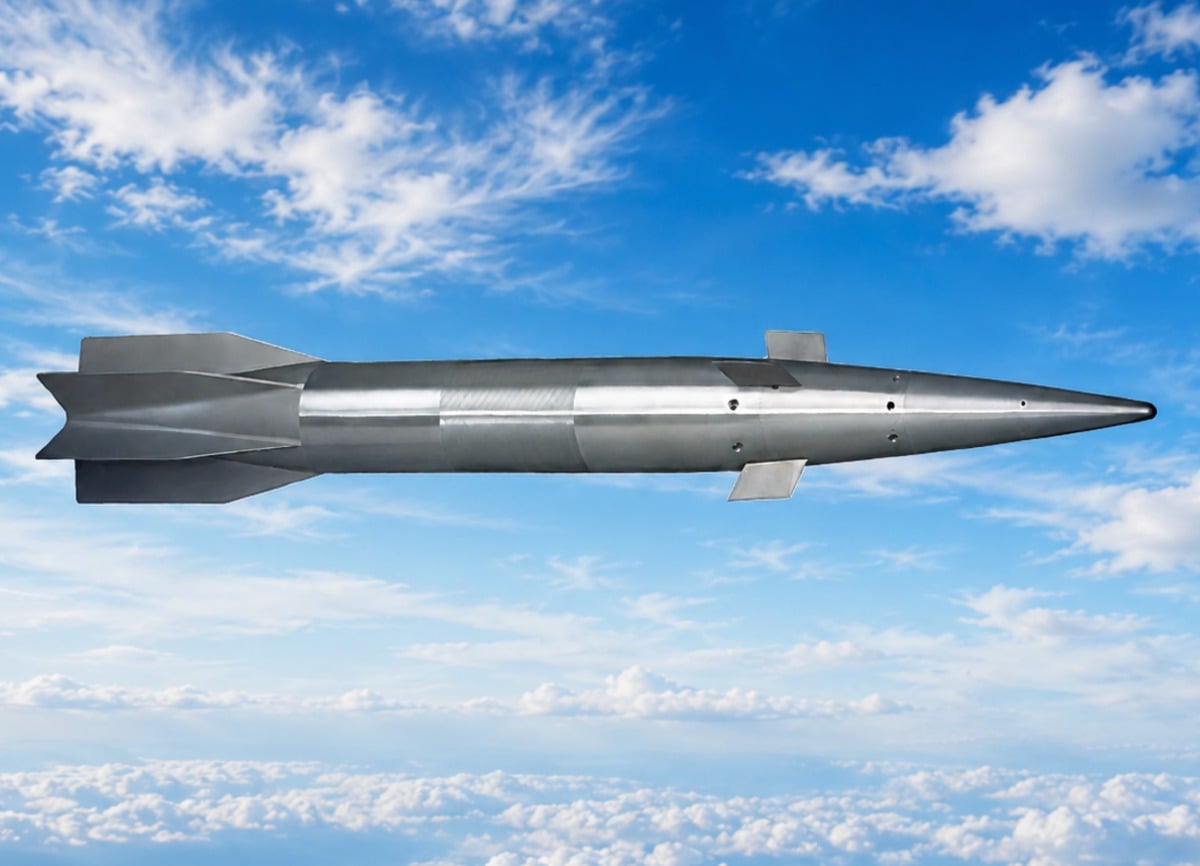
The US Army is quietly upending its field artillery strategy by adopting a European-designed 155mm shell capable of striking targets 43 miles away. This move to integrate the German-made Vulcano munition into the American arsenal directly addresses a glaring vulnerability exposed by recent high-intensity conflicts: US legacy artillery is badly outranged by peer adversaries. By bypassing prolonged domestic development cycles to adopt foreign technology, the Pentagon is making a high-stakes bet that immediate long-range precision can offset a worrying deficit in sheer barrel numbers and manufacturing capacity.
For two decades, American counterinsurgency campaigns allowed field artillery modernization to stall. The military relied heavily on air supremacy to clear the skies and deliver precision strikes from above. That luxury disappeared with the resurgence of peer-state competition, where sophisticated air defense networks can effectively ground friendly aircraft.
Suddenly, the ground war matters exactly as it did mid-century. And the ground war is dictated by who can punch the farthest.
The Physics of the Forty Three Mile Punch
Standard American 155mm artillery shells, like the unguided M795, max out at a range of roughly 14 to 18 miles. The highly touted, GPS-guided M982 Excalibur extended that reach to about 25 miles. While impressive on paper a decade ago, those distances leave American battery crews exposed to devastating counter-battery fire from Russian and Chinese systems that routinely push past the 30-mile mark.
The Vulcano shell, developed by Germany’s Diehl Defence and Italy’s Leonardo, solves this math problem through a fundamental shift in ballistics.
It is a sub-caliber, fin-stabilized projectile.
[Standard 155mm Shell] ----> Maximizes payload, sacrifices range via high drag
[Vulcano Sub-Caliber]  ----> Uses sabot discarding system, slashes drag, flies 43+ miles
When fired, the shell sheds a discarding sabot—a temporary collar holding it inside the barrel—leaving a much smaller, highly aerodynamic dart to fly through the air. This drastic reduction in surface area minimizes atmospheric drag. When paired with a longer, 58-caliber barrel variant, the sub-caliber design allows the projectile to maintain its velocity far longer, stretching its trajectory to the 43-mile threshold without requiring a heavy, volatile rocket motor.
The Lethality Trade Off
Military procurement is an exercise in compromise. You do not get an extra twenty miles of range for free.
The primary sacrifice in the Vulcano design is the size of the warhead. Because the projectile is sub-caliber, the internal cavity holding the high explosives is significantly smaller than that of a conventional, full-bore 155mm shell. A standard M795 shell carries roughly 24 pounds of TNT or composition explosives. The Vulcano carries a fraction of that payload.
To compensate for this lack of raw explosive mass, the system relies on absolute precision and optimized fragmentation. It utilizes two distinct guidance packages:
- GPS/INS Guidance: A mid-course inertial navigation system paired with GPS updates keeps the shell on its macro-trajectory over the bulk of its flight.
- Semi-Active Laser (SAL) Terminal Guidance: For the final phase of flight, a laser seeker in the nose locks onto a target illuminated by a drone or a forward observer, bringing the circular error probable down to less than a meter.
Instead of leveling a grid square with a massive payload, the goal is to put a smaller, pre-fragmented warhead directly through the roof of a command vehicle or radar array. It is surgical assassination via artillery.
Yet, this reliance on precise electronics introduces a massive point of failure. Modern battlefields are utterly saturated with electronic warfare jamming equipment. GPS signals are routinely spoofed or completely blocked across hundreds of square miles. If the GPS signal fails, the Vulcano must fall back on its internal inertial navigation and terminal laser guidance. If a drone cannot get close enough to paint the target with a laser due to short-range air defenses, the shell’s accuracy degrades rapidly over that 43-mile journey. A miss with a downsized warhead is a wasted multi-thousand-dollar shot.
The Humiliation of Domestic Innovation
Adopting a European shell is a tacit admission that the US defense industrial base stumbled in its own attempts to solve the long-range artillery puzzle. For years, the Army pinned its hopes on the Extended Range Cannon Artillery (ERCA) program. This ambitious project aimed to mount a massive, 30-foot-long XM907E2 barrel onto a modified Paladin chassis, attempting to hurl experimental shells out to 43 miles and beyond.
The ERCA program failed.
The extreme pressures and heat generated by the massive propellant charges needed to achieve those ranges resulted in catastrophic excessive wear on the barrels. After just a few dozen rounds, the rifling inside the tubes eroded, destroying accuracy and risking catastrophic mechanical failures. The Army officially cancelled the cannon portion of the ERCA program after pouring hundreds of millions of dollars into its development.
With the domestic hardware pipeline dry and the strategic necessity for range growing more urgent by the day, the Pentagon had to look across the Atlantic. European defense contractors, operating under different budgetary constraints and design philosophies, focused on modifying the ammunition rather than redesigning the entire artillery piece from scratch. The Vulcano can be fired from existing American M777 towed howitzers and M109A7 Paladin self-propelled guns, bypassing the need for a brand-new, fragile vehicle platform.
The Logistics Crisis No One Wants to Discuss
The adoption of the Vulcano highlights a deeper, structural crisis within Western militaries: the inability to mass-produce advanced weaponry. High-tech, guided munitions are exceptionally difficult to manufacture quickly. They require specialized microelectronics, precise machining, and complex supply chains that span multiple countries.
Current industrial capacity in both the United States and Europe is nowhere near ready for a prolonged, industrial-scale conventional conflict. While a standard unguided shell can be forged and packed with explosives relatively quickly, a sub-caliber guided shell requires meticulous assembly.
Monthly Production Requirements vs. Actual Output (Hypothetical Index)
Conventional Shells: [====================] (High volume, low cost)
Guided Long-Range:   [==]                  (Low volume, astronomical cost)
During intense combat operations, a single artillery brigade can burn through thousands of rounds in a matter of weeks. If the Army replaces a meaningful portion of its stockpile with complex European imports, it risks running out of high-end ammunition early in a conflict, with zero capability to rapidly surge production lines at home.
The financial cost is equally staggering. While a basic unguided 155mm shell costs around $3,000 to produce, guided projectiles regularly command price tags north of $100,000 per round. When a single mission requires dozens of shots to suppress an enemy position, the economic sustainability of artillery warfare quickly falls apart. The Pentagon is buying an exquisite boutique tool for a problem that historically requires a massive sledgehammer.
The Reality of the New Artillery Doctrine
The US Army’s pivot toward the Vulcano is changing how field artillery will be deployed in future theaters. For decades, artillery was used as an area-denial tool, raining down massive volumes of steel to suppress infantry movements and shatter defensive lines.
The new doctrine shifts the focus entirely toward counter-battery dominance and deep interdiction.
By placing artillery batteries 30 miles behind the front lines, commanders can keep their assets safely outside the reach of the enemy’s standard artillery units. From this safe pocket, the Vulcano-equipped units can reach deep into the enemy's rear echelons to target high-value assets. This includes mobile command posts, ammunition supply points, fuel depots, and surface-to-air missile launchers.
| System Attribute | Legacy 155mm M795 | European Vulcano 155 |
|---|---|---|
| Maximum Range | 14–18 Miles | 43+ Miles |
| Guidance System | None (Ballistic) | GPS / INS / Laser |
| Warhead Weight | ~24 lbs Explosive | Reduced (Sub-caliber) |
| Primary Tactical Role | Area Suppression | Deep Precision Interdiction |
This capability effectively turns conventional field artillery into a tactical missile alternative. It bridges the gap between traditional short-range cannon fire and costly, low-inventory rocket systems like HIMARS.
But this operational shift demands an unprecedented level of real-time intelligence. An artillery piece capable of hitting a target 43 miles away is only as good as the eyes finding that target. The Army must now seamlessly integrate its field artillery units with long-range reconnaissance drones, satellite intelligence, and electronic warfare units capable of pinpointing enemy emissions in real time. If the sensor-to-shooter link is delayed by even a few minutes, a mobile target will have moved well outside the lethal radius of the Vulcano's smaller warhead by the time the shell completes its long flight.
This foreign dependency creates a fragile supply architecture. Relying on European factories for core components of America's long-range striking power leaves the US military vulnerable to overseas supply disruptions, political shifts within the European Union, and transatlantic shipping bottlenecks during a global crisis. The Pentagon has secured its 43-mile reach, but it has done so by trading away industrial self-reliance.