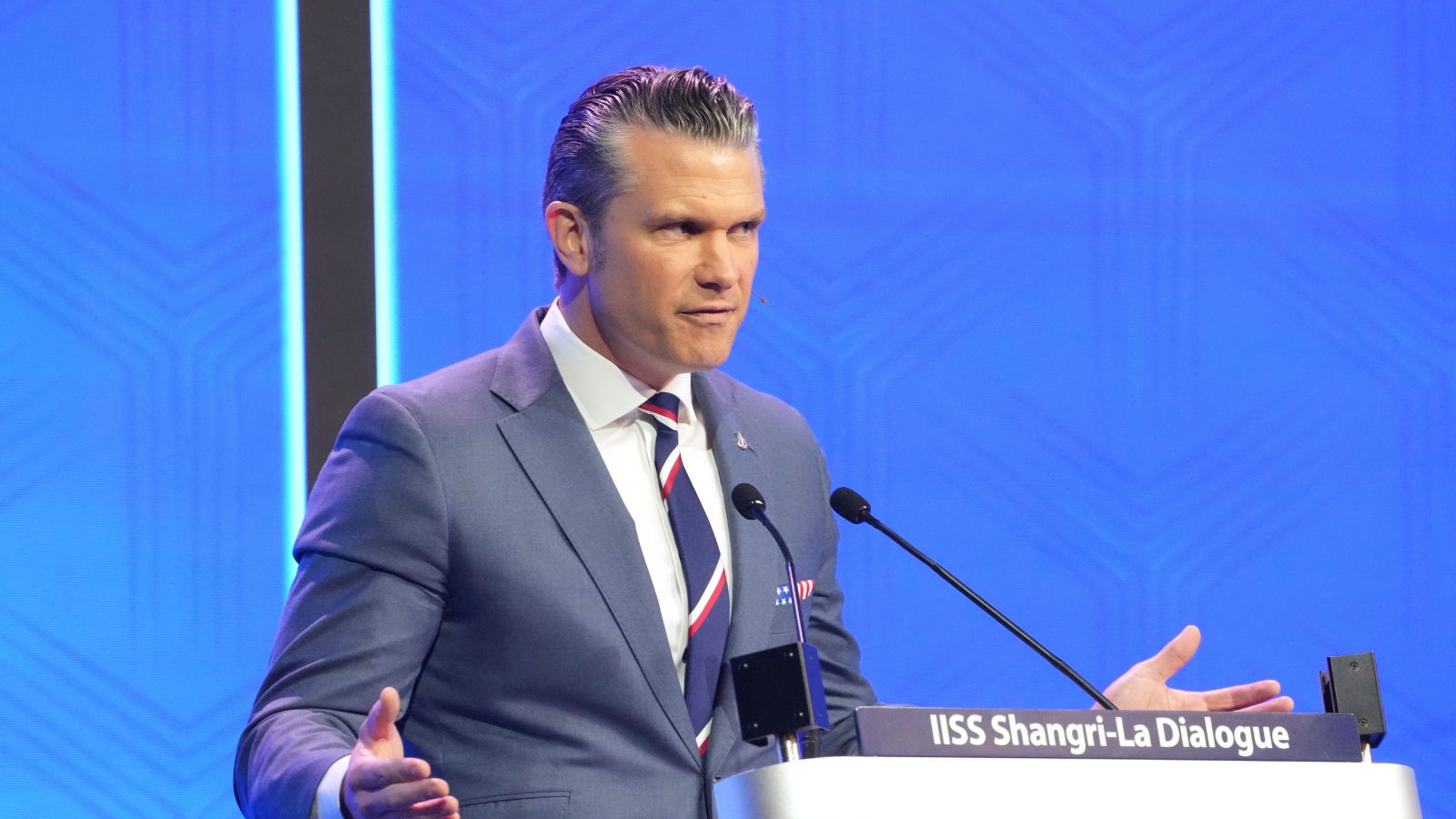
The rhetoric coming out of the Pentagon signals a shift from deterrence to active readiness. Defense Secretary Pete Hegseth recently confirmed that the United States remains fully prepared to resume military strikes against Iranian targets, even as the Trump administration weighs a sixty-day extension of the current ceasefire. This is not merely posturing for the cameras. It represents a fundamental realignment of American power in the Middle East, moving away from the diplomatic caution of the previous four years toward a doctrine of "credible escalation." While the ceasefire extension offers a temporary reprieve, the underlying mechanism for war is being recalibrated for speed and lethality.
The strategy hinges on a singular premise. If the diplomatic clock runs out, the transition to kinetic operations must be instantaneous. Hegseth’s confidence reflects a military apparatus that has spent months refining its logistics in the Persian Gulf, ensuring that "more than capable" is an operational reality rather than a political talking point.
The Calculated Risk of the Sixty Day Extension
Extending a ceasefire is rarely about peace in the absolute sense. In the current geopolitical climate, it is about buying time to secure regional alliances and ensuring that domestic supply chains can handle the strain of a prolonged engagement. The Trump administration is playing a double game. On one hand, the extension signals a willingness to let regional mediators work through the thorny issues of proxy influence. On the other, it provides a window for the U.S. to reposition assets without the immediate pressure of active combat.
This creates a paradox for Tehran. If they use the sixty days to regroup, they provide the U.S. with a justification to strike harder once the clock hits zero. If they comply, they risk appearing weakened to their own hardline factions. Washington knows this. By publicly stating that the U.S. is ready to strike at any moment, Hegseth is removing the element of surprise in exchange for psychological dominance. The message is clear: the ceasefire is a choice, not a necessity.
Rebuilding the Arsenal of the Middle East
To understand why Hegseth believes the U.S. is ready, one must look at the recent shifts in theater-wide logistics. For several years, the focus was on pivoting to the Indo-Pacific. However, the recent volatility has forced a quiet surge of munitions and specialized personnel back into Central Command’s area of responsibility.
This isn't the massive troop buildup seen in 2003. It is leaner. It relies on advanced standoff capabilities and long-range precision fires that don't require tens of thousands of boots on the ground. The U.S. has invested heavily in "over-the-horizon" lethality. This means that when Hegseth speaks of capability, he is referring to the ability to decapitate command-and-control structures without getting bogged down in an urban insurgency.
The Drone Factor and Air Superiority
The nature of the threat has changed. Iran’s proliferation of cheap, effective loitering munitions has forced the Pentagon to rethink its defensive umbrella. Part of being "more than capable" involves the deployment of new directed-energy weapons and electronic warfare suites designed to blind Iranian sensor networks.
A hypothetical engagement would likely begin not with a roar, but with a silent pulse. Disabling the eyes of the enemy is the first step in the Hegseth doctrine. Once the electronic perimeter is breached, the traditional air superiority of the U.S. Air Force can be applied with devastating efficiency. The goal is a short, sharp shock that prevents Iran from closing the Strait of Hormuz, the world’s most vital oil artery.
The Economic Shadow of a Resumed Conflict
War in the Gulf is never just about missiles. It is about the price of a gallon of gasoline in Ohio and the stability of the global shipping industry. The Trump administration’s hesitation to end the ceasefire immediately is deeply tied to domestic economic goals.
A spike in oil prices would jeopardize the administration’s promise of low inflation. By dangling the sixty-day extension, the White House is essentially telling the global markets that they are in control of the volatility. However, this control is fragile. If Iran or its proxies decide that the ceasefire no longer serves their interest, they can force the U.S. into a conflict that may not be as contained as Hegseth suggests.
The "more than capable" claim assumes a conventional victory. It does not account for the asymmetrical chaos of a global energy crisis. For an industry analyst, the real story isn't the missiles. It is the insurance rates for tankers in the Gulf. Those rates are currently fluctuating wildly, reflecting a deep skepticism among private sector players about the long-term viability of the truce.
Bureaucracy and the New Defense Leadership
Hegseth represents a departure from the traditional "general officer" class of Defense Secretaries. His approach is less concerned with the nuances of international law and more focused on the projection of raw power. This shift has caused friction within the halls of the Pentagon. Career officials, many of whom have seen the failures of the last two decades in the region, are wary of the "capable" narrative.
They argue that being capable of a strike is not the same as being capable of managing the aftermath. The "day after" problem has haunted every American intervention in the Middle East since the turn of the century. Hegseth’s critics suggest his focus on readiness ignores the political vacuum that would follow a successful strike on Iranian infrastructure.
Modernizing the Military Mindset
The new leadership believes that previous administrations were paralyzed by a fear of escalation. They see this fear as a weakness that Iran has exploited for years. By openly discussing the resumption of attacks, Hegseth is attempting to reset the rules of engagement. He is signaling that the U.S. will no longer be deterred by the threat of regional instability.
This is a high-stakes gamble. It relies on the belief that the Iranian leadership is fundamentally rational and will back down when faced with overwhelming force. History suggests this is an optimistic view. In the world of high-stakes diplomacy, one man's "deterrence" is another man's "provocation."
The Geopolitical Chessboard
Beyond the U.S. and Iran, several other players are watching this sixty-day window with intense scrutiny. Israel, Saudi Arabia, and the United Arab Emirates are all calculating their own responses to a potential American escalation.
Israel remains the most vocal proponent of a "hard" stance on Tehran. For them, a ceasefire is simply a delay of the inevitable. They have spent the last decade preparing for a solo strike on Iranian nuclear facilities if the U.S. fails to act. Hegseth’s comments are designed to reassure Jerusalem that they don't need to go it alone.
Saudi Arabia, conversely, has been exploring a more diplomatic path. They have no desire to see their multi-billion dollar "Vision 2030" projects go up in smoke during a regional war. They are the ones pushing most heavily for the extension. The Trump administration must balance these conflicting interests—a feat that requires more than just military capability. It requires a level of diplomatic finesse that has yet to be fully demonstrated by the new Pentagon leadership.
The Reality of "More Than Capable"
When a Defense Secretary says the military is ready, he is talking about hardware. He is talking about the readiness rates of the F-35 fleet. He is talking about the positioning of carrier strike groups. He is talking about the replenishment of the Tomahawk cruise missile stockpile.
On these metrics, Hegseth is correct. The U.S. military is an unrivaled machine of destruction. It can hit any target in Iran with surgical precision. But as any veteran of the Iraq or Afghanistan campaigns will tell you, the hardware is the easy part. The difficult part is the human element.
The Iranian Revolutionary Guard Corps (IRGC) is not a conventional army. It is a sprawling network of ideological fighters, cyber-warfare specialists, and proxy commanders. Defeating them requires a multi-domain strategy that goes beyond "restarting attacks." It requires a long-term commitment to a region that the American public is increasingly tired of funding.
The Domestic Pressure Cooker
The American voter is the ultimate decider of Hegseth’s success. While the base of the Republican party generally supports a "strength first" foreign policy, there is an equally strong isolationist streak that has grown in recent years. They want the U.S. to be respected, but they don't want another "forever war."
If the ceasefire fails and the U.S. begins a sustained bombing campaign, the clock starts ticking on public patience. Hegseth’s job is to ensure that any military action is seen as necessary, effective, and, most importantly, brief. The "sixty-day" extension might be less about Iran and more about preparing the American public for what comes next.
The Technological Edge in Modern Warfare
A major factor in the Pentagon's confidence is the secret world of autonomous systems. We have moved past the era of the Reaper drone. The military is now integrating AI-driven swarm technology and sub-surface autonomous vehicles that can loiter near Iranian naval assets for weeks without detection.
These tools change the calculus of risk. If you can degrade an enemy's capabilities without putting a single pilot in harm's way, the political cost of an attack drops significantly. This is the "secret sauce" behind Hegseth’s bravado. He knows that the technological gap between Washington and Tehran is wider now than it was even five years ago.
However, technology is a double-edged sword. Iran has proven remarkably adept at capturing and reverse-engineering Western tech. A failed mission doesn't just result in a lost asset; it results in a technology transfer to a hostile power. The "more than capable" claim must be weighed against the potential for high-tech embarrassment.
Intelligence Gaps and Certainty
No military operation is better than the intelligence that drives it. The "restarting" of attacks implies that the U.S. has a current and accurate target list. This includes the elusive "mobile launchers" and the deep-buried bunkers of the Iranian nuclear program.
The intelligence community has been under significant pressure to provide a clear picture of Iran’s internal dynamics. There are reports of growing dissent within the Iranian populace, but how that translates to military effectiveness is a mystery. If Hegseth orders a strike based on faulty intel—hitting a civilian site or missing a key command node—the fallout would be catastrophic for the administration's credibility.
The sixty-day extension gives the intelligence community more time to verify their targets. It allows for more satellite passes, more signals intelligence collection, and more "human intelligence" assets to be moved into place. In the world of clandestine operations, silence is the greatest asset. The public posturing of the Defense Secretary provides a noisy distraction while the real work happens in the shadows.
The Infrastructure of Escalation
Military readiness is often measured by what the public cannot see. It is the fuel depots in Diego Garcia, the hospital ships moving into the Mediterranean, and the cyber-defense protocols being updated across the entire Department of Defense.
Hegseth is overseeing a massive stress test of these systems. The "more than capable" statement is an invitation for the world to watch the gears of the American war machine begin to turn. This is intentional. It is a form of "grey zone" warfare where the threat of violence is used to achieve political ends without a shot being fired.
But the danger of this approach is the "escalation ladder." Once you climb the first few rungs—moving ships, increasing rhetoric, setting deadlines—it becomes very difficult to climb back down without losing face. Both Washington and Tehran are currently perched on the middle rungs. The sixty-day extension is a pause on the ladder, but the direction of travel remains upward.
The Pentagon's stance is a gamble on the ultimate efficacy of raw power. By signaling that the U.S. is ready to abandon diplomacy at a moment’s notice, the administration is stripping away the safety nets of international norms. If the ceasefire expires and the missiles fly, the success of the Hegseth doctrine will not be measured by the number of targets destroyed, but by whether the resulting chaos can be contained. Military capability is a blunt instrument. In the complex tapestry of Middle Eastern politics, blunt instruments often leave a mess that no amount of firepower can clean up.
The sixty-day clock is ticking. Every day that passes without a diplomatic breakthrough brings the region closer to a kinetic reality that few are truly prepared for. The Pentagon says it is ready. The world is about to find out what "ready" actually means.