The annual Washington panic cycle is ahead of schedule. Every time a defense appropriation bill looms or allied defense ministers gather to nod solemnly in unison, the script remains identical. A high-ranking defense official steps to the podium, wrinkles their brow, and warns that China’s military buildup is reaching critical mass. The prescription is always the same: allies must immediate ratchet up domestic defense spending to meet the threat.
It is a masterful exercise in threat inflation. It is also a fundamental misreading of how modern state power and military logistics actually function in the Pacific.
The lazy consensus dominating Western defense circles assumes that raw spending numbers and the sheer quantity of naval hulls dictate geopolitical dominance. This perspective is dangerously obsolete. Treating military capability as a simple game of accounting ignores the staggering structural inefficiencies within the Western defense industrial base, while simultaneously mischaracterizing China's economic and military realities.
We are told to look at the raw numbers. We are told to panic. But when you look beneath the surface of the defense establishment's favorite talking points, a far more complicated—and far less terrifying—reality emerges.
The Shell Game of Purchasing Power Parity
The core of the current panic relies on a flawed comparison of defense budgets. Commentators frequently point out that Beijing’s official defense budget has risen consistently for decades, closing the gap with the United States.
This metric is functionally useless.
Comparing the US defense budget to the Chinese defense budget using market exchange rates is a mathematical parlor trick. A dollar spent on a military contractor in Virginia does not buy the same amount of steel, engineering talent, or manufacturing labor as the equivalent renminbi spent in Dalian.
When adjusted for Purchasing Power Parity (PPP), China’s defense dollar goes vastly further. I have spent years tracking how defense procurement costs mutate. In the West, a staggering percentage of any defense appropriation is swallowed whole by corporate overhead, multi-decade development delays, and compliance paperwork. China operates a state-directed command economy. They do not spend ten years debating the environmental impact statement of a new dry dock.
But this is not a reason to panic. It is a reason to audit.
If Western allies simply pour more cash into a broken procurement apparatus, they are not buying more security. They are merely funding more contractor bonuses. Merely demanding that European or Asian allies hit an arbitrary GDP percentage target is a lazy proxy for actual capability. If Great Britain or Australia increases defense spending by 2% but spends that money on administrative bloat and legacy platforms that would not survive forty-eight hours in a contested electronic warfare environment, the net gain to regional stability is exactly zero.
The Myth of the Hull Count
The most common metric used to trigger alarmism is the size of the People’s Liberation Army Navy (PLAN). Headlines frequently blare that China now commands the largest navy on earth by ship count.
This is a classic example of lying with statistics.
+-----------------------------------+-----------------------------------+
| Metric                            | US Navy / Western Allies          | China (PLAN)                      |
+-----------------------------------+-----------------------------------+
| Total Hull Count                  | Lower (approx. 290 active US)     | Higher (approx. 370+)             |
+-----------------------------------+-----------------------------------+
| Total Tonnage                     | Significantly Higher              | Lower                             |
+-----------------------------------+-----------------------------------+
| Blue-Water Capability             | Global Carrier Strike Groups       | Regional / Near-Seas Focused      |
+-----------------------------------+-----------------------------------+
| Primary Platform Focus            | Nuclear Submarines, Large Cruisers| Corvettes, Frigates, Diesel Subs  |
+-----------------------------------+-----------------------------------+
Counting a 1,500-ton Type 056 corvette with the same weight as a 100,000-ton Nimitz-class aircraft carrier is intellectually bankrupt. The US Navy vastly outclasses the PLAN in terms of total displacement, throw-weight, and true blue-water capability.
More importantly, China's naval strategy is explicitly defensive, structured around Anti-Access/Area Denial (A2/AD). They have built a green-water and brown-water force designed to deny access to the First Island Chain. They are not built to project power across the global commons.
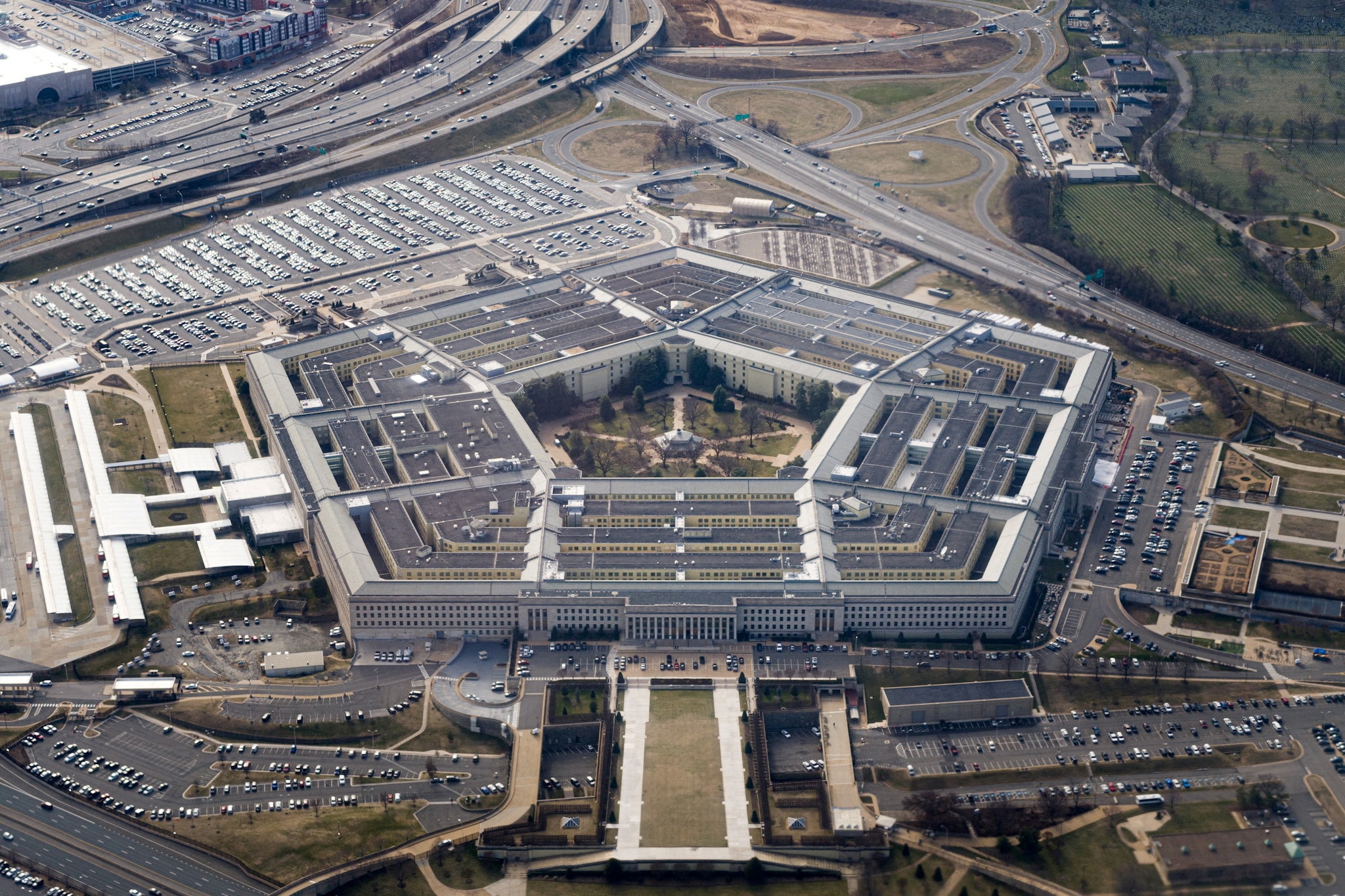
When the Pentagon urges allies to build more traditional hulls to counter this, they are playing directly into Beijing's hands. Trying to match a continental power hull-for-hull in their own backyard is a logistical nightmare. A single American or allied vessel operating thousands of miles from its home port requires an immense logistics train to sustain. China can support its fleet using land-based anti-ship ballistic missiles, land-based air support, and civilian maritime militias.
The solution for allies is not to buy more expensive, easily targeted surface ships to bolster their defense spending metrics. The counter-intuitive truth is that Western allies should be building their own asymmetric, low-cost denial capabilities. Sea mines, mobile land-based anti-ship missiles, and swarms of low-cost uncrewed underwater vehicles are far more disruptive to Chinese naval planning than an extra multi-billion-dollar frigate that takes a decade to build.
Why Washington Loves an Active Alarm
If the strategic reality is more balanced than the rhetoric suggests, we must ask why the alarm is rung with such predictable intensity.
Follow the capital.
The Western defense apparatus is a self-sustaining ecosystem that thrives on peer-competitor anxiety. During the Global War on Terror, the military-industrial complex struggled to justify the production of high-end, high-margin platforms like stealth fighters, advanced attack submarines, and next-generation cruisers. Counter-insurgency required drones, mine-resistant vehicles, and small arms.
China changed everything. A near-peer adversary provides the perfect intellectual framework to justify massive, multi-decade capital expenditure programs.
- The Pentagon gets to protect its core budget and request record-breaking appropriations from Congress.
- Defense Contractors lock in long-term development cycles with guaranteed cost-plus contracts.
- Think Tanks receive corporate and state funding to write white papers detailing the precise day the invasion of Taiwan might occur.
This is not a conspiracy; it is institutional alignment. Everyone in this ecosystem wins when the threat level is dialed up to eleven. The only loser is the citizen who watches public funds diverted from domestic infrastructure and economic resilience into platforms that may be obsolete before they leave the shipyard.
The Intellectual Failure of the Two Percent Target
The insistence that every ally must dedicate an arbitrary 2% of their Gross Domestic Product to defense is an intellectual shortcut. It values input over output.
Consider the structure of modern national power. A nation’s true defense capability in the twenty-first century is not determined by how many infantry battalions it can field or how many armored vehicles it has sitting in storage facilities. It is determined by its semiconductor supply chain, its energy independence, its cyber resilience, and its industrial capacity to scale production during a prolonged crisis.
If an ally spends billions subsidizing domestic advanced manufacturing, securing critical mineral supply chains, and hardening its national electrical grid against state-sponsored cyber strikes, that spending does not count toward the official defense metric. Yet, that work does far more to deter a foreign adversary than purchasing an extra squadron of fighter jets that rely on foreign-sourced components to fly.
Focusing exclusively on military spending creates a fragile state. It hollows out the domestic economy to fund a gilded military structure. If a crisis lasts longer than three weeks, a country with massive defense spending but no industrial depth will rapidly deplete its stockpiles of precision munitions, with no domestic capacity to replace them. The early stages of the conflict in Ukraine proved this definitively.
Redefining Regional Deterrence
The premise of the question coming out of Western defense summits is flawed. The question being asked is: "How do we get our allies to spend more money to match China's military expansion?"
The correct question is: "How do we make China’s military expansion irrelevant?"
Deterrence in the Pacific does not require matching China dollar-for-dollar or hull-for-hull. It requires making the cost of kinetic aggression prohibitively high. This is achieved through economic integration, undeniable cyber attribution, and deep arsenals of cheap, distributed, lethal defense technology.
Stop measuring the strength of an alliance by the size of its defense budget. Start measuring it by the resilience of its societies, the depth of its industrial supply chains, and its willingness to deploy asymmetric economic leverage. The current alarmism serves the bureaucracy, not the strategy. True security will not be found by expanding the budgets of legacy defense giants; it will be found by changing the rules of the contest entirely.