The lazy consensus among urban planners and optimistic restaurateurs is always the same: ban the cars, open the patios, and watch the cash register ring.
We see it every summer. A city announces a weekend road closure—like Winnipeg’s car-free Saturdays on Corydon Avenue—and the local media serves up glowing fluff pieces about "vibrant European-style plazas" and expected customer rushes. It sounds beautiful. It sounds progressive.
It is also an operational trap.
Planners look at successful pedestrian havens like Copenhagen's Strøget or Buenos Aires' Florida Street and assume the magic formula is simply removing pavement from vehicles. They forget those spaces succeed due to massive baseline foot traffic, high-density residential surroundings, and robust underground transit networks. When you map that same ideology onto a car-dependent North American arterial corridor, you do not get a European piazza. You get an artificial island that isolates businesses from their most reliable, high-spending customer base.
I have watched hospitality groups pour hundreds of thousands of dollars into expanded patio setups for these temporary street closures, only to watch their weekday margins bleed out to cover the chaotic, weather-dependent volatility of a Saturday afternoon.
Before Corydon Avenue proprietors order extra kegs and rewrite their staff schedules, they need to look at the brutal economic mechanics of the weekend pedestrian zone. The math rarely works out in favor of the kitchen.
The Mirage of Increased Foot Traffic
The fundamental mistake of the car-free weekend is confusing a crowd with a customer base.
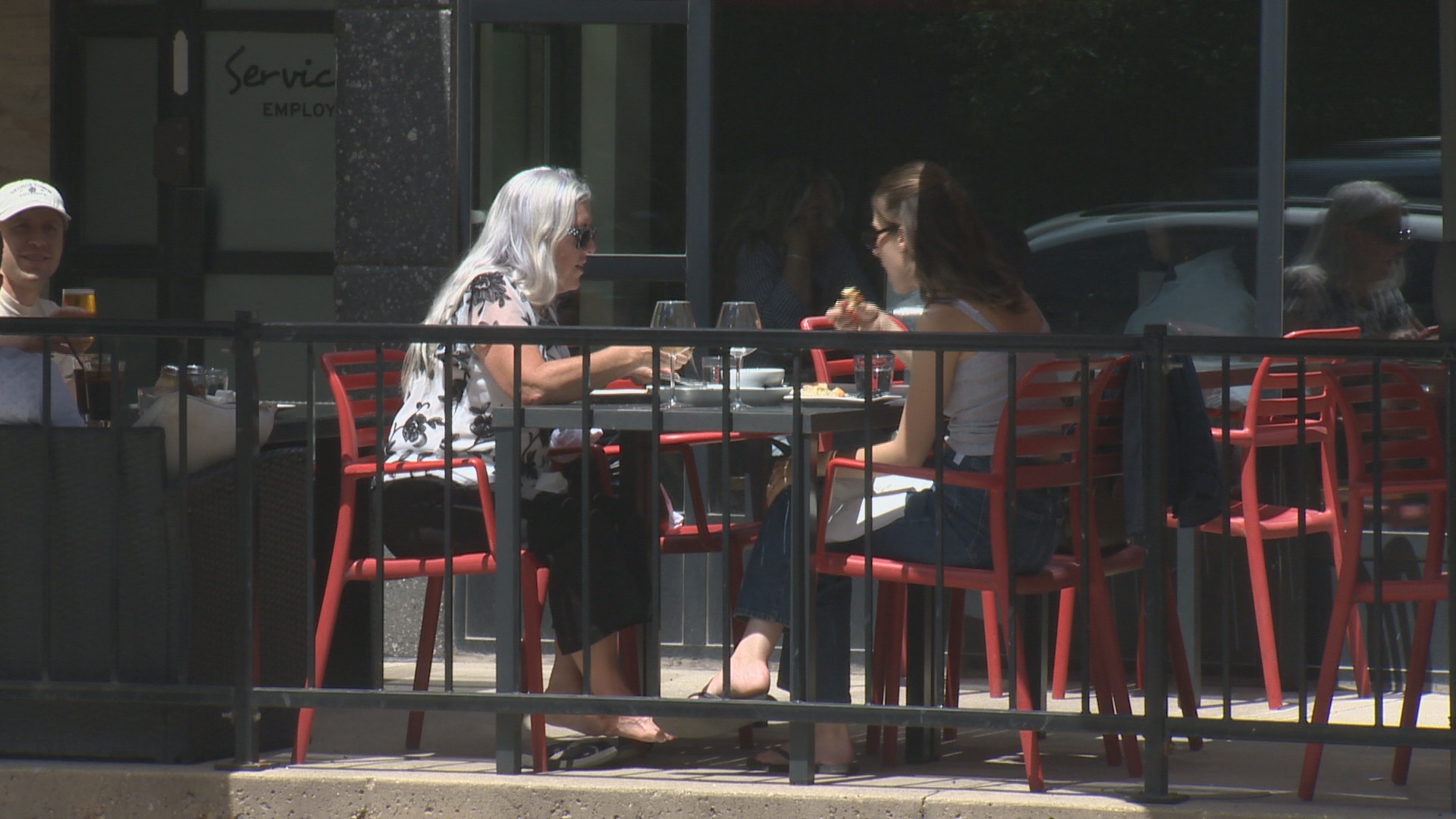
When you close a major commercial strip to vehicles, people do absolutely show up. They bring strollers. They walk dogs. They rollerblade. They soak up the atmosphere.
But public space enthusiasts overlook a critical distinction: strollers are not spenders.
Urban economist Joe Cortright has spent decades analyzing how transportation modes dictate retail spending. The data consistently reveals a harsh reality for full-service restaurants. While pedestrians and cyclists do visit districts frequently, their average spend per transaction is significantly lower than that of vehicular patrons. A driver arrives with a clear destination, a specific reservation, and a wallet ready for a multi-course dinner. A pedestrian often treats the street as an extension of a public park, dropping money only on an iced coffee or a single scoop of gelato.
When you block vehicle traffic, you cut off the high-spending destination diners from adjacent neighborhoods who refuse to hunt for parking three blocks deep into residential side streets. You exchange your highest-margin dinner reservations for low-margin foot traffic that clogs your patio tables for ninety minutes while sharing an appetizer.
The Tyranny of the Micro-Climate
Relying on street closures to drive summer revenue turns your restaurant into a high-stakes gambling operation where the house always wins.
A restaurant indoor dining room is a controlled environment. You know your capacity, your labor costs, and your predictable turnover. A pedestrian zone shifts your entire economic viability outdoors.
Consider the climate realities of mid-summer. If the temperature hits 33 degrees Celsius with high humidity, nobody wants to sit on baking asphalt under a canvas umbrella. If a sudden thunderstorm rolls in at 6:00 PM on a Saturday, your entire street-side revenue stream evaporates in sixty seconds.
Worse, your fixed costs do not disappear when the clouds roll in. You still scheduled double the service staff. You still prepped extra perishable inventory based on the city's promises of a "car-free rush."
When a restaurant relies on a closed street to hit its numbers, it becomes entirely subservient to the weather forecast. One rainy weekend in July can wipe out the net profit of an entire month.
The Operational Breakdown Nobody Talks About
Ask any kitchen manager who has operated inside a temporary pedestrian zone about the logistics, and watch their jaw clench.
A restaurant is a manufacturing plant disguised as a theater. It requires a constant, highly coordinated flow of raw materials in and finished products out. Street closures break the supply chain.
Delivery Delays and Dead Zones
Most commercial blocks depend on front-loading zones for daily deliveries. When the street closes on Friday night or Saturday morning, major food and beverage distributors cannot reach your front door. Chefs are forced to haul hundreds of pounds of product from distant side streets via hand trucks, dragging down efficiency and increasing labor costs before the doors even open.
The Third-Party Delivery Black Hole
In the modern restaurant economy, off-premise dining (UberEats, SkipTheDishes, DoorDash) accounts for anywhere from 15% to 40% of total revenue. Couriers rely on fast, predictable vehicle access to grab orders and go. The moment you close the street to cars, you kill your delivery business for the day. Drivers skip your zone entirely because they cannot justify parking blocks away and walking to collect a single bag of food. You might fill a few more patio seats, but you simultaneously lobotomize a highly profitable revenue stream running in the background.
Staffing Exhaustion
Managing a sprawling street patio requires a completely different labor model than a standard dining room. The distance from the kitchen line to the edge of a street-level enclosure can easily triple the steps a server takes per table. This leads to slower ticket times, cold food, frustrated customers, and burned-out staff who are forced to walk miles on concrete in the summer heat.
People Also Ask: Dismantling the Myth of the Pedestrian Utopia
Don't businesses always profit when streets become pedestrian-only?
No. This is a selective memory bias driven by urbanist case studies of highly specific streets like New York's Times Square or London's Carnaby Street. A study of over 100 pedestrian malls created in the United States during the late 20th century revealed that the vast majority actually accelerated retail decline. Unless a street has a massive, built-in density of office workers and residents who do not rely on cars to get there, removing vehicular access simply starves the businesses of their primary customer pipeline.
Won't drivers just park on side streets and walk?
Only the highly motivated ones, and hospitality is a game of friction reduction. The moment a destination diner realizes they have to circle residential blocks, navigate confusing temporary parking restrictions, and walk a quarter-mile in the humidity, they pivot. They drive to a suburban lifestyle center or a strip with a dedicated parking lot instead. You do not change consumer culture by putting up orange pylons; you just redirect their capital elsewhere.
Is there a downside to expanding outdoor dining space?
Yes, when it comes at the expense of infrastructure predictability. Temporary expansions create a massive mismatch between kitchen capacity and seating capacity. If your line is built to handle 80 seats indoors, and you suddenly add 120 seats on the asphalt, your kitchen will bottleneck. Ticket times skyrocket to 45 minutes, execution drops, and you end up damaging your brand reputation among the very locals who support you during the grueling winter months.
How to Actually Weaponize Public Space Without Killing Margins
If you are a restaurateur trapped in a district pushed toward a car-free model, you cannot just sit back and hope the pedestrian crowds buy enough mozzarella sticks to cover your overhead. You have to change your operational playbook entirely.
Stop treating the street patio as an extension of your white-cloth dining room. It isn't one. Instead, execute three specific adjustments:
- Bifurcate Your Menu: Create a hyper-fast, low-labor "street menu" specifically for outdoor seats. Think high-margin, quickly assembled items that do not tax the main cook line. If the kitchen gets backed up, the street patrons shouldn't pull down the service quality of your indoor destination diners.
- Set Up Satellite Stations: Do not make servers walk half a block to ring in a drink or grab a draft beer. Invest in mobile point-of-sale terminals and outdoor draft carts. If you can't get your POS and beverage infrastructure onto the pavement, your labor costs will eat any revenue you generate.
- Enforce Table Turning Rules: Pedestrian zones attract lingerers. A table drinking tap water and sharing a plate of fries for two hours kills your revenue per seat hour. Implement polite but firm 75-minute limits for street seating during peak hours.
The romantic vision of the car-free street is a luxury product designed by urban planners who have never had to make a payroll on a rainy Tuesday. Patios are a beautiful amenity, but infrastructure stability is what actually pays the rent. Stop letting the city use your business as a guinea pig for lifestyle experiments that starve your bottom line. Turn your street space into a streamlined, high-velocity profit engine, or pull your tables inside and leave the asphalt to the rollerbladers.