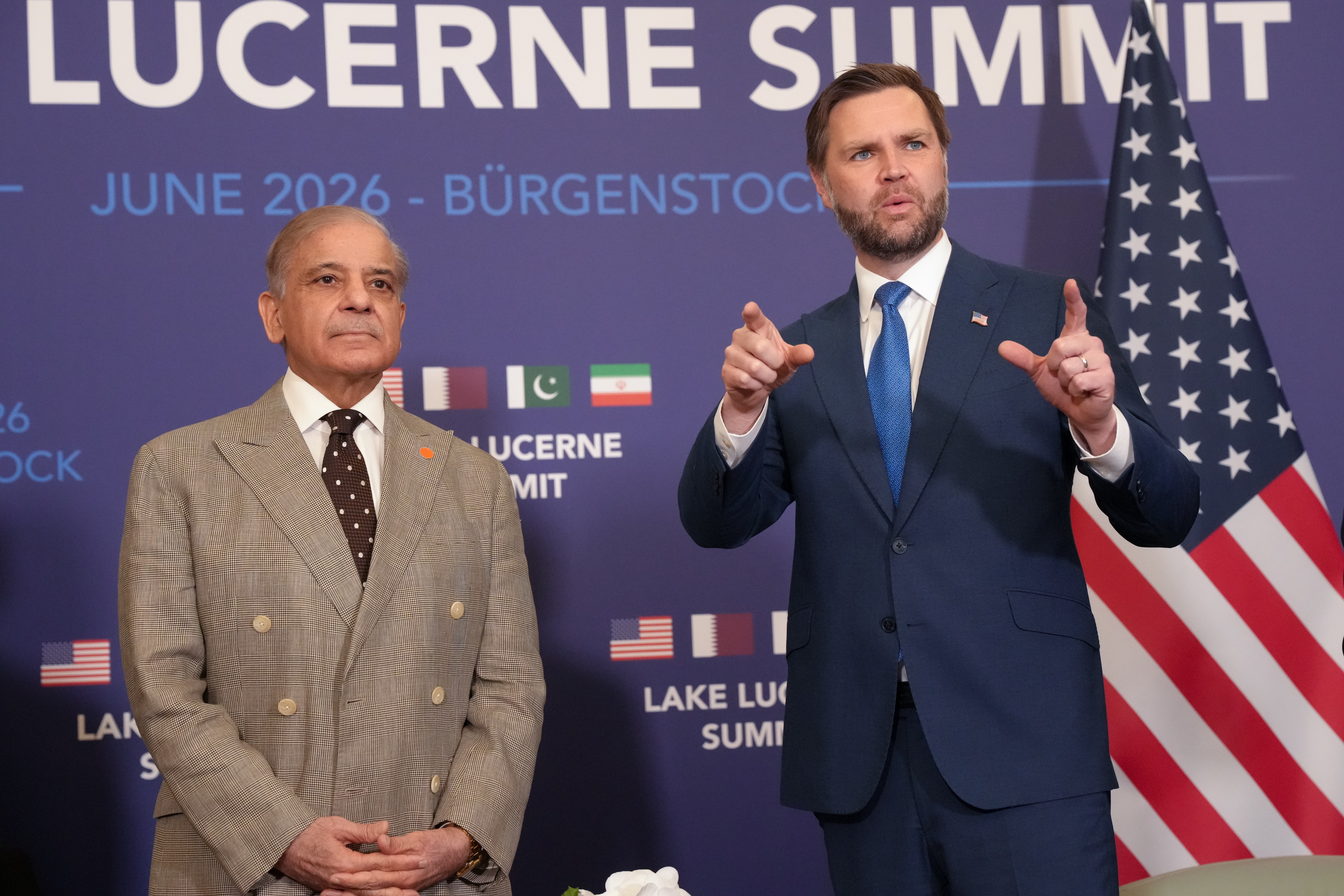
The scenic Bürgenstock Resort overlooking Lake Lucerne in Switzerland is currently playing host to one of the highest-stakes diplomatic tightrope walks in recent history. On one side of the world, Vice President JD Vance is sitting face-to-face with senior Iranian negotiators, talking about a "historic opportunity to reset bilateral relations" and permanently transforming how the Middle East operates. On the other side of the world, President Donald Trump is firing off late-night warnings on Truth Social, threatening to "hit Iran very hard again" and even musing about a full U.S. takeover of the vital Strait of Hormuz.
If you are confused by these contradictory signals, you are not alone. Global markets, foreign diplomats, and even members of Congress are scrambling to figure out which version of American foreign policy is the real one. Is it the olive branch being extended in the Swiss Alps, or the heavy stick being swung from Mar-a-Lago?
The reality is that both are happening simultaneously. This good-cop, bad-cop routine is not an accident; it is the core strategy of an administration attempting to force a sweeping regional peace deal through a mix of raw military intimidation and high-level economic bargaining.
Inside the Bürgenstock Summit
The diplomatic effort in Switzerland represents an unprecedented moment in modern international relations. Never before have the top leadership tiers of the United States and the Islamic Republic of Iran met directly at such a high technical level.
Led by Vance, the American delegation includes critical power players like White House envoy Steve Witkoff and Trump’s son-in-law Jared Kushner. They are sitting across the table from an Iranian team led by parliament speaker Mohammad Bagher Ghalibaf and Foreign Minister Abbas Araghchi, with mediators from Pakistan and Qatar smoothing out the rough edges.
The foundation of these talks is a fragile memorandum of understanding digitally signed last week at the Palace of Versailles. Under that initial framework, a 60-day window was established to hash out a permanent peace deal. The core tenets of the framework involve three massive pillars:
- Nuclear De-escalation: Iran must agree in writing to renounce its nuclear weapons ambitions and invite International Atomic Energy Agency (IAEA) inspectors back to its sites to oversee the dilution of its highly enriched uranium stockpile.
- Economic Relief: In exchange for compliance, the U.S. has committed to lifting severe naval blockades, allowing Iran to sell its oil freely, and unfreezing billions of dollars in restricted assets.
- Regional Security: A comprehensive ceasefire meant to apply to Lebanon, ensuring that shipping lanes remain completely open and commercial vessels can pass through the region unhindered.
Vance has leaned heavily into his role as the optimistic architect of this potential new era, telling Swiss media that great progress has been made toward securing regional stability. But while Vance talks of turning over a new leaf, the ground beneath the summit is already shaking.
The Fracturing Ceasefire in Lebanon
The entire Swiss diplomatic track is built on the assumption that a regional ceasefire will hold. Over the weekend, that assumption disintegrated.
Despite the diplomatic framework, heavy fighting erupted between Israeli forces and Hezbollah, the powerful Iranian-backed militant group in Lebanon. Israeli airstrikes in central and southern Lebanon reportedly killed dozens of people, prompting immediate retaliatory rocket fire from Hezbollah onto Israeli military positions.
This presents a massive structural problem for the negotiations: neither Israel nor Hezbollah are actual signatories to the U.S.-Iran memorandum of understanding.
Tehran argues that the U.S. has utterly failed to fulfill its end of the bargain, which required Washington to rein in Israeli military operations. In a furious act of retaliation, the Iranian military announced it was remounting its blockade of the Strait of Hormuz—the narrow waterway that controls the transit of roughly one-fifth of the world’s petroleum.
Fire and Fury via Truth Social
Iran's move to choke off global energy shipping triggered an explosive response from President Trump. In a series of public statements and a lengthy, defensive phone interview with Fox News, Trump made it clear that his patience with diplomatic nuance has its limits.
"Iran must immediately stop their highly paid PROXIES in Lebanon from causing trouble," Trump posted. "If they don't, we'll hit Iran very hard again, just like we did last week, only harder!!!"
He went even further during his call with Fox News, explicitly warning Iranian officials that if they interfere with global shipping lanes, they risk losing their sovereignty entirely. "You close it and you won't have a country," Trump said, recounting what he claimed to have told Tehran's representatives. "You won't even make it back to your f**king country."
Trump even floated a radical contingency plan: if a permanent agreement isn't finalized within the 60-day window, the United States military might permanently "take over" the Strait of Hormuz and collect transit tolls from global vessels as payment for acting as the "Guardian Angel" of the Middle East.
Predictably, these threats caused an uproar in Switzerland. The Iranian delegation lodged a formal protest with Qatari and Pakistani mediators, demanding that the U.S. president's "bullying" rhetoric be brought under control before technical negotiations can proceed. Mohammad Bagher Ghalibaf, Iran’s chief negotiator, publicly dismissed the threats, claiming that Washington is acting out of desperation and warning that Iran’s armed forces are fully prepared to respond to any renewed American military strikes.
The Domestic Political Trap for Vance
This high-wire act isn't just about Middle Eastern geopolitics; it is also a brutal domestic political test for JD Vance.
The Biden-era conflicts and the subsequent U.S. military strikes against Iranian targets last week have left the American public deeply weary of foreign entanglements. Rising fuel prices ahead of the peak summer travel months have put massive pressure on the White House to find a solution that stabilizes global oil markets.
Yet, by attempting to negotiate with Tehran, Trump and Vance have opened themselves up to blistering criticism from within their own party. Republican hard-liners are furious, openly comparing this temporary framework to the 2015 nuclear deal negotiated by the Obama administration—a deal Trump spent years trashing as a total capitulation. Critics point out that allowing Iran to immediately sell its oil and access billions in frozen assets gives away America's economic leverage before Tehran has actually dismantled a single centrifuge.
Trump is acutely aware of this political vulnerability, which explains why he has publicly stated that if these Swiss peace talks fall through, Vance will take the blame.
For Vance, who is widely believed to be protecting his positioning for a 2028 presidential run, the Bürgenstock summit is a zero-sum game. If he pulls off a comprehensive, verifiable treaty that strips Iran of its nuclear ambitions and opens the shipping lanes, he secures his legacy as a master diplomat. If the talks collapse under the weight of renewed military strikes, he becomes the fall guy for a failed policy of appeasement.
The next 48 hours in Switzerland will reveal whether this aggressive dual-track strategy can actually work. Technical teams are currently trying to isolate the negotiations from the rocket fire in Lebanon, focusing entirely on the logistics of getting UN weapons inspectors into Iranian nuclear facilities. But as long as the bombs are falling in Beirut and the threats are flying from Mar-a-Lago, the path to a lasting peace remains incredibly narrow.
Watch the global oil markets closely over the coming days. If the price per barrel spikes, it means the trading floors have lost confidence in Vance's ability to keep the Strait of Hormuz open—regardless of how optimistic the updates from the Swiss Alps sound.