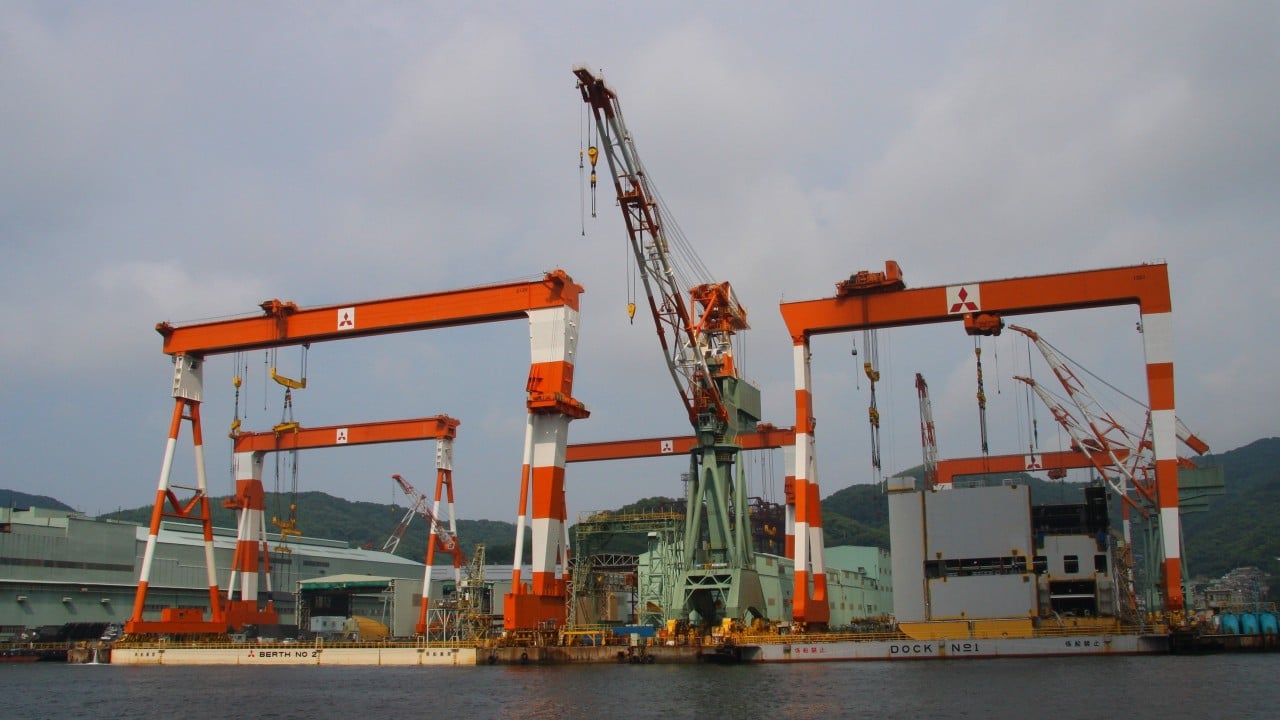
The Pentagon is currently flirting with a plan that would have been considered treasonous thirty years ago: asking South Korea and Japan to build our warships. On the surface, the logic feels seductive. Hyundai Heavy Industries and Mitsubishi Heavy Industries build ships faster, cheaper, and with fewer weld defects than our aging domestic yards. The "lazy consensus" among defense analysts is that this is a pragmatic move to counter China’s massive naval expansion.
They are wrong.
This isn't a "strategic partnership." It is a managed retreat. By outsourcing the hull and the steel, the United States is effectively admitting that it can no longer maintain the industrial muscles required to be a superpower. We are trading long-term sovereignty for a short-term discount on a hull.
The Myth of the Efficient Pivot
The argument for using Korean or Japanese yards usually centers on the "efficiency gap." It is true that South Korea’s commercial shipbuilding capacity is light-years ahead of the U.S. They use modular construction techniques and integrated digital twins that make Bath Iron Works look like a historical reenactment society.
But warships aren't container ships.
When you outsource the design and construction of a guided-missile destroyer, you aren't just buying a boat. You are exporting the very soul of your naval architecture. The moment a foreign yard lays the keel, they own the learning curve. They gain the proprietary knowledge of how to integrate vertical launch systems (VLS) with high-density power requirements. They learn the "scars" of the design.
I’ve spent years watching industrial bases hollow out. It starts with "we just need the hulls" and ends with "we don’t know how to fix the hulls we bought." If the U.S. Navy moves forward with this, we aren't just "leveraging" (to use a term I despise) Asian capacity; we are decommissioning American talent.
The Security Risk Nobody Wants to Quantify
Proponents of this plan point to the Jones Act as the villain. They claim that protectionist laws have stifled innovation and made American ships too expensive. They aren't entirely wrong about the cost, but they are dangerously naive about the risk.
Imagine a scenario where the South China Sea becomes a "hot" zone. If our primary repair and construction hubs are within the strike range of Chinese intermediate-range ballistic missiles, our fleet is effectively neutralized before it leaves the pier. Placing our industrial eggs in the baskets of Seoul and Tokyo—both of which sit well within the "First Island Chain" and the reach of regional adversaries—is a geographic blunder of the highest order.
We are proposing to move our manufacturing base closer to the enemy's front door to save a few billion dollars in the budget. It is the military equivalent of a homeowner moving their gun safe to the front porch because it’s easier to access.
The "Hollow Hull" Problem
There is a technical nuance here that the mainstream press consistently misses: the decoupling of the platform from the system.
The Pentagon’s current daydream involves building "empty" hulls in Asia and towing them to U.S. yards for "outfitting" with sensitive Aegis radar systems and weaponry. This is a logistical nightmare. Modern naval vessels are highly integrated machines. The cooling systems, the power cabling, and the structural integrity of the ship are woven into the steel.
You cannot simply "plug and play" an SPY-6 radar into a hull built by a team that doesn't have the highest-level security clearances to understand why certain bulkheads need specific shielding. The result will be "Franken-ships"—vessels with integration glitches that will take years to iron out in post-delivery maintenance. We saw this disaster play out with the Littoral Combat Ship (LCS). We don't need a sequel on a global scale.
The Talent Drain is Permanent
The most devastating consequence of this policy is the permanent loss of the American shipwright.
When you stop building, you stop learning. If the U.S. Navy stops awarding major contracts to domestic yards, those yards don't just "wait" for the next cycle. They die. The engineers move to aerospace. The welders move to oil and gas. The institutional knowledge of how to build a nuclear-hardened hull evaporates.
Once that knowledge is gone, you cannot buy it back. You cannot "startup" a shipyard. It takes decades to cultivate the mastery of complex marine engineering. By sending the work to U.S. allies, we are subsidizing their workforce while firing our own. We are paying for the privilege of becoming a client state.
Stop Fixing the Wrong Problem
The question shouldn't be "How do we get ships from Japan?" It should be "Why can’t America build ships anymore?"
The answer isn't just labor costs. It's the "requirements creep" and the "Gold-Plating" of every single bolt and bracket. The Pentagon’s procurement process is a bloated, risk-averse bureaucracy that prioritizes paperwork over steel.
If we want to compete with China’s 200-to-1 shipbuilding advantage, we don't need to outsource. We need to deregulate our own yards. We need to give American builders the freedom to innovate without a thousand-page manual on how to buy a toilet seat.
We need to stop treating our domestic industry like a charity case and start treating it like a strategic asset. If that means subsidizing the modernization of our docks to match the automation levels of the Koreans, so be it. It’s cheaper than the alternative: a future where the United States Navy has to ask for permission from a foreign government to repair its own fleet.
The Brutal Reality of "Allies"
History is littered with "everlasting" alliances that lasted exactly until the first shot was fired.
Japan and South Korea are vital partners. Today. But geopolitics is fluid. Relying on foreign nations for the core of your national defense is an act of extreme vulnerability. What happens if a future administration in Seoul decides that maintaining neutrality in a U.S.-China conflict is in their best interest? Our supply chain for the most complex machines on earth suddenly has a "stop" button that we don't control.
The argument that we can’t afford to build at home is a lie. We choose not to. We spend billions on "legacy" systems and social programs while the literal foundations of our naval power turn to rust.
If we outsource our warships, we aren't just buying boats. We are selling the 21st century.
Build them here. Or don't build them at all. Because a navy built by someone else is a navy that belongs to someone else.
Fix the yards. Fire the bureaucrats. Weld the steel.