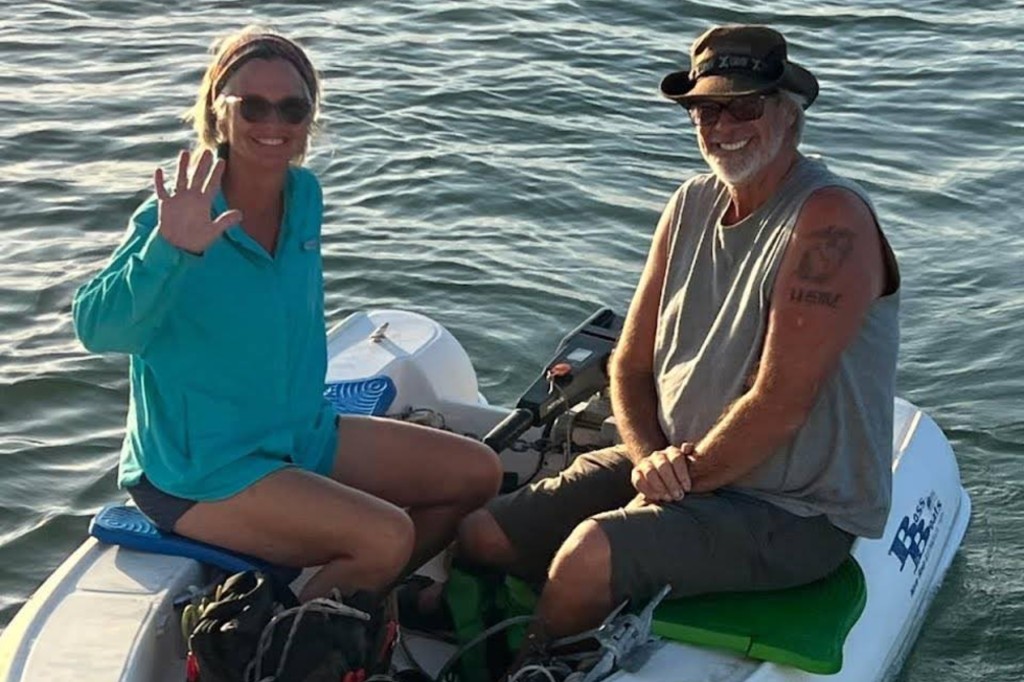
The seizure of a private vessel by the United States Coast Guard (USCG) represents a significant escalation from a missing persons investigation into a targeted forensic operation. In the case involving Brian Hooker and the disappearance of his wife, the transition from a Search and Rescue (SAR) mission to the physical impoundment of property signals that the federal government has established a specific nexus between the vessel and a potential criminal violation. This analysis deconstructs the procedural framework of maritime seizures, the evidentiary thresholds required for such interventions, and the tactical implications for the broader investigation.
The Jurisdictional Catalyst for Vessel Impoundment
Under 14 U.S.C. § 522, the Coast Guard possesses unique authority to board any vessel subject to the jurisdiction of the United States to address violations of federal law. In high-profile disappearances, a seizure is rarely an arbitrary act of preservation; it is a calculated legal maneuver driven by one of three primary catalysts:
- The Preservation of Transient Evidence: Maritime environments are hostile to forensic integrity. Saltwater, humidity, and biological degradation create a "decay clock" on physical evidence. Seizing the boat allows for a controlled, climate-stable environment for Luminol testing, DNA recovery, and fiber analysis that is impossible while the vessel remains docked or in use.
- The Plain View Doctrine and Probable Cause: If, during a standard safety inspection or the initial SAR response, officers observed anomalies—such as cleaned deck sections, missing safety equipment, or structural modifications—this provides the "probable cause" necessary to obtain a seizure warrant.
- The Federal Forfeiture Framework: If the vessel is suspected of being used to facilitate a felony, it becomes subject to civil or criminal forfeiture. By seizing the asset, the government effectively freezes the suspect’s mobility and secures a potential instrument of the crime.
The Three Pillars of Forensic Maritime Analysis
When a vessel like Hooker’s is seized, the investigative team applies a specialized diagnostic framework to the craft. This process is far more invasive than a standard police search of a residence or vehicle.
Biological and Chemical Residue Mapping
Analysts treat the vessel as a closed-loop system. They look for "void patterns" in blood spatter or chemical cleaning agents that disrupt the natural patina of the boat’s surfaces. Because fiberglass and teak are porous to varying degrees, high-intensity ultraviolet light and chemical reagents are used to identify scrubbed areas. A significant focus is placed on the bilge system; anything washed down the deck eventually settles in the bilge, making it a chronological trap for biological material.
Nautical Telemetry and Geospatial Synchronization
Modern vessels are equipped with GPS plotters, AIS (Automatic Identification System), and often integrated engine control units (ECUs). Investigators execute a "digital autopsy" of these systems to reconcile the owner's timeline with physical reality.
- Velocity vs. Fuel Consumption: Discrepancies between the distance traveled and the fuel consumed can indicate periods of idling or heavy load, suggesting the boat was stationary or engaged in specific maneuvers at undocumented times.
- Waypoints and Depth Soundings: Historical data from the sonar can reveal if the vessel hovered over specific underwater topographies, which is critical in body recovery efforts.
Mechanical Integrity and Alteration Audits
The Coast Guard’s technical experts inspect the vessel for missing components. In many disappearance cases, the absence of specific anchors, weights, or tethering lines becomes a focal point. If the inventory of the boat does not match its standard operating configuration, the burden of explanation shifts to the owner.
The Cost Function of Legal and Social Friction
The seizure of a primary asset creates an immediate "resource squeeze" for the individual under investigation. This is a deliberate byproduct of the legal process.
- Financial Attrition: The owner must fund a legal defense while simultaneously losing access to a high-value asset. If the boat was a residence or a primary source of income, the psychological and financial pressure increases exponentially.
- The Narrative Shift: In the court of public opinion and within the technical scope of the investigation, a seizure moves the subject from "grieving spouse" to "person of interest" with a tangible link to a crime scene. This shift often triggers a change in witness cooperation, as associates may be more inclined to provide information once the federal government takes formal action against property.
Strategic Intersections of State and Federal Law
While the USCG handles the maritime seizure, the underlying disappearance is often a state-level homicide or missing persons case. This creates a "Dual-Track" investigation:
- The Federal Track: Focuses on maritime safety, federal waters violations, and asset seizure protocols.
- The State Track: Focuses on the motive, the relationship dynamics between Brian Hooker and his wife, and the timeline leading up to the departure.
The friction between these two tracks can cause delays. However, the federal seizure provides the state with a "clean room" for evidence. By removing the boat from Hooker’s control, the FBI and state police can conduct a multi-week forensic "tear-down" without the risk of the owner claiming the evidence was planted or contaminated after the fact.
Limitations of the Seizure Mechanism
It is critical to acknowledge that a boat seizure is not an indictment. The presence of biological material on a vessel owned by a married couple is statistically expected. The challenge for the prosecution is not finding DNA, but finding "displaced" DNA—blood in the engine room, hair in the bilge, or skin cells in a storage locker that has been recently sanitized.
Furthermore, if the vessel was seized without a perfectly executed warrant, any evidence found during the "tear-down" could be suppressed under the Fourth Amendment. The "fruit of the poisonous tree" doctrine is particularly potent in maritime law, where the boundaries between a "safety check" and a "criminal search" are frequently litigated.
Operational Forecast
Based on the mechanics of federal maritime investigations, the next phase of the Hooker case will likely involve the extraction of the vessel’s "Black Box" data—specifically the NMEA 2000 network data which links all onboard electronics. If the data reveals a "gap" in GPS logging or a deliberate powering down of the AIS during the window of the disappearance, the investigation will transition from forensic recovery to active interrogation.
The immediate strategic priority for the investigative team is the reconciliation of the vessel's drift patterns with the reported "last known position." By using oceanographic modeling (SLDMB - Self-Locating Datum Marker Buoys), the Coast Guard can determine if the boat was where Hooker claimed it was at the time of the incident. Any deviation between the modeled drift and the physical location of the boat at the time of the rescue/seizure will serve as the primary catalyst for criminal charges. The boat is no longer just a vehicle; it is a witness that cannot be silenced by legal counsel.
The seizure indicates that the government has moved past the "hypothesis" stage and is now in the "verification" stage of a criminal theory. The focus is no longer on if a crime occurred, but where on that specific vessel the evidence of the crime remains hidden.