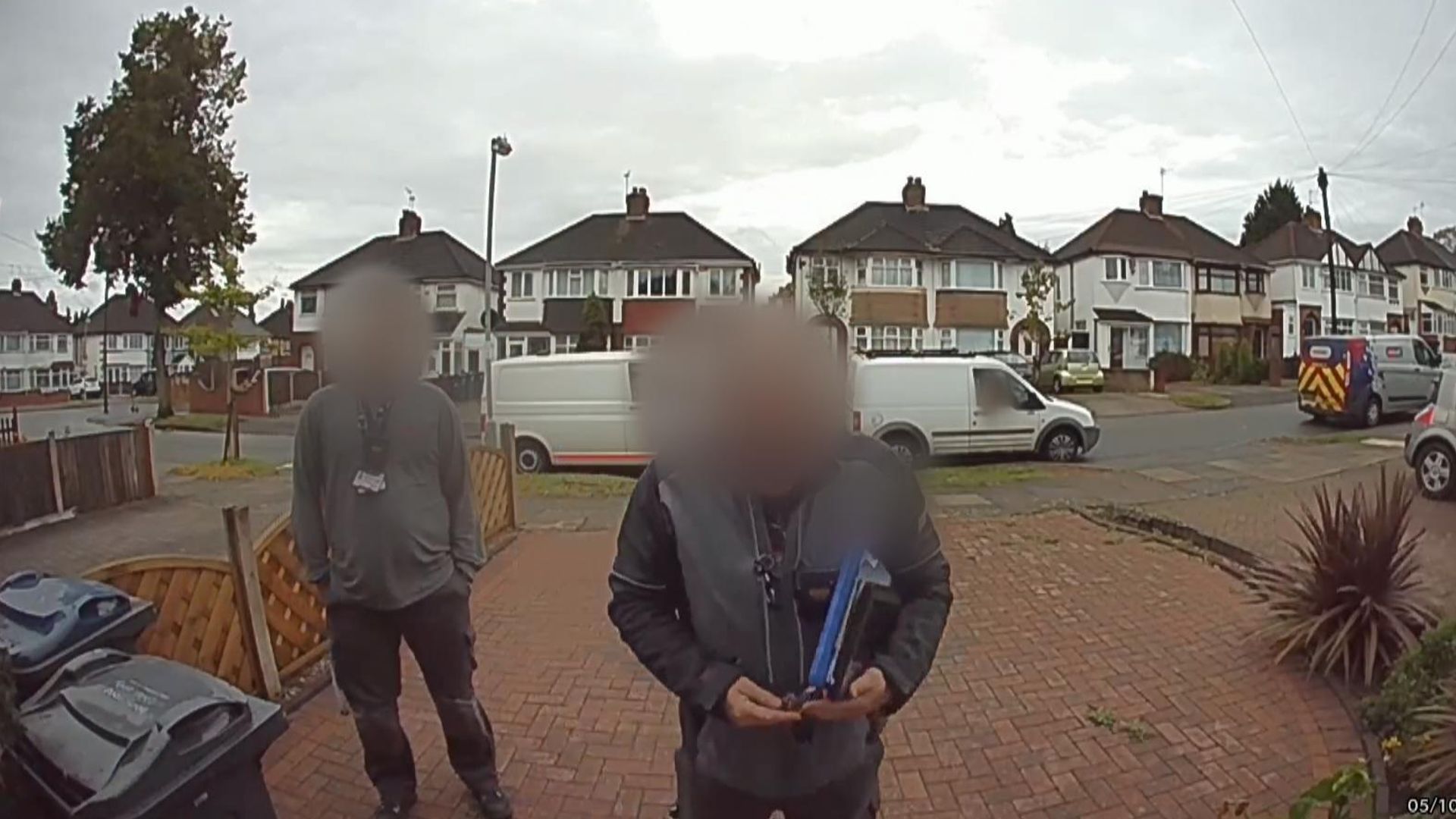
British Gas’s £20 million voluntary redress payment represents more than a reactive settlement; it is a quantification of systemic failure in the management of vulnerable consumer segments. When an energy supplier loses the ability to distinguish between operational efficiency and regulatory compliance, the resulting friction creates a "compliance debt" that eventually compounds into significant financial and reputational liabilities. This analysis deconstructs the mechanisms behind the British Gas prepayment meter (PPM) crisis, mapping the collapse of internal controls and the structural shifts required to prevent the recurrence of such systemic breakdown.
The Triad of Regulatory Breach
The failure at British Gas was not a singular event but a convergence of three distinct operational lapses. By examining these through the lens of Ofgem’s Standards of Conduct, the gravity of the £20 million figure becomes clearer. Also making headlines recently: Why the Russia India Trade Alliance is Becoming Impossible to Sanction.
- Process Integrity Failure: British Gas utilized third-party contractors to execute warrant-based installations of prepayment meters. The breakdown occurred at the hand-off between internal legal teams and external field agents.
- Vulnerability Identification Deficit: The core of the breach involved installing PPMs in the homes of individuals whose physical or mental health conditions made such meters inherently unsafe. This indicates a failure in the Information Feedback Loop, where frontline data regarding customer health did not override the automated debt collection workflow.
- Governance Blindness: For a period spanning multiple fiscal quarters, the reporting mechanisms intended to flag high-risk installations failed to reach executive visibility. This lack of oversight suggests that key performance indicators (KPIs) were weighted toward debt recovery speed rather than compliance accuracy.
The Economic Impact of Forced PPM Conversion
In the UK energy market, the prepayment meter serves as a debt management tool of last resort. However, the cost of executing a "forced" conversion is significant, and when done improperly, it becomes a value-destructive activity for the firm.
The Direct Cost Function
The total cost to the supplier of a forced installation ($C_f$) can be modeled as:
$$C_f = C_a + C_l + C_i + (P \times L)$$ More information regarding the matter are covered by The Wall Street Journal.
Where:
- $C_a$ is the administrative cost of the warrant application.
- $C_l$ is the legal cost of court representation.
- $C_i$ is the physical installation cost (labor and hardware).
- $P$ is the probability of regulatory fine or redress.
- $L$ is the magnitude of the legal/regulatory liability.
In the case of British Gas, the variable $L$ expanded exponentially because the breach was systemic rather than incidental. The £20 million redress package—comprising £10 million in direct compensation to affected customers and £10 million to the Energy Redress Fund—essentially serves as a retroactive tax on poor operational risk management.
Structural Incentives and Behavioral Misalignment
A primary driver of this crisis was the misalignment between corporate objectives and agent behavior. External debt collection agencies (DCAs) often operate on incentive structures based on "successful" conversions. When the metric for success is the physical installation of a meter, there is a natural disincentive for the agent to report reasons why the installation should not proceed, such as customer vulnerability.
This creates an Adverse Selection Problem. The agents with the most information about the customer’s situation have the least incentive to share it with the parent company if it jeopardizes their commission. British Gas failed to implement a "Negative Incentive" or a rigorous audit trail that penalized agents for ignoring vulnerability flags.
The Mechanics of Redress and Restitution
The £20 million payment is bifurcated to address two different types of harm: individual and societal.
Individual Restitution (£10 Million)
This fund is targeted at the specific households—estimated in the tens of thousands—who were subjected to the forced installations. The logic here is compensatory, aimed at returning the customer to their "pre-harm" state. This includes:
- Reversing the cost of the warrant.
- Providing a credit balance to offset the higher tariffs often associated with PPMs.
- A "stress and inconvenience" premium.
Societal Redress (£10 Million)
The payment to the Energy Redress Fund serves a different function. It acts as a punitive measure that strips the firm of any potential profit gained from the non-compliant behavior and redirects it toward the broader protection of vulnerable energy consumers. This satisfies the regulatory requirement that a firm should not benefit from its own breach.
Technological Debt as a Catalyst for Non-Compliance
A significant portion of the British Gas failure can be attributed to legacy IT infrastructure. In many large-scale energy suppliers, customer data is siloed across multiple platforms. A "Vulnerability Flag" entered by a customer service representative during a phone call might not sync with the "Debt Collection Module" used to generate warrant lists.
When these systems do not talk to each other in real-time, the company operates with a fragmented view of the customer. The result is an automated path to litigation that ignores critical human data points. The "Master Data Management" (MDM) failure meant that even if British Gas had the data to identify a vulnerable customer, they lacked the systemic cohesion to act on it.
The New Regulatory Paradigm: Involuntary PPM Oversight
Following this incident, Ofgem has transitioned from a principle-based oversight model to a prescriptive one. The new Code of Practice for involuntary PPM installations introduces several "Hard Stops" that were missing during the British Gas breach period:
- The 80+ Age Exclusion: An absolute prohibition on forced installations for households where all occupants are over 80.
- Mandatory Body-Worn Cameras: Requiring agents to record the assessment of the household to ensure the "Vulnerability Check" is not bypassed.
- The Two-Visit Minimum: Requiring multiple independent attempts to engage with a customer before a warrant can even be sought.
These measures increase the "Friction Cost" of debt recovery. For British Gas and its peers, the cost of recovering debt from the most delinquent customers has now risen significantly, as the procedural hurdles required to remain compliant are labor-intensive and legally rigorous.
Quantifying Reputational Contagion
The financial penalty of £20 million is a "Line Item Risk." However, the reputational damage leads to Customer Churn Risk. In a competitive market, a brand associated with the "forced entry" into the homes of the elderly or disabled faces a higher Customer Acquisition Cost (CAC).
Prospective customers, particularly those in the "Socially Conscious" demographic, migrate toward challengers with cleaner ESG (Environmental, Social, and Governance) profiles. The long-term loss in "Customer Lifetime Value" (CLV) due to brand erosion likely exceeds the £20 million headline figure.
Operational Transformation Requirements
For an organization of British Gas's scale to move beyond this crisis, the strategy must shift from "Redress" to "Prevention." This requires a three-layered approach to operational hygiene:
- Algorithmic Auditing: Implementing AI-driven filters that scan debt collection lists against social services data, health registries (where opt-in is provided), and historical interaction sentiment to auto-exclude high-risk profiles.
- Contractual Reform: Redesigning agreements with third-party DCAs. Instead of paying per installation, the model should pivot to "Resolution Quality," where agents are rewarded for successfully moving a customer onto a sustainable payment plan without the need for a warrant.
- The Chief Vulnerability Officer: Elevating the oversight of "Vulnerable Customer Policy" to a C-suite or near-C-suite level. This ensures that compliance is not buried within a general "Legal" or "Operations" silo but has its own dedicated budget and authority to halt revenue-generating activities that pose a regulatory risk.
The British Gas settlement is a reminder that in the utility sector, the "License to Operate" is contingent upon the protection of the most marginalized users. When the system fails, the cost is not just a fine; it is a fundamental breakdown of the social contract between the provider and the public.
The strategic play for any energy retailer now is the aggressive pursuit of "Clean Debt Recovery." This involves a pivot away from physical enforcement towards predictive analytics and early-intervention communication strategies. Firms that continue to rely on the "Warrant-and-Install" model will find their margins evaporated by the rising costs of compliance and the inevitable escalation of regulatory penalties for future infractions. The focus must be on identifying the "Inability to Pay" vs. the "Refusal to Pay" at the earliest possible stage in the billing cycle, using high-frequency data from smart meters to trigger support mechanisms before a debt balance becomes insurmountable.