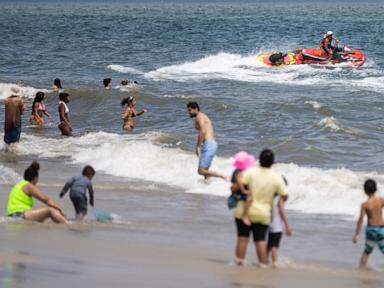
You are packing your cooler for a massive holiday weekend at the beach when the news alerts hit your phone. A swimmer just got bitten on the foot at Jones Beach. Lifeguards are blowing whistles, ordering everyone out of the surf, and launching drones into the sky. Immediately, the mind goes straight to a Hollywood thriller. People start panicking, thinking the coast is crawling with apex predators waiting for a holiday feast.
That is exactly what happened on Friday, July 3, 2026, at Jones Beach State Park Field 6. Right around noon, a male swimmer felt a sharp pain and emerged from the water with bloody lacerations on his right foot. Park officials scrambled, suspended swimming, and spent an hour scouring the area for dangerous marine life.
It sounds terrifying, but the reality behind these coastal encounters is far different from the media frenzy. If you understand what is actually happening in the water, you do not have to abandon your summer beach plans.
The Real Story of the Jones Beach Incident
The July 3rd bite did not happen in a vacuum. It capped off a tense forty-eight hours along the New York and Long Island coastlines. Just the day before, on Thursday, lifeguards at Point Lookout spotted an eight-foot shark cruising west, barely forty yards from the shore. That sighting forced immediate red-flag warnings and beach closures in the Town of Hempstead. Meanwhile, over at Rockaway Beach in Queens, city officials spotted multiple sharks via drone, leading to intermittent closures throughout the afternoon.
When the bite occurred at Field 6 the next day, emergency workers responded instantly. Lifeguards bandaged the man's foot, and an ambulance rushed him to Nassau University Medical Center. Luckily, the injuries were non-life-threatening.
State Parks Regional Director George Gorman confirmed that crews searched the beachfront thoroughly for an hour. After finding no lingering threats, they let people back into the water, though they restricted swimming to waist-deep wading.
This swift response kept the panic at bay, allowing the beach to transition into its scheduled Independence Day celebrations, including overhead practices for the massive weekend air show. But it leaves beachgoers asking why this keeps happening.
Why the Atlantic Shoreline is Changing
The ocean right off New York is healthier than it has been in decades, and that is precisely why we are seeing more marine life close to the sand. Cleaner water means more Atlantic menhaden, locally known as bunker fish. These small, oily schooling fish are the absolute favorite snack for juvenile sharks, whales, and predatory bluefish.
When millions of bunker fish migrate close to the surf zone, the predators follow them. Most coastal bites are not calculated attacks on humans. They are cases of mistaken identity in murky water. A juvenile shark dashes into a school of baitfish, sees a flashing human foot or ankle, and takes a quick experimental nip before realizing its mistake and swimming away.
Record-breaking summer heatwaves across the eastern United States also play a massive role. Extreme heat drives hundreds of thousands of people into the ocean to cool off at the exact same time marine life is highly active near the shore. When you mix high human density with high baitfish density, the statistical probability of an accidental encounter climbs.
The Drone Boom and the Illusion of an Invasion
State and local agencies have radically transformed how they monitor the coastline. New York has deployed a fleet of high-tech drones to scan the waters daily. Lifeguards, park rangers, and specialized shark patrols use these flying cameras to spot marine activity from above long before a swimmer sees anything from the surf.
This surveillance creates a bit of a psychological trick. We are not necessarily experiencing a sudden massive influx of dangerous predators. We are just finally looking at the water with the right tools. Sharks have always cruised these coastal waters during the summer months. Now, we simply capture them on camera and tweet about it within minutes.
Gavin Naylor, the director of the Florida Museum of Natural History's shark research program, points out that unprovoked bites remain incredibly rare on a global scale. There are usually only sixty to eighty unprovoked bites worldwide each year. To put that in perspective, millions of people enter the Atlantic Ocean every single weekend without ever seeing a fin.
How to Actually Stay Safe at New York Beaches
You do not need to avoid the ocean entirely, but you do need to stop treating it like a backyard swimming pool. The Atlantic is a wild ecosystem. To minimize your chances of an accidental interaction, you should adopt a few simple habits based on how these animals hunt.
First, stay completely out of the water if you see signs of active feeding. If you notice schools of small fish jumping out of the water, thick flocks of seabirds diving aggressively into the surf, or seals hanging out on nearby sandbars, get out. Predators are actively hunting in that exact spot, and your limbs can easily look like a struggling bunker fish in the foam.
Second, time your swims wisely. Avoid entering the ocean during dawn, dusk, or nighttime hours. Many coastal shark species do the bulk of their hunting during low-light conditions when their vision gives them an advantage over prey.
Third, stick to the buddy system and stay reasonably close to the shoreline. Swim, paddle, or surf in groups, because sharks are far less likely to approach a crowd. Keeping your feet in an area where you can easily touch the bottom gives you more stability and keeps you out of deeper channels where larger marine life might travel.
Finally, listen to the lifeguards without arguing. When a whistle blows or a red flag goes up because a drone spotted a fin, exit the water immediately. The system works well, as proven by the quick response and temporary closure at Jones Beach. Pay attention to your surroundings, respect the local wildlife, and let the beach patrols do their jobs while you enjoy the summer sun.