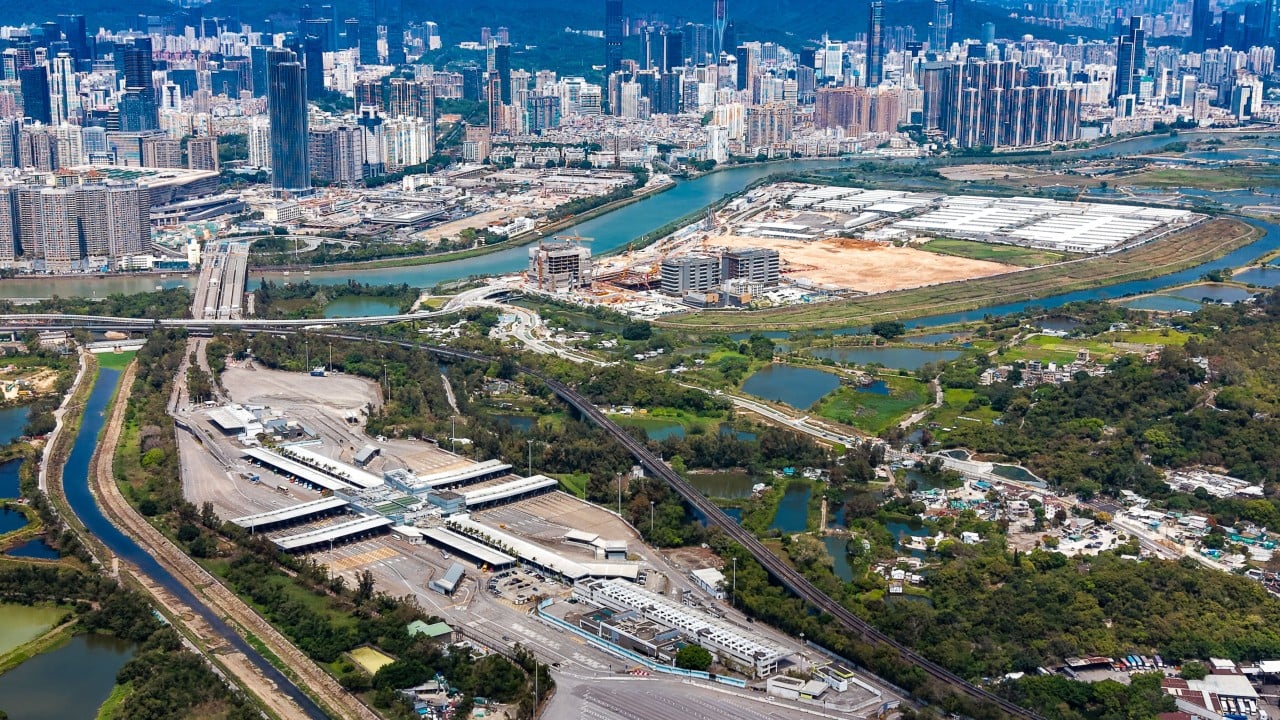
Hong Kong is finally cutting the red tape at the border. For years, the boundary between Hong Kong and Shenzhen felt like a hard wall for businesses trying to move data, cash, or research samples. The government is moving to fix this layout. New legislative updates submitted to the Legislative Council show a massive shift in how the 30,000-hectare Northern Metropolis project will operate. It is not just about building apartments or pouring concrete anymore. It is about making the border porous for technology and capital.
The Development Bureau unveiled plans to launch pilot projects this year right inside the Hetao Shenzhen-Hong Kong Science and Technology Innovation Co-operation Zone. They are starting small with the 87-hectare Hong Kong Park. But the real news is their open admission that these eased rules will expand to other parts of the Northern Metropolis later. If you run a tech company or invest in biotech, you need to understand what this means right now. The old ways of doing business across the Shenzhen river are ending.
The Real Intent Behind Easing Border Barriers
Most people think the Northern Metropolis is just a massive land bank. That is a mistake. The real goal is to fix Hong Kong's weak research and development spending, which sits at just 1.1% of GDP. Compare that to Beijing or Shenzhen where tech contributes up to 40% of their economic output. Hong Kong needs Shenzhen’s massive manufacturing ecosystem, and Shenzhen needs Hong Kong’s common law system and free capital flows.
To bridge this gap, the government is introducing six subsidiary laws designed to remove historical bottlenecks. The pilot program starting this year targets three specific elements.
- Data flows allowing research institutions to share secure datasets without crossing legal tripwires.
- Material shipments including critical biological samples and specialized construction parts that used to get stuck in customs for weeks.
- Capital movement to allow funds to support joint research projects without traditional offshore banking delays.
This is a massive deal for biotech firms. In the past, moving a blood sample across the border to a Shenzhen lab required piles of paperwork. Sometimes the samples spoiled before getting approval. Under the new rules, a "whitelist" system will manage the people and materials moving through dedicated boundary control facilities at a new western bridge. It simplifies everything. If you are on the list, you pass through fast.
Moving Past the Hetao Pilot Phase
The Hetao zone is just the testing ground. The Development Bureau explicitly stated that once they iron out the kinks in the Hong Kong Park, they want to scale these measures across the broader Northern Metropolis. This means areas like the San Tin Technopole, Hung Shui Kiu, and Lau Fau Shan will eventually get the same treatment.
Think about what happens when an entire economic zone gains frictionless access to mainland resources. It completely alters the math for multinational corporations. Take AstraZeneca as an example. The pharmaceutical giant has already shown serious interest in setting up inside the border zone. They are not doing it for cheap land. They are doing it because the border location lets them use Hong Kong’s trusted regulatory framework to test new drugs while drawing directly from Shenzhen's talent pool.
It is a pragmatic approach. The government realized that waiting for the entire 30,000 hectares to be built would take decades. By turning the Hetao zone into an immediate legal exception, they create an instant proof of concept. Investors do not have to buy into a long-term promise. They can see the policy working this year.
Streamlining the Internal Bureaucracy
You cannot build a new city layout if your internal planning laws are stuck in the 1990s. Alongside the cross-border updates, the government is aggressively cutting down domestic legal hurdles. They are altering how town planning, construction permits, and land compensation work in the New Territories.
Faster Planning in Non Conservation Areas
The Development Bureau is pushing ahead with plans to streamline town planning procedures. They faced plenty of pushback from groups wanting to include wetland buffer zones and agricultural land in these fast-track schemes. The government stood its ground. They are keeping the streamlined planning restricted to non-conservation areas to strike a balance between speed and environmental protection.
This means if your project sits outside sensitive ecological zones, your approval timelines will drop significantly. You will not spend years trapped in endless committee reviews.
Resolving the Land Compensation Trap
In traditional Hong Kong developments, land resumption disputes could drag on for years in the Lands Tribunal. The government originally proposed a strict six-month deadline for referring disputed compensation cases to the courts. They dropped that plan recently.
Why change course? Because forcing a hard deadline would have clogged the court systems. Instead of speeding things up, it would have created a massive backlog of litigations, stalling actual construction on the ground. By scrapping the deadline, they allow more time for out-of-court settlements. It keeps the bulldozers moving while protecting the legal rights of land owners.
Fixing the Construction Noise Constraints
Another practical change involves Construction Noise Permits. Traditionally, these permits only lasted six months, requiring constant renewals that disrupted project schedules. The new framework extends the validity period to a full year for specific industrial zones.
The government is also extending these simplified noise permit procedures to the new data facility cluster at Sandy Ridge. This area joins other major hubs like Hung Shui Kiu, Ngau Tam Mei, and the New Territories North new town. Contractors can now plan their machinery usage and night shifts with twelve months of certainty. It sounds like a minor administrative tweak, but it saves millions in idling costs for massive infrastructure setups.
How Funding Models Are Shifting From Traditional Coffers
The way Hong Kong pays for infrastructure is changing completely. Historically, the city relied on its massive fiscal reserves to fund public works. The Northern Metropolis is too big for that old playbook. It takes up a third of the territory's land mass.
Expect a heavy reliance on government-related entities and private capital markets. We will see state-backed enterprises issuing project-related debt and equity to act as credit multipliers. This mirrors how large-scale developments are funded across the border. It reduces the direct fiscal burden on taxpayers while letting international institutional investors get a piece of the action.
The Hong Kong Monetary Authority and the Hong Kong Association of Banks formed a dedicated taskforce recently to explore these new funding avenues. They are actively lowering premium requirements for site auctions in the region. This makes it easier for local developers to jump in without draining their cash reserves up front.
The Immediate Steps for Businesses and Investors
If you want to capitalize on this shifting economic layout, you cannot afford to wait until the legislation passes later this year. The bill goes to the Legislative Council next month. Once approved, the first batch of subsidiary laws will take effect rapidly. You need to position your operations now.
First, audit your supply chain and data dependencies. If your business relies on transferring proprietary algorithms, clinical data, or hardware prototypes between Hong Kong and the mainland, look closely at the Hetao zone specifications. See if your key personnel qualify for the upcoming whitelist system.
Second, re-evaluate your real estate footprint. The cost advantages of the Northern Metropolis are undeniable compared to Central or Kowloon. With the Northern Link railway projects moving forward, physical isolation is no longer a valid excuse to stay away.
Get your compliance and legal teams to review the upcoming legislative drafts as soon as they hit the assembly next month. The companies that move first into these newly integrated border zones will capture the best talent and the lowest operational premiums before the market prices them out. Easing the flow of resources is happening whether the old guard likes it or not. Stay ahead of it.