The air inside the stadium doesn’t circulate; it just gets heavier. By the eighty-eighth minute, the emerald grass under the floodlights looks less like a football pitch and more like an anvil where twenty-two men are being systematically broken down. You can smell the deep, earthy scent of churned turf mixed with the sharp tang of sweat and liniment. In the stands, sixty thousand people have stopped singing. They are doing something much more terrifying. They are holding their breath.
When the whistle finally blows, the sound is flat. Deflating. A 0–0 draw is the soccer equivalent of a long, unresolved sigh.
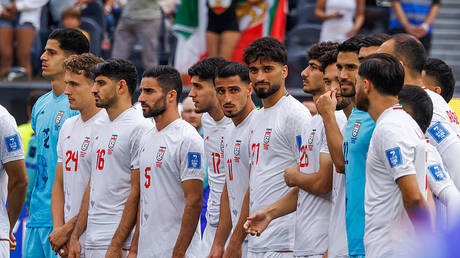
To the casual observer scanning a sports ticker, England sharing the points with Ghana looks like a sterile mathematical exercise. A box score. A minor data point on a spreadsheet that inches both nations closer to the round of 32. But numbers are a terrible way to measure the human heart. If you look closely at the pitch the moment the referee ends the agony, you don't see calculators. You see exhaustion. You see black shirts and white shirts collapsing into the grass, faces buried in damp jerseys, unified by a shared, grueling truth: survival in the World Cup is rarely beautiful.
We tend to look at international football through the lens of grand mythology. We want the cinematic overhead strikes, the tears of joy, the clear-cut villains, and the sweeping triumphs. But the reality of a tournament group stage is much grittier. It is a war of attrition.
Consider the modern footballer not as a millionaire icon, but as a pressure cooker with studs. For ninety minutes, a player like the English central midfielder isn't thinking about his legacy or his endorsement deals. He is thinking about his hamstrings, which feel like overstretched rubber bands, and the terrifying closing speed of a Ghanaian winger who seems to have an extra pair of lungs.
Ghana brought something to the pitch that standard match previews completely missed: an unapologetic, physical joy. They did not play like a team intimidated by traditional European football royalty. Every tackle was an eviction notice. Every recovery was a sprint executed with the desperate urgency of a man running out of a burning building. When the Ghanaian defenders leaped for a header, they stayed in the air long enough to look around. They turned the match into a suffocating, high-altitude chess game played at sea level.
England, meanwhile, carried the familiar, crushing weight of an expectant nation on their shoulders. It is a invisible backpack filled with millions of critical tweets, tabloid headlines, and the historical ghosts of tournaments past. You could see that weight in the way they passed the ball. It wasn't crisp. It was cautious. It was the footballing equivalent of walking through a dark house at night, toes extended, terrified of stubbing a foot on a piece of furniture. They wanted to win, certainly, but more than that, they were terrified of being the ones who made the mistake that opened the floodgates.
So, the game became a series of near-misses and tactical stalemates. A cross flashed across the six-yard box, inches from an outstretched boot. A goalkeeper made a fingertip save that looked routine on television but required a lifetime of accumulated reflexes to execute.
The real drama of this match wasn’t in the goals that were scored, because none were. The drama was in the math that governed every tactical substitution and every cautious back-pass. As the clock ticked down, both managers began to look less like generals commanding an army and more like accountants managing a volatile portfolio. A draw was dangerous, yes. A draw left everything down to the final group match. But a loss? A loss was a cliff edge.
When you watch a team realize that a point is enough to keep them alive, a subtle shift occurs. The ambition drains out of the collective body, replaced entirely by the instinct for self-preservation. The attackers stop making the risky sixty-yard overlapping runs. The midfielders stop trying the cheeky through-balls that can pierce a defense or result in a devastating counter-attack. The game slows down to a crawl. It becomes ugly, defensive, and agonizingly tense.
It is easy to sit on a comfortable sofa, thousands of miles away, and criticize a team for lacking creative spark. It is easy to demand flair when your own pulse isn't hammering at 180 beats per minute. But out on that pitch, under the glare of the lights and the scrutiny of the world, a point feels like a lifeline thrown into a choppy sea. You grab it. You don't complain about the texture of the rope.
The stadium eventually empties, leaving behind a graveyard of plastic cups, discarded flags, and the lingering hum of thousands of departing voices. The players march down the concrete tunnels, their boots clattering like old bones against the floor. There are no celebrations in the dressing rooms tonight. No champagne. Just ice baths, medical tape, and the quiet realization that the journey continues for another few days.
Both teams are still standing, bruised and breathless, on the threshold of the knockout rounds. They did not conquer the mountain today; they simply earned the right to climb it for another ninety minutes. In the grand theater of the World Cup, sometimes that is the greatest victory of all.