The air in the Situation Room is often described as clinical, but anyone who has spent an hour there knows it smells of stale coffee and the metallic hum of too many servers running at once. On this particular evening, the tension was thick enough to choke a ghost. Maps of the Strait of Hormuz glowed on the monitors, a narrow, jagged blue vein that carries the lifeblood of the global economy. One wrong move, one sparked fuse, and that vein would be severed.
We were staring at a choke point only twenty-one miles wide. To the north, the Iranian coastline loomed like a jagged wall of limestone. To the south, the Musandam Peninsula of Oman reached out as if trying to touch its neighbor. Between them lies the most dangerous stretch of water on the planet.
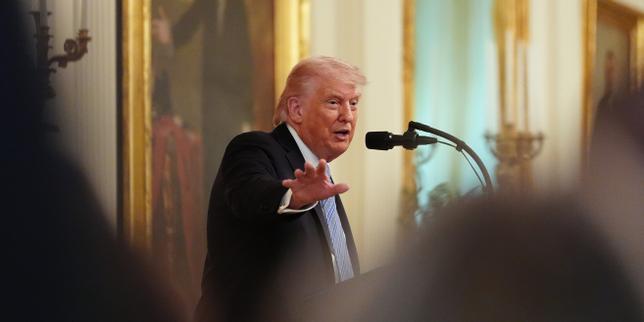
Donald Trump sat at the center of this storm, weighing a choice that felt less like diplomacy and more like a high-stakes game of chicken played with aircraft carriers. The headlines called it a "temporary renunciation of force." But for the sailors on the deck of a Maersk tanker or the families in Ohio wondering why their heating bill just spiked, it was something far more visceral.
The Ghost of 1988
To understand why the President paused, you have to look past the tweets and the press briefings. You have to look at the water itself. There is a memory that haunts the U.S. Navy in these parts—the memory of Operation Praying Mantis in 1988. It was the last time the U.S. and Iran truly traded blows at sea. It was fast, it was violent, and it left a trail of burning steel in its wake.
When the talk of "reopening the Strait by force" began to circulate through the West Wing, those memories resurfaced. This isn't a video game. When a Harpoon missile leaves its tube, there is no "undo" button. The logistics of a forced opening involve clearing mines that are essentially floating refrigerators packed with high explosives, invisible beneath the waves until they find a hull to kiss.
Imagine a merchant captain—let’s call him Elias. He has spent thirty years at sea. He knows the tides of the Gulf better than he knows the streets of his hometown in Greece. For Elias, the Strait isn't a geopolitical pawn. It’s a gauntlet. If the U.S. launches a "forceful reopening," Elias doesn't see a liberation. He sees his bridge becoming a target. He knows that Iran’s response wouldn’t be a conventional naval battle. It would be a swarm of fast-attack boats, small enough to hide in the radar clutter, closing the distance before a billion-dollar destroyer even knows they’re there.
The Arithmetic of Hubris
War is often a matter of simple math, but the math of the Strait of Hormuz is terrifying. Approximately 21 million barrels of oil pass through that needle’s eye every single day. That is roughly a fifth of the world’s daily consumption.
If the U.S. military had pushed forward with a full-scale kinetic operation to "clear" the Strait, the immediate reaction wouldn't have been a victory parade. It would have been a global cardiac arrest. The markets don't wait for the smoke to clear; they react to the first flash. We aren't talking about an extra five cents at the pump. We are talking about a systemic shock that would have paralyzed logistics chains from Shanghai to Stuttgart.
The President, known for his instinct for the "big deal," found himself staring at a ledger where the costs outweighed the gains by a staggering margin. Using force to ensure the flow of oil is a paradox; the very act of using that force likely stops the flow. You cannot pump oil through a war zone.
The Silent Pivot
The decision to step back wasn't an admission of weakness. It was a rare moment of strategic vertigo. The administration realized that the "maximum pressure" campaign had reached a point of diminishing returns where the next step was a cliff.
In the hallways of the State Department, the chatter shifted from "when do we strike" to "how do we de-escalate without looking like we’re de-escalating." It’s a delicate dance. You have to keep the threat credible enough to deter, but quiet enough to keep the insurance premiums for cargo ships from doubling overnight.
Consider the "tanker war" of the 1980s. It lasted years. It involved hundreds of ships being hit. But back then, the world was different. Today, our reliance on "just-in-time" manufacturing means that a forty-eight-hour closure of the Strait would trigger a domino effect. Components for iPhones would sit in ports. Medical supplies would be delayed. The human cost isn't just the soldiers in the line of fire; it’s the fragility of a globalized world that has forgotten how to function without a steady stream of tankers.
The Shadow of the Mines
The most terrifying weapon in this theater isn't a nuclear warhead. It’s a $15,000 naval mine. These are the "invisible stakes." Iran possesses thousands of them. They are low-tech, high-impact, and incredibly difficult to find.
If the President had ordered the reopening by force, the first step would have been a massive minesweeping operation. This is slow, tedious work. It’s the equivalent of trying to find a needle in a haystack while someone is throwing rocks at your head from the barn loft. For every day the U.S. spent "securing" the lanes, the global economy would bleed.
The pause—the "renoncement provisoire"—was a recognition of this reality. It was a realization that while the U.S. has the biggest hammer in the world, the Strait of Hormuz is made of glass.
The Human Toll of Certainty
We often talk about these events as if they are movements on a chessboard. But the pieces are people. They are the drone operators in Nevada whose eyes are glued to grainy infrared feeds of the Iranian coast. They are the Iranian Revolutionary Guard sailors, often young men with more zeal than experience, idling their engines in the heat of the Gulf, waiting for a signal.
When the order to stand down (or at least, to not stand up) was given, a collective, silent sigh rippled through the Mediterranean and the Indian Ocean. The "force" was kept in the holster. For now.
But the tension hasn't evaporated; it has merely changed state, like water turning to ice. The Strait remains a place where a single nervous finger on a trigger could rewrite the history of the 21st century. The President’s retreat from the brink wasn't a final chapter. It was a deep breath before the next plunge.
There is a specific kind of silence that exists on the bridge of a ship at night in the Strait. You can see the lights of the shore—sometimes close enough to feel like you could reach out and touch them. You see the radar pips of other vessels, all of them moving in a choreographed line, trying to pretend that the water beneath them isn't a powder keg.
That silence was preserved for another day. The tankers keep moving. The oil keeps flowing. But everyone on that water knows that the peace is held together by nothing more than a temporary decision to wait. The maps are still glowing in the Situation Room. The coffee is still stale. And the limestone cliffs of the Musandam Peninsula are still watching, waiting for the next ship to pass through the eye of the needle.
The world didn't end last night, but we caught a glimpse of how easily it could.