The air in the industrial zone of Kiryat Gat usually smells of dry earth and the faint, metallic tang of heavy machinery. It is a workingman’s scent. On a Tuesday night, that scent vanished, replaced by the sharp, acidic bite of chemicals that shouldn't be in the lungs.
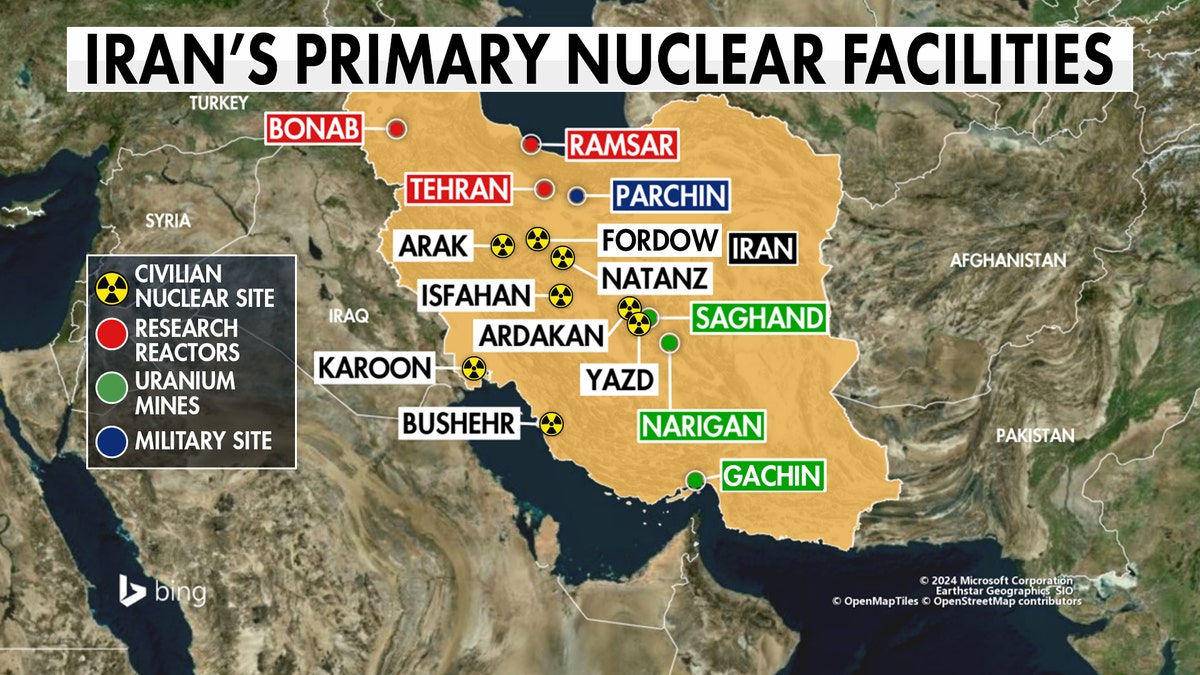
When the sirens began their rising and falling wail, it wasn't the sound of a drill. It was the sound of reality breaking. High above the atmosphere, ballistic missiles launched from Iran were re-entering the world, glowing like angry embers against the black. One of those embers didn't hit an open field. It found a chemical plant.
The Anatomy of a Second
Imagine a worker named Elias. He is hypothetical, but his experience is mirrored by every first responder who felt the ground shudder that night. Elias isn't thinking about geopolitics or the range of a Fattah missile. He is thinking about the safety valves on a pressurized tank.
Then, the world turns white.
The impact of a ballistic missile is not merely an explosion; it is a displacement of existence. The kinetic energy alone can liquefy concrete. When that energy meets a facility filled with volatile industrial compounds, the math changes from physics to a nightmare of chemistry. Fire erupted instantly. It wasn't the orange flicker of a campfire. This was a chemical blaze—hot, neon-bright, and fueled by substances that turn water into steam before it can even touch the flames.
The report from The Times of Israel noted the blaze with the clinical detachment of a news wire. But the clinical truth ignores the panic of a shifting wind. Firefighters arrived to find a structure that was no longer a building, but a massive, leaking battery of toxins.
The Invisible Ghost
The real terror of a chemical leak is its invisibility. You can see the fire. You can’t see the plume of anhydrous ammonia or the vaporized solvents creeping across the asphalt. These are the "invisible stakes" of modern warfare. In an era of precision strikes, the target is rarely just the site of impact. The target is the ecosystem surrounding it.
Hazmat teams moved in like deep-sea divers, their heavy rubber suits crinkling in the heat. They weren't just fighting fire; they were fighting a clock. Every minute the blaze roared was another minute that hazardous particles were being lifted into the thermal currents, potentially drifting toward residential neighborhoods.
The fear wasn't just of the blast. It was of the breath taken ten minutes later.
A Lesson in Volatility
Why does a missile hit on a chemical plant matter more than a hit on an empty warehouse? To understand this, we have to look at the "Secondary Hazard Cycle."
When a high-explosive warhead strikes a stabilized chemical environment, it triggers a chain reaction:
- Thermal Destabilization: Heat causes stable liquids to expand rapidly, bursting containment vessels.
- Aerosolization: The explosion mists the chemicals, turning liquid threats into airborne ones.
- Environmental Seepage: Firefighting runoff carries dissolved toxins into the groundwater.
This isn't a "game-changer"—to use a tired phrase—it is a catastrophe of compounding variables. The missile is the spark, but the infrastructure is the fuel. In Kiryat Gat, the emergency crews were essentially trying to solve a three-dimensional puzzle while the pieces were melting.
The Weight of the Shield
Israel’s air defense systems, like the Arrow and David’s Sling, are marvels of engineering. They catch falling stars. But no shield is perfect. When 180 missiles are screaming through the stratosphere, the law of large numbers takes over. A 90% interception rate still leaves eighteen impacts.
Eighteen chances for the sky to fall.
The night of the attack saw the largest ballistic missile barrage in history. While the Iron Dome handles the short-range "pipes" from Gaza, these long-range threats are different beasts altogether. They move faster. They carry more weight. When they fail to be intercepted, they don't just leave a crater; they leave a scar on the industrial heart of a nation.
The Silence After the Siren
By the time the sun began to creep over the horizon, the orange glow of the plant had faded to a smoldering grey. The fire was "contained," a word used by officials to signal that the immediate danger had passed, though the long-term work was just beginning.
The residents of the South didn't wake up to a different world, but they woke up to a quieter one. There is a specific kind of exhaustion that follows a night in a bomb shelter. It is a heaviness in the limbs and a fog in the brain. You check the news. You see the headlines about "hazardous leaks" and "chemical fires," and you realize how thin the veil is between a normal Tuesday and a localized apocalypse.
We often talk about war in terms of maps and arrows. We discuss "strategic depth" and "deterrence." But the reality of a missile attack is found in the smell of burnt plastic and the sight of a hazmat suit shimmering under a streetlamp. It is found in the frantic phone calls to elderly parents who can’t move fast enough to reach the "Ma'amad" (reinforced room).
The Residual Cost
The fire is out, but the ground remembers.
Environmental experts will spend weeks testing the soil around the Kiryat Gat plant. They will look for trace elements that shouldn't be there. They will monitor the air quality for the lingering ghosts of the explosion. This is the tax of modern conflict—a tax paid in respiratory health, in soil viability, and in the collective psyche of a population that has to wonder if the next siren will be the one that hits the "big one."
There is no easy way to wrap this in a bow. There is no "looking ahead" that offers a clean solution. There is only the grit of the cleanup and the knowledge that for one night, the sky turned copper, and the wind carried the scent of a disaster that was almost—but not quite—uncontainable.
The sirens will eventually stop. The smoke will clear. But the metallic taste in the back of the throat? That stays.