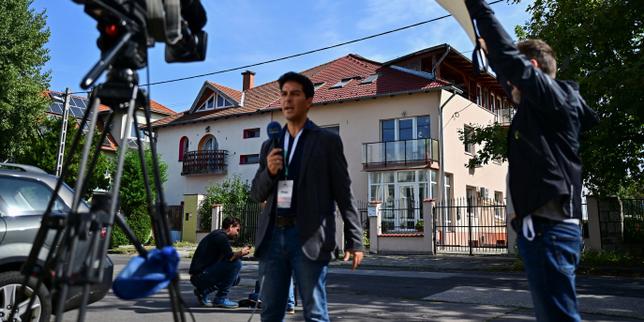
The transition happened at midnight. It did not arrive with the dramatic fanfare of a military coup or the chaotic static of a technical failure. Instead, the television screens across Hungary simply slipped into darkness, a deliberate, quiet erasure. For a few hours, the state-run channels and radio stations ceased to exist. When the signals flickered back to life, the logos were different, the studios looked sharper, and the voices carried a new, engineered certainty.
To understand what happened in Budapest, you have to look past the bureaucratic press releases detailing a "structural reorganization" of the state media apparatus. You have to look at the living rooms.
Imagine an elderly woman named Ilona. She lives in a small apartment in Szeged, where the radiator clanks in the winter and the only constant companion is the gentle hum of the television set in the corner. For decades, that box was her window to the world. It told her the weather, the news, and the state of her country. When the screen went black, the silence in her living room was heavy. And when the broadcast returned, it brought a carefully curated reality designed by the government of Viktor Orbán—one where external threats are always looming, the opposition is inherently treacherous, and the state is the sole protector of the nation.
This is not a story about a simple media blackout. It is a story about the systematic dismantling of shared reality.
The Architecture of a Total Capture
Public broadcasting is, by definition, supposed to belong to the public. It is funded by taxpayers to provide objective, non-partisan information. But over the course of a decade, the Hungarian government treated public media not as a civic institution, but as real estate to be occupied.
The midnight shutdown was the final, formal seal on a project that had been underway for years. The government consolidated the country's public television channels, radio stations, and the national news agency, MTI, under a single centralized umbrella. Hundreds of independent-minded journalists were quietly shown the door. Those who remained faced a stark choice: repeat the script provided from above, or join the ranks of the unemployed.
Consider how information flows in this new ecosystem. The national news agency began offering its stories to all media outlets across the country entirely for free. For small, cash-strapped regional newspapers and radio stations, this was an offer they could not refuse. Why pay journalists to investigate local stories when a polished, professionally written wire service is available at zero cost?
The catch, of course, was the content. The free news was meticulously scrubbed of any criticism of the ruling party. It amplified government campaigns, painted migration as an existential apocalypse, and framed every European Union policy as a direct attack on Hungarian sovereignty. By controlling the source of the water, the government managed to poison the entire well without most people noticing the taste.
The Mirage of Choice
Walking through the streets of Budapest today, a casual visitor might think the media environment is thriving. There are billboards, dozens of radio stations, and countless websites. The coercion is rarely overt. There are no censors sitting in newsrooms with red pens, physically cutting lines from articles.
Instead, the control is financial and psychological. The state is the largest advertiser in the country. It channels massive advertising budgets exclusively into media outlets that toe the party line, while starving independent publications of revenue. Private owners loyal to the prime minister bought up independent outlets, turning them into pro-government mouthpieces overnight.
The result is a psychological echo chamber. If a citizen switches from a state TV channel to a commercial station, changes the radio dial, and then opens a regional newspaper, they encounter the exact same narrative, phrased in the exact same way. It creates an illusion of consensus. When every voice says the same thing, the dissenting voice does not sound like an alternative viewpoint; it sounds like madness.
For journalists who refused to comply, the landscape became hostile. They found themselves barred from government press conferences, ignored by public officials, and labeled as foreign agents or traitors in the very media outlets they used to work for. The profession was stripped of its dignity, reduced to a choice between stenography for the powerful or exile to the fringes of the internet.
The Human Cost of a Distorted Mirror
We often talk about media freedom in the abstract, using terms like "democratic backsliding" or "press pluralism." But the true cost is paid in human relationships. It is measured in the fractures that open up across dinner tables.
When reality is fragmented, conversation becomes impossible. A granddaughter visiting her grandmother in the countryside finds that they no longer share a common language. One speaks of economic hardship, inflation, and the lack of teachers in local schools. The other, immersed in the alternate reality of state television, speaks only of Brussels conspiracies and the vital need to protect the nation from outside invaders.
The media apparatus does not just inform; it manufactures fear. And fear is the most potent political currency available. By keeping the population in a state of perpetual anxiety, the government positions itself as the only shield against chaos. The quiet shutdown of the old state media was the moment the machinery was optimized, the final gears clicking into place to ensure that no unauthorized signal could disturb the peace of the state's narrative.
The screens in Budapest are bright now, broadcasting high-definition imagery and flawless graphics. The anchors smile, their voices smooth and reassuring. But the light they cast into the living rooms of Hungary is a cold one, illuminating a world that exists only in the minds of those who built the transmitters.