The asphalt was still radiating the day’s trapped heat when the first trash can toppled.
In the neat, quiet suburbs of a northern Japanese city, tucked tightly between the neon glow of convenience stores and the dark, looming presence of the prefectural mountains, silence is a commodity. Neighbors respect boundaries. The rhythm of life is predictable. Train schedules are met down to the second.
Then came the heavy, rhythmic thud of padded paws on concrete.
For three days, a four-hundred-pound Asian black bear held an entire urban center hostage. It did not use weapons, demands, or ultimatums. It simply existed in a space where it did not belong, transforming a modern, high-tech community into a theater of primal anxiety.
To understand why this happens, look at a map of Japan. It is a nation of hyper-density surrounded by immediate, untamed wilderness. Cities do not fade into the countryside; they hit a wall of cedar and bamboo. When the mountain gets hungry, the wall vanishes.
The Midnight Intruder
Imagine standing at your kitchen window at 2:00 AM, rinsing a glass, looking out into the alleyway. You expect to see a stray cat, perhaps a neighbor returning late from a shift. Instead, a shadow rises on two legs. It blocks out the streetlamp.
That was the reality for residents who spent seventy-two hours looking over their shoulders.
The animal was first spotted near a riverbank on a Tuesday. By Wednesday morning, the local government had deployed drone units, police cruisers, and a patchwork crew of local hunters from the regional hunting association. Schools closed. Parents walked their children to transit hubs in tight, silent groups. The air carried the sharp, metallic tang of tension.
This was not a cartoon mascot. It was a powerful, disoriented predator running on pure adrenaline and survival instinct.
Every time the sirens wailed, the bear vanished. It slipped through the gaps between traditional wooden houses. It ran behind the corrugated steel walls of auto-body shops. It used the city's infrastructure against it, turning drainage ditches into highways and backyard gardens into hiding spots.
The hunt was not an exercise in tracking; it was a game of architectural hide-and-seek.
The Friction of Two Worlds
We tend to look at wildlife encroaching on human spaces as an anomaly. A freak accident. A random headline to skim before clicking on the next link.
The truth is far colder. It is a mathematical certainty.
As rural populations in Japan age and shrink, the buffer zones between dense wilderness and urban centers are dissolving. Abandoned farms turn back into brush. Orchards go unharvested, leaving sweet, rotting fruit hanging from branches like neon signs for hungry animals. The forest is reclaiming its old territory, and the bears are simply following the trail.
Consider the perspective of the hunting volunteers. Most of them are grandfathers. They wear bright orange vests over heavy wool shirts, carrying rifles that have been cleaned and oiled for decades. They are not mercenaries looking for a trophy. They are the thin, gray line between their grandchildren and the deep woods.
One hunter, whose hands were calloused from fifty years of working the soil, described the feeling of tracking a bear through a residential neighborhood. It is entirely different from hunting in the mountains. In the woods, you have space. You have sightlines. In the city, every corner is a blind spot. A bear can burst from a garage, a tool shed, or a bush in a fraction of a second.
The danger is absolute. One wrong shot can ricochet off brick or asphalt. The stakes are not just about stopping an animal; they are about keeping a neighborhood from turning into a crossfire zone.
The Capture on the Concrete
By the third afternoon, the bear was exhausted. The asphalt had worn its pads raw. The constant roar of sirens and the hum of drones overhead had driven it into a corner of an industrial park, wedged between a chain-link fence and a stack of shipping pallets.
The end was not cinematic. It was methodical, tense, and desperately quiet.
A team of veterinarians crept forward behind the shield of a police van. The tranquilizer dart made a soft thwip sound as it cleared the air. Then, the wait. Five minutes. Ten minutes. The crowd of reporters and officials held their breath, listening to the idling engines of the response vehicles.
When the massive head finally slumped against the concrete, a collective breath escaped the city.
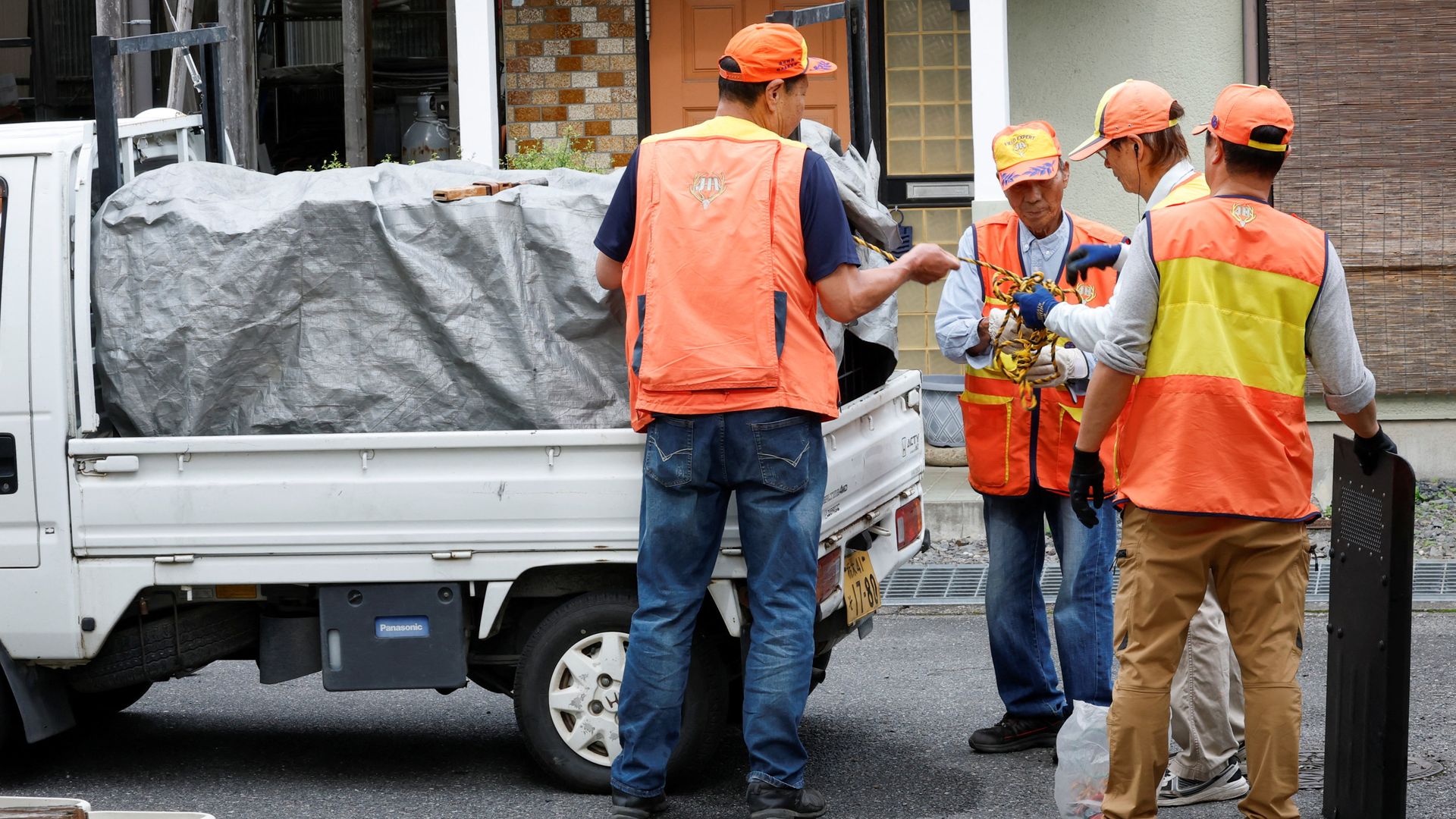
Ropes were secured. A heavy canvas tarp was laid out. It took six grown men, muscles straining and breath coming in ragged gasps, to lift the tranquilized animal into the back of a waiting truck. The fur was thick, coarse, and smelled of pine needles, mud, and the stale grease of city dumpsters.
The Long Shadow
The truck drove away, heading back toward the high, dark ridges of the prefecture. The police tape was rolled up. The schools reopened the next morning.
Yet, the atmosphere in the neighborhood changed. The illusion of absolute separation had been shattered.
When you walk down those streets now, you notice small things. People check their car doors twice. They look closely at the tree line before letting the dog out. They realize that the modern world, with its fiber-optic cables, automated convenience stores, and immaculate sidewalks, is built on a very fragile foundation.
The mountain is always watching. It does not care about city limits, property lines, or zoning laws. It only knows hunger, winter, and the ancient paths that existed long before the concrete was poured.



:max_bytes(150000):strip_icc():focal(665x0:667x2)/gettyimages-50733149-2000-8b129a2475974982a915418ce92a73d8.jpg)