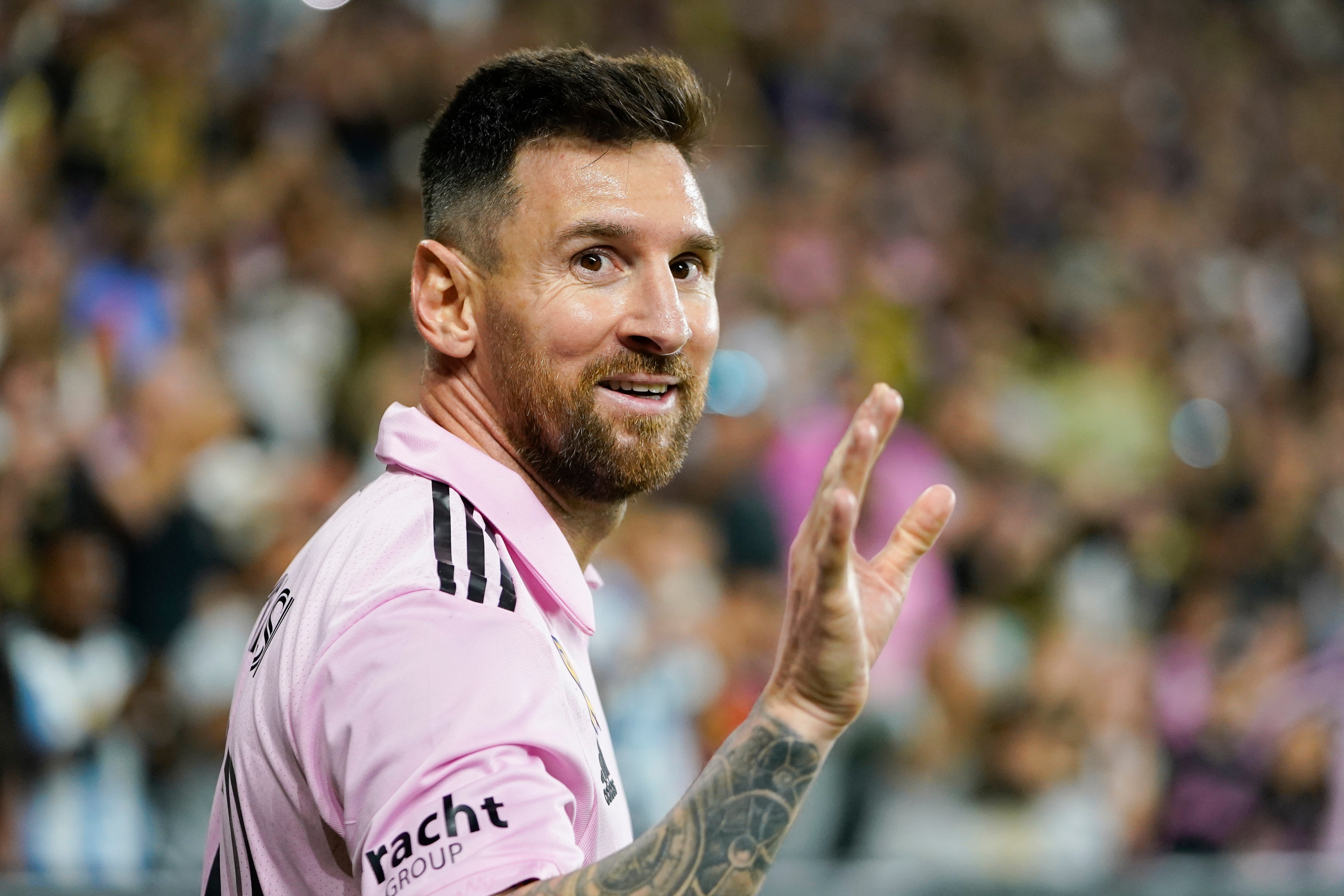
The Allianz Arena does not just hold noise; it traps it, compresses it, and hurls it back at the pitch like a physical force. On an ordinary Tuesday or Saturday, the sound is a wall of German chants, a rhythmic, thumping machine of support that has driven Bayern Munich for generations. But on this specific night, the machine stopped. The tactical shapes dissolved. The immense, crushing pressure of a multi-million-dollar transfer fee evaporated into the cold Munich air.
There stood Harry Kane.
He was not holding a match ball, nor was he staring down a goalkeeper from twelve yards out. He held a megaphone. His hands, usually curled into fists of concentration during a game, gripped the plastic device slightly awkwardly. He looked less like one of the greatest strikers of his generation and more like a guy who had wandered onto the stage at a local pub wedding.
Then came the opening chords—not from a guitar, but from thousands of lungs.
Today is gonna be the day that they're gonna throw it back to you.
It was Oasis. It was Manchester’s finest export, echoing through the heart of Bavaria, sung by thousands of Germans who standardly spent their weekends chanting in rhyming German couplets. In the middle of it all was an English captain, far from home, grinning like a schoolboy.
To understand why a world-class athlete singing a nineties Britpop anthem badly into a megaphone matters, you have to look past the stat sheets. Football journalism loves numbers. We talk about Expected Goals. We analyze heat maps. We track transfer valuations down to the last decimal point. In the summer of 2023, the number was one hundred million euros. That was the price tag hanging around Kane’s neck when he left Tottenham Hotspur, the only footballing home he had ever really known, to move to Germany.
Imagine moving your entire life to a country where you do not speak the language, where the culture is fiercely protective of its traditions, and where every single camera lens is focused on your face to catch the first sign of failure. It is isolating. The pitch is ninety minutes of familiarity, but the other twenty-two and a half hours of the day are an exercise in displacement.
Every local reporter wanted to know how the Englishman would adapt. Would he learn German? Would he understand the club's famous Mia San Mia ethos—the arrogant yet earned belief that they are simply better than everyone else?
The answer did not come in a press conference. It came through Liam and Noel Gallagher.
When the final whistle blew on that particular matchday, the traditional post-game celebration began. The players walked over to the Südkurve, the literal beating heart of the stadium where the most passionate fans stand. Usually, this is a choreographed affair. Clapping, waving, perhaps a coordinated jump.
But someone handed Kane the megaphone. The crowd began to chant for a song. Not a German football anthem, but a track that represents a very specific kind of British nostalgia.
When Kane started singing "Wonderwall," something shifted. He wasn't the expensive foreign mercenary brought in to buy a Champions League trophy. He wasn't the sterile icon of modern Premier League marketing. He was just a bloke sharing a song with people who loved the same beautiful, ridiculous game.
The crowd didn't just join in; they took over. The sound swelled, bouncing off the glass facades of the stadium, turning a cold tactical triumph into an emotional core memory.
Consider what happens next when an athlete breaks that invisible barrier between the pitch and the stands. Football fans are inherently cynical. They know players come and go. They know badges are kissed for the cameras and forgotten when a better contract arrives. Trust is a rare currency in the modern game.
By singing along, off-key and without a shred of self-consciousness, Kane did something that a hundred goals could not achieve. He bared his soul. He showed vulnerability. He admitted, without saying the words, that he needed them just as much as they needed him.
The English media often portrays Kane as a stoic, almost robotic figure. He gives perfectly safe interviews. He rarely loses his temper. He is the ultimate professional. Yet, watching him look up at the sea of red and white scarves, his face flushed from ninety minutes of running and the sheer adrenaline of the moment, that robotic veneer cracked completely.
He would later tell reporters that the moment was one of the absolute highlights of his career. Think about that for a second. This is a man who has scored hat-tricks in the Premier League, led his country to a World Cup semi-final, and broken goalscoring records that stood for decades. Yet, standing on the grass, singing an old rock song with a stadium full of foreign fans, ranks right at the top.
It reveals a truth about sports that we often forget in our obsession with trophies and tactical genius. Winning is great, but connection is the human purpose of the whole enterprise. A trophy sits in a glass case, gathering dust and reflections. A moment where forty thousand strangers sing your language back to you in a foreign city is something that settles deep into your bones.
The real magic of the moment lay in its sheer absurdity. Soccer in the modern era is hyper-managed. Public relations teams vet every tweet. Media trainers coach players to say absolutely nothing of substance for five minutes at a time. It is rare to see an unscripted emotion break through the corporate armor of a mega-club like Bayern Munich.
But you cannot script a stadium singing Oasis. You cannot fake the genuine, wide-eyed joy on Kane's face as he realized they knew every single lyric.
The stadium eventually emptied. The lights turned off, casting long shadows across the empty green grass. The fans walked out into the cool Munich night, their voices hoarse, their scarves wrapped tight against the chill. They went back to their normal lives, to their offices, their factories, their schools.
But they left knowing that the Englishman wasn't just visiting. He belonged.
On the surface, it was just a post-game celebration, a brief clip for social media to chew on for twenty-four hours before the next transfer rumor took over. Underneath, it was the moment an outsider truly arrived, proved not by the goals he scored, but by the song he shared.