The air in Corio usually smells of salt and heavy industry, a predictable brine that the locals stop noticing by the time they finish primary school. But on a Tuesday night that was supposed to be unremarkable, that smell changed. It became sharp. Metallic. Acrid.
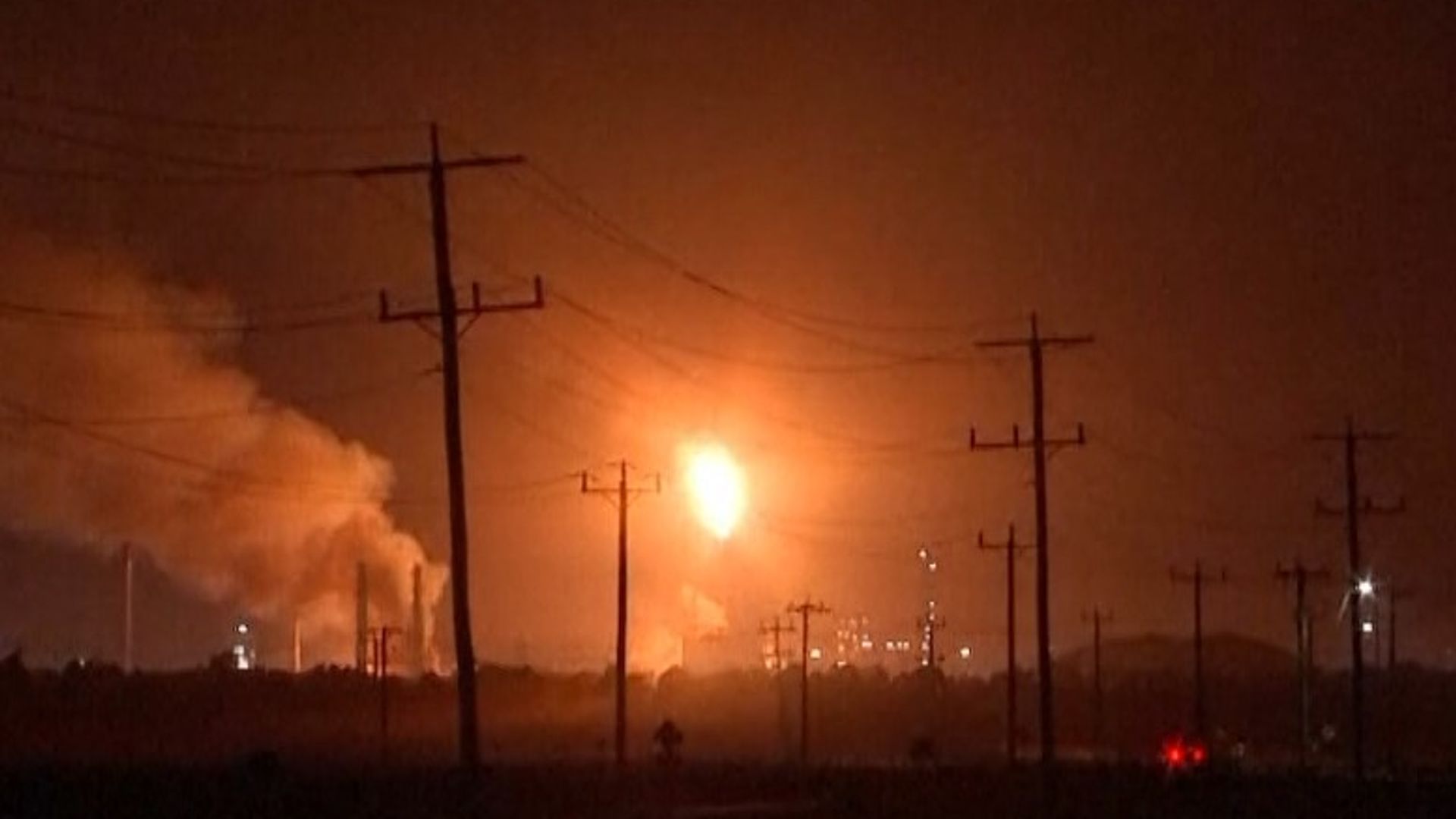
At the Viva Energy refinery, a sprawling labyrinth of steel pipes and pressurized vessels that serves as one of Australia’s last remaining pillars of fuel security, something went wrong. A fire broke out. In the clinical language of a press release, it was an "operational incident" involving a "compressor unit." In the reality of a country already white-knuckling its way through a supply crunch, it was a heartbeat skipping.
Imagine a man named Elias. He is a hypothetical composite of the thousands of shift workers who keep the gears of Victoria turning. Elias was finishing his coffee when the alarms cut through the hum of the night. He didn’t see a Hollywood explosion; he saw a glow that shouldn't be there, reflecting off the chrome of the distillation towers. He felt the vibration in his boots—a low, rhythmic thrumming that told him the system was fighting against itself.
While the fire crews moved in with the practiced precision of soldiers, the rest of the country remained asleep, unaware that their morning commutes, their grocery deliveries, and their weekend getaways had just become significantly more fragile.
The Fragility of the Pipe
Australia is an island nation that often forgets it is an island. We live in a world of "just-in-time" logistics, a philosophy that assumes the tap will always flow because it always has. We have dismantled our refining capacity over the decades, trading the soot and sweat of domestic production for the perceived efficiency of the global market.
But efficiency is the enemy of resilience.
When a refinery like the one in Geelong hits a snag, it isn't just a local headache for Viva Energy. It is a stone thrown into a very still pond. The ripples move fast. The refinery provides roughly half of Victoria’s fuel needs. When the "catcracker" or a crucial compressor goes offline, the math becomes brutal. You cannot simply wish more diesel into existence. You have to wait for a ship. And ships are at the mercy of tides, geopolitical whims, and the sheer, staggering distance of the Southern Ocean.
Consider the journey of a single liter of fuel. It isn't a simple stroll from the ground to your tank. It is a high-stakes relay race involving thousands of kilometers of ocean, complex chemical transformations at temperatures that would melt lead, and a fleet of trucks that must move in a synchronized dance across the continent. When the Geelong refinery stutters, the relay baton is dropped.
The fire was contained quickly. No one was hurt. On paper, the "setback" was manageable. But for a nation already staring down the barrel of a fuel crisis—driven by aging infrastructure and a global scramble for energy—there is no such thing as a small fire.
The Invisible Stakes at the Pump
Most people don't think about refinery compressors when they see the price of 91 Unleaded tick up by five cents. They think about corporate greed or distant wars. They rarely think about the physical reality of a machine in Corio that has been running for forty years, finally deciding it has had enough.
The real problem lies elsewhere. It’s in our collective vulnerability.
We are currently holding a few weeks’ worth of fuel in reserve. Think about that. If the ships stopped coming and the refineries stopped breathing, the wheels of the nation would cease to turn in less time than it takes to finish a moderate-length Netflix series. This isn't alarmism; it's a spreadsheet reality. We are a country built on long distances, yet we are incredibly short on the one thing that collapses those distances.
The fire at the refinery acts as a thermal camera, revealing the hot spots in our national security that we prefer to ignore. We see the bravery of the workers who ran toward the heat to shut down the valves. We see the engineers who will spend the next seventy-two hours straight staring at schematics, trying to bypass a damaged section of the plant. But we also see a system that is stretched so thin it has become translucent.
The Human Cost of a Cold Start
The impact of a refinery setback isn't felt in the boardroom first. It’s felt by the long-haul trucker who pulls into a station at 3:00 AM only to find a plastic bag over the diesel nozzle.
Let's look at another hypothetical: Sarah. She runs a small transport business out of Ballarat. For Sarah, the Geelong refinery is the sun around which her world orbits. When production slows, her costs don't just rise—her certainty vanishes. If she can't guarantee a delivery because fuel stocks are diverted to "priority services," she loses a contract. If she loses a contract, she loses the ability to pay the mortgage on the warehouse.
To Sarah, that "operational incident" isn't a headline. It’s a tightening in her chest. It’s the sound of her phone ringing with an update she didn't want to hear.
This is the emotional core we miss when we talk about energy policy. We treat fuel like a commodity, but it is actually the social glue of the modern world. It is the ability to visit a dying relative three towns over. It is the ability for a farmer to harvest a crop before the rain comes. It is the literal energy that keeps a society from reverting to the isolation of the nineteenth century.
The Myth of the Easy Fix
There is a temptation to say, "Just build more refineries," or "Just switch to electric."
Neither is a magic wand.
Building a modern refinery is a multi-billion dollar bet on a fossil fuel future that many are trying to move away from. It takes years. It takes political will that evaporates with every election cycle. On the other hand, the transition to electric vehicles—while necessary and inevitable—does nothing for the heavy machinery, the planes, and the ships that currently keep Australia fed and clothed.
We are in the "in-between" time.
It is a dangerous place to be. We are leaning on aging steel while we wait for a green future that isn't quite ready to carry the load. The Geelong fire is a reminder that the bridge we are walking across is old, and some of the planks are rotting. We can’t run across it, and we can’t turn back. We have to tread carefully.
The engineering required to keep a refinery running is a miracle of the modern age. These are cities of fire and pressure. They require constant vigilance. When we see a fire reported, our first instinct is to ask, "How long until it’s fixed?" We should be asking, "How have we allowed ourselves to become so dependent on so few points of failure?"
The Smoke Clears
By dawn, the fire was out. The smoke that had drifted over the bay dissipated, lost in the vast Australian sky. The news cycle moved on to the next scandal, the next sporting result, the next weather event.
But inside the gates at Geelong, the atmosphere remains tense. There is the smell of burnt insulation and the quiet, frantic energy of a recovery operation. They will fix the compressor. They will patch the pipes. The fuel will start to flow again, eventually.
However, the flicker has happened. The lights dimmed for a second, and in that second, we saw the truth of our predicament. We are a high-tech society built on a foundation of prehistoric liquids and nineteenth-century thermodynamics, governed by a "she'll be right" attitude that is increasingly disconnected from the fragility of our reality.
The next time you see the silver towers of a refinery glinting in the sun as you drive past, don't just see a factory. See a lung. It is breathing for you, for Sarah, and for Elias. And right now, it’s gasping for air.
The silence that follows a disaster averted is often louder than the explosion itself. It is a silence filled with questions we aren't quite ready to answer, lingering in the air long after the salt smell of the bay has returned to the streets of Corio.