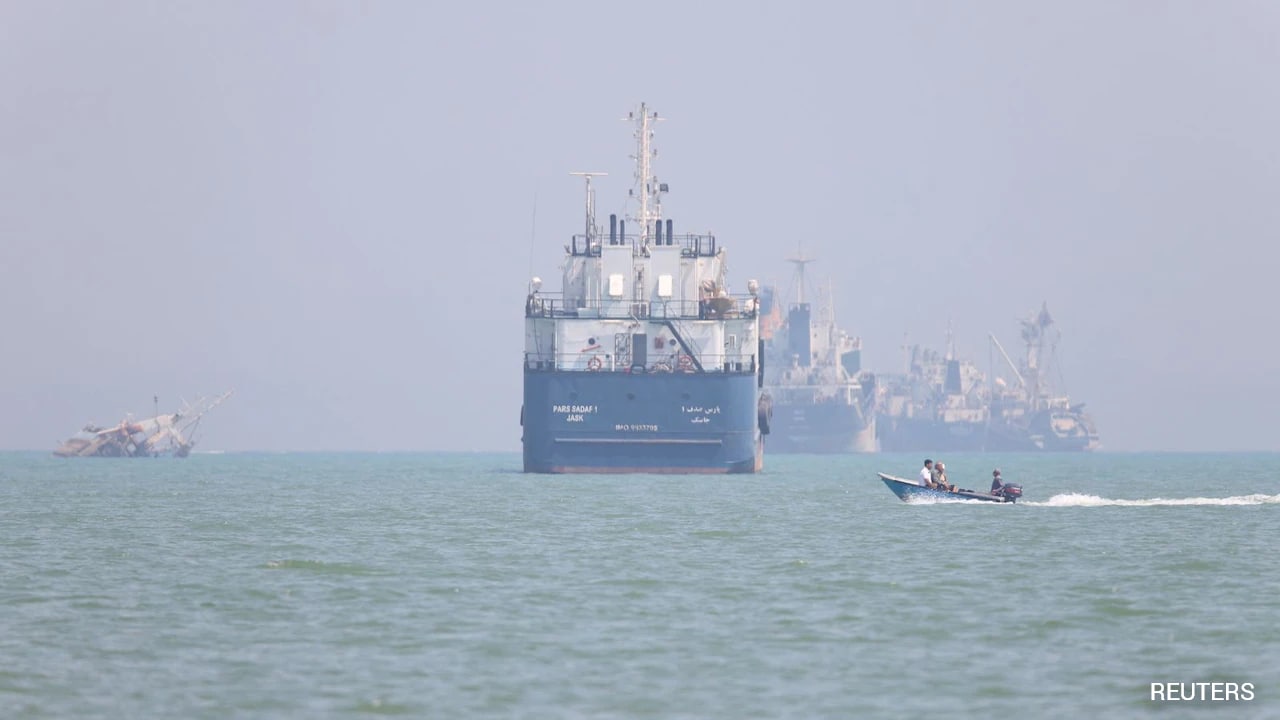
Don't let the headlines about a historic peace deal fool you. The ink isn't even dry on the framework agreement mediated by Pakistan, and we're already seeing the first major crack in the foundation. Early Monday morning, the United States and Iran announced a tentative memorandum of understanding (MoU) to end a brutal three-month war that has choked global energy markets. But hours after Donald Trump declared the deal "complete," Tehran dropped a massive asterisk on the entire agreement.
Iran is going to charge ships transiting the Strait of Hormuz. Meanwhile, you can read related developments here: The Weight of a Rumble in the Geneva Sky.
Iranian Foreign Ministry spokesperson Esmaeil Baghaei made it clear in a press briefing that while Tehran isn't calling these charges "transit tolls," they will absolutely be collecting money for "navigation services, environmental protection, ship insurance and other necessary services".
This directly contradicts the public stance of the White House. Just hours earlier, US Vice President JD Vance explicitly stated on CNBC that Washington expects the strategic waterway to remain "toll-free" over the long term. To see the bigger picture, we recommend the recent analysis by The New York Times.
What we're looking at isn't a minor administrative disagreement. It's a fundamental clash over who controls the most vital chokepoint in global commerce.
The Semantic War Over Maritime Fees
Let's look at the wording here because words matter in international diplomacy, especially when you're trying to stop a war.
Iran claims it has no intention of violating international maritime law by charging a direct transit toll. Legally, under the United Nations Convention on the Law of the Sea (UNCLOS), ships enjoy the right of transit passage through international straits like Hormuz. If Iran calls it a toll, Donald Trump has already labeled that "extortion".
So, what does Tehran do? They call it a service fee.
According to Baghaei, these fees are meant to offset the costs of keeping the strait safe, clean, and insured, a task Iran claims it shares with Oman. They are framing this as a business transaction, not a political blockade. If your mega-tanker uses Iranian navigational aids or benefits from Iranian environmental cleanup crews, you pay up.
But let's be real. If every commercial vessel passing through a narrow, 21-mile-wide strip of water is forced to pay a mandatory fee for "insurance" or "environmental protection" run by the Iranian government, it's a toll by another name.
The US side is already trying to downplay this. Vance mentioned that these exact details are what the two nations are going to "figure out in these technical negotiations" over the next 60 days. It's a classic case of kicking the can down the road to get a photo-op in Geneva this Friday.
Deep Mistrust and the Ghost of 2018
You can't blame anyone for being skeptical about this truce. Tehran explicitly admitted on Monday that a "deep mistrust" of the United States hangs over these talks.
"Unfortunately, it must be acknowledged that Iran's deep mistrust of the US stems from a long history of wrongdoing by American leaders," Baghaei told reporters. He went on to add that the framework is "merely a step towards reducing tensions".
When Iran talks about a history of wrongdoing, they aren't just talking about the recent three months of military strikes. They are talking about 2018, when the previous Trump administration unilaterally walked away from the JCPOA nuclear deal. Tehran remembers that perfectly. They aren't about to rely on a handshake deal with Washington without holding onto some serious geopolitical leverage.
And that leverage is the Strait of Hormuz.
By establishing a framework where Iran manages the strait and levies fees, they maintain a physical dial on global trade. If the US delays the release of Iran's frozen assets abroad or drags its feet on war reparations—both of which Iran claims Washington promised under this new framework—Tehran can simply adjust the "service fees" or tighten compliance checks on shipping lanes.
The reality is that Iran views its control over the strait not just as a revenue stream, but as an insurance policy against future American policy reversals.
What Happens to Global Shipping Now
The economic stakes are massive. The three-month war and subsequent naval blockade sent oil prices soaring and left cargo ships stranded throughout the region. Monday's announcement gave the global markets a temporary sigh of relief, with oil sliding and stock markets surging on the news of a ceasefire.
But the shipping industry isn't out of the woods.
European powers are already moving to secure their own interests in the waterway regardless of what Washington and Tehran agree on. French President Emmanuel Macron announced that France and Britain, with support from Italy and the Netherlands, are ready to deploy a maritime mission to the Strait of Hormuz. Macron vowed that Europe would "do everything" to ensure that no tolls are imposed on international shipping.
This sets up an incredibly tense environment for commercial operators. Tanker captains could soon find themselves sailing into a strait where:
- Iran demands service and insurance fees to clear passage.
- The US expects completely free, unhindered transit.
- European warships are actively patrolling to prevent Iran from enforcing those fees.
That doesn't sound like a stable peace. It sounds like a bureaucratic powder keg.
Furthermore, the regional dynamics are deeply complicated by the situation in Lebanon. Iran is pressuring the US to force Israel to stop its military operations in Lebanon as part of the broader regional peace package. If those parallel negotiations fail, the entire framework could fall apart before the 60-day window closes.
The Technical Battleground Ahead
The next two months will reveal whether this peace deal is worth the paper it's written on. The preliminary MoU simply stops the active fighting and lifts the immediate US naval blockade on Iranian ports.
The real work happens in the upcoming technical negotiations. The US wants a permanent, toll-free shipping lane. Iran wants its frozen assets back, war reparations paid, and acknowledgment of its maritime authority in the Gulf.
If you are tracking global energy markets or supply chains, don't watch the Friday signing ceremony in Geneva. Watch what happens to the maritime insurance rates and shipping guidelines issued over the next few weeks. The true test of this agreement will be whether a commercial oil tanker can pass Musandam without an Iranian patrol boat demanding a receipt for "environmental services". Peace has been declared, but the battle for control over the world's most critical economic choke point is just getting started.