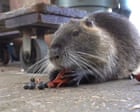
Neuty the nutria is gone, and for the thousands of people who followed his journey from a roadside rescue to a legal cause célèbre, the news hits hard. He didn’t just die as a pet. He died as a symbol of how human connection can sometimes override strict bureaucratic mandates. The 22-pound swamp rat, who became a fixture of Louisiana culture, passed away after a struggle with cancer, leaving behind a legacy that forced people to rethink the line between invasive species and family members.
Most people see a nutria and think of a pest. They see an orange-toothed rodent destroying wetlands. But the Lacoste family saw something else. They saw a companion that wore sweaters, snacked on treats, and lived a life far removed from the marshes. When the state tried to take him away, the public didn't just watch—they revolted.
The life of a swamp icon
Neuty's story started about three years ago. Denny and Myra Lacoste found him as an infant, struggling and alone after his mother was killed. In Louisiana, nutria are considered an invasive species. The state actually pays a bounty for every tail turned in to help protect the coastline. Keeping one as a pet isn't just unusual; it’s technically against the rules.
The Lacostes didn't care about the rules at that moment. They cared about the shivering animal in front of them. They brought him home, raised him, and watched him grow into a social, gentle creature. He wasn't aggressive. He didn't bite. He spent his days lounging in their home and his nights being a local celebrity. He had a personality that defied every stereotype about his species. He was "Neuty," and he was home.
That massive legal battle with Wildlife and Fisheries
The honeymoon period for Neuty hit a brick wall when the Louisiana Department of Wildlife and Fisheries (LDWF) got wind of the situation. In 2023, the state moved to seize him. Their argument was straightforward and legally sound: nutria are invasive, they carry diseases, and allowing one person to keep a pet sets a dangerous precedent for others.
From a conservation standpoint, the LDWF was right. Nutria cause millions of dollars in damage to Louisiana's marshes every year by eating the roots of plants that hold the soil together. They're a disaster for the ecosystem.
But the public didn't see an ecosystem threat. They saw a family being torn apart.
The backlash was instant and overwhelming. A petition to save Neuty garnered tens of thousands of signatures. People showed up at rallies. It became a political nightmare for state officials. Honestly, it was a classic case of the law versus the heart. Eventually, a compromise was reached that allowed Neuty to stay with the Lacostes under specific conditions, including regular vet checks and a "no-breeding" guarantee. It was a rare win for the little guy against the big machine.
What it's like to lose a viral legend
Cancer doesn't care about legal victories or internet fame. The Lacostes recently shared the news that Neuty had been diagnosed with an aggressive form of the disease. Despite the best efforts of his veterinary team—the same team that helped ensure his legal safety—he couldn't beat it.
Losing a pet is always brutal. Losing one that you fought the government to keep is a different kind of pain. For the Lacostes, Neuty wasn't a "specimen" or an "invasive rodent." He was a presence in their living room. He was a creature that recognized their voices and sought out their company. His death marks the end of a very specific chapter in Louisiana folklore where a giant rodent managed to unite a fractured public.
The reality of nutria as pets
Don't go out and grab a nutria from the swamp just because you liked Neuty. That's the biggest mistake people make after a story like this goes viral. Neuty was an outlier. Most nutria are wild, can be extremely territorial, and carry parasites like the "nutria itch" (a nasty skin rash caused by larvae).
The Lacostes put in thousands of hours of socialization. They also dealt with the reality of a pet that has very specific aquatic needs and a diet that can be tricky to manage in a domestic setting. Neuty thrived because he had a family dedicated to his specific quirks, not because nutria are easy pets. They aren't.
Why Neuty actually mattered to Louisiana
Louisiana has a complicated relationship with its environment. We love the marshes, but we also live in a place where nature is constantly trying to reclaim the land. The nutria represents that conflict perfectly. By embracing Neuty, people were able to find beauty in something usually labeled as a "problem."
He humanized a species that is usually seen through the scope of a rifle. While his death is a blow to his family and his fans, the conversation he started about wildlife management and the ethics of pet ownership stays behind. He proved that even an "invasive" creature can have value if given the chance to show its personality.
If you’ve followed this story from the start, the best way to honor Neuty isn't to find a new swamp pet. It's to support local wetland restoration projects. The species as a whole still threatens the very ground Louisiana is built on. We can love Neuty and still recognize that his wild cousins need to be managed for the sake of the coast.
Check your local wildlife regulations before ever considering an exotic pet. Support groups like the Coalition to Restore Coastal Louisiana. They're working to fix the damage that wild nutria cause. Neuty was special, but the environment he came from needs your help even more now that he's gone. Keep his memory alive by making sure the marshes he left behind actually survive for the next generation.