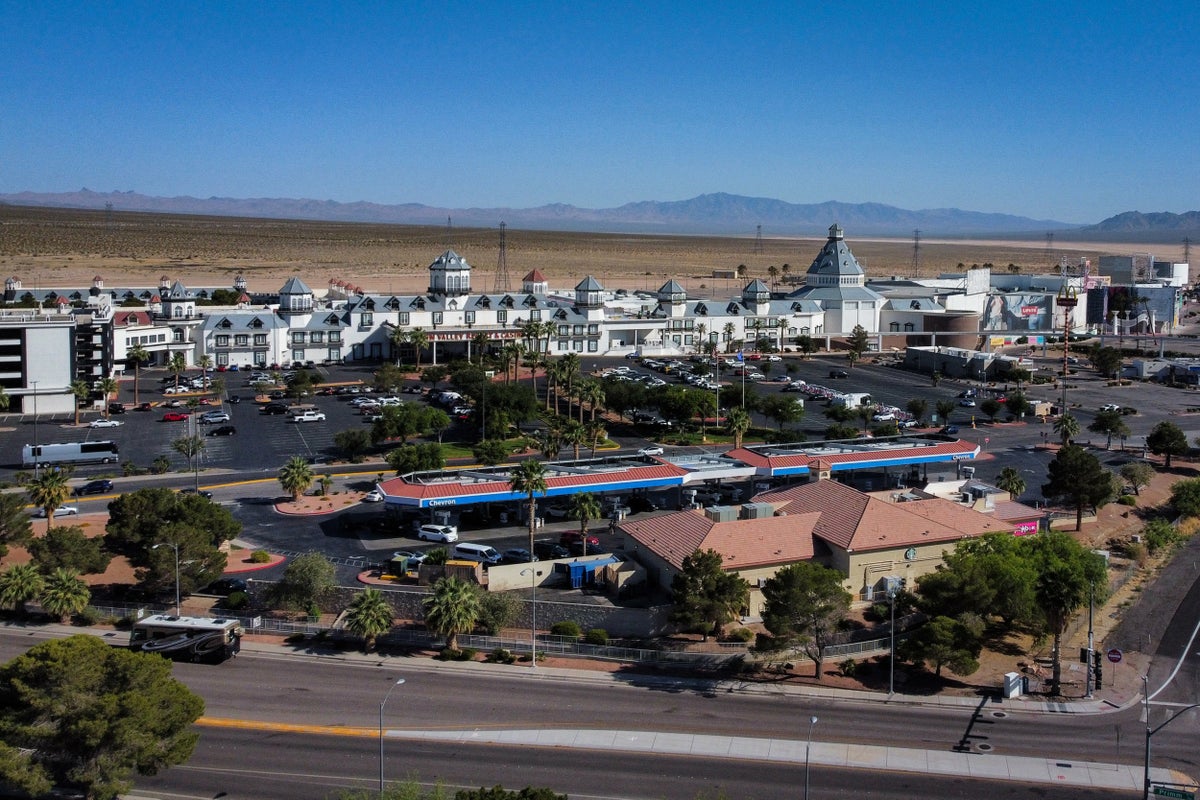
The desert does not care about economics. It waits. If you turn off the water, the sagebrush creeps back across the asphalt. If you turn off the electricity, the wind swallows the sound of human voices within a week. In the remote stretches of Nevada, survival is not a given. It is a daily negotiation funded by neon light.
When the rumors started filtering through the slot floor of the central property that held the town together, the air changed. It became heavy. People who had spent twenty years pressing buttons and pouring drinks began looking at the carpet. They knew the math. In a metropolitan center, a business closure is a tragedy for the workers. In an isolated Nevada settlement, the closure of the main casino is an execution order for the municipality itself.
The headline in the financial press was dry. It spoke of debt restructuring, asset preservation, and a newly inked corporate agreement that prevented a liquidation. But behind those sterile phrases lay something raw. A community was staring into the abyss of becoming a ghost town, and a last-minute signature pulled them back from the ledge.
The Gravity of a Single Roof
Consider the anatomy of an isolated desert town. It does not possess a diverse industrial base. There are no tech corridors or manufacturing hubs. Instead, the entire economy operates like a solar system, where every small business is a planet orbiting a single, massive sun. That sun is the local casino resort.
When that sun threatens to go dark, the gravity fails.
Let us look at a hypothetical resident to understand how this machinery functions. Call him James. James does not work at the casino. He owns a small auto repair shop three blocks down the highway. He fixes the delivery trucks that bring food to the casino kitchens. He changes the oil in the sedans driven by the shift supervisors. His wife runs a small daycare center that watches the children of the blackjack dealers working the graveyard shift.
If the casino doors are chained shut, James does not just lose a few customers. He loses his entire world. The dealers move away to find work in Reno or Las Vegas. The delivery trucks stop coming down the state route. The school district loses its tax base, the grocery store stops receiving fresh produce, and the municipal water system suddenly lacks the funding to maintain its pumps.
This is not a metaphor. It is the literal blueprint of how dozens of settlements across the American West have vanished into the dust over the last century. The silver ran out, the highway bypassed the town, or the main employer packed up. The result is always the same. Boarded windows. Rusted signs creaking in the wind. Silence.
The Anatomy of the Brink
The crisis did not happen overnight. It crawled into town slowly, hidden beneath balance sheets and corporate earnings reports. The property had been struggling under the weight of shifting travel patterns and aging infrastructure. To the outside world, it was just a dot on a map, a place where cross-country travelers stopped for a cheap steak and a few minutes at the tables before hitting the road again.
But to the people living there, it was the provider of health insurance. It was the sponsor of the little league team.
When a major employer faces total collapse, the psychological toll precedes the financial one. You could see it in the grocery store aisles. People stopped buying name-brand goods. They stared longer at the prices of eggs. The local diner saw its dinner rush thin out. Cash stopped moving through the town. It stayed locked in wallets, frozen by fear.
The threat of losing a gaming license or facing a sudden foreclosure meant that the city would lose over half of its tax revenue in a single stroke. The local government would be unable to pay its police officers or maintain its roads. The transition from a living town to a historical footnote can happen in less than six months.
Then came the negotiations.
The Deal on the Table
Corporate restructuring is rarely romantic. It happens in windowless conference rooms hundreds of miles away, handled by lawyers who have never tasted the dust of the town they are discussing. The debate centered on liquidation versus survival. To the creditors, the property was worth a certain amount dead, and a certain amount alive.
The breakthrough came when a new group realized that the value of the casino was inextricably linked to the survival of the community itself. A dead town cannot support a resurrected resort. The agreement was complex, involving debt write-downs, tax considerations from the state, and a commitment to immediate capital improvements.
But stripped of its legal jargon, the deal was simple. It was an agreement to keep the lights on.
The immediate relief was palpable, but it leaves behind an uncomfortable truth that rural communities across the country are forced to confront. Dependency is a fragile state of existence. When your entire life is tied to a single corporate entity, your citizenship is tied to their profitability.
The Cost of Staying Alive
The machines are spinning again. The parking lot has cars in it. The delivery trucks have resumed their routes, and James is back to changing oil filters for the morning shift workers. The town did not become a ghost town.
Yet, the experience leaves a scar. It forces a community to look at its own vulnerability in the mirror. It raises questions that are not easily answered by a corporate press release. How do you build a future when your foundation is built on the volatile whims of consumer entertainment? How do you convince the next generation to stay when they saw how close their hometown came to disappearing entirely?
The survival of this Nevada town is a victory. It is a testament to the fact that sometimes, the numbers work out in favor of the people who live outside the major metropolitan centers. But it is also a reminder of the thin line between a community and a memory. The neon sign continues to flash against the dark desert sky, a bright, artificial heart keeping the wilderness at bay for a little while longer.