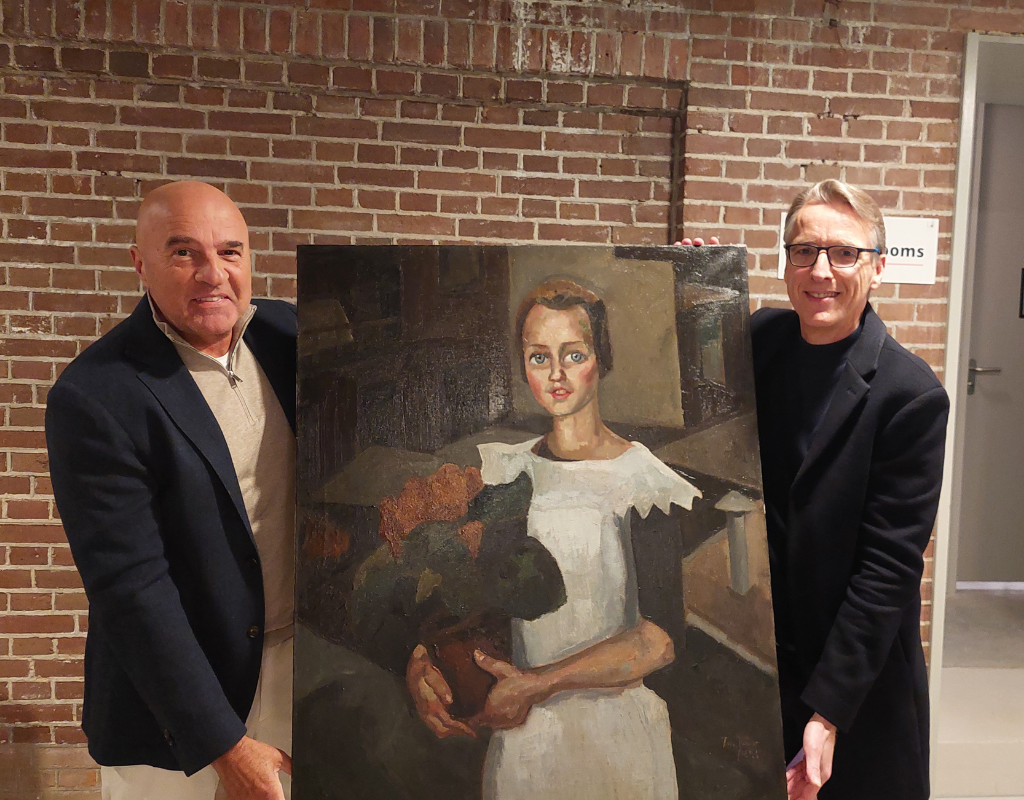
Justice doesn't always arrive with a gavel or a grand courtroom announcement. Sometimes, it shows up on a dusty wall in a private living room decades after the person who stole it is dead. That's exactly what happened when a painting looted by Nazis was discovered in the home of a Dutch SS commander’s family. It’s a gut-punch of a reminder that the ghosts of World War II aren't just in history books. They’re still hanging in people’s houses.
The piece in question, a 17th-century work titled The Adoration of the Magi, didn't belong to the family that held it for over seventy years. It belonged to a Jewish collector in Amsterdam named Samuel Noach. When the Nazis swept through the Netherlands, they didn't just take lives. They systematically stripped Jewish families of their culture, their wealth, and their history.
This isn't just a story about a missing canvas. It’s about the massive, ongoing effort to untangle the web of theft that financed the Third Reich and the uncomfortable reality that many "heirlooms" in European homes have blood on them.
The Commander and the Theft
To understand how a masterpiece ends up in the wrong hands, you have to look at the man who took it. Nicolaas van Tol was a high-ranking Dutch member of the SS. He wasn't just a soldier; he was a collaborator who leaned into the occupation with terrifying enthusiasm. While thousands of his countrymen were resisting or hiding, Van Tol was profiting.
He didn't find this painting in a shop. He took it because he could. During the occupation, the "Lippmann, Rosenthal & Co." bank was used as a front to seize Jewish assets. It was a legalized robbery scheme. Noach’s collection was liquidated, and pieces like The Adoration of the Magi were distributed among the Nazi elite and their local sympathizers.
Van Tol didn't see himself as a thief. He saw himself as a winner. That’s the scary part. He brought the painting home, and it became part of the family decor. His children and grandchildren grew up with a stolen piece of history as a backdrop to their morning coffee. They didn't ask questions. Or maybe they did and didn't like the answers.
Why Restitution Takes Decades
You might wonder why it took until 2026 for this to come to light. Why wasn't it found in 1945? The truth is, the aftermath of the war was chaotic. Millions of objects were displaced. While the "Monuments Men" did incredible work, they couldn't check every single private residence in Europe.
Most looted art doesn't sit in a museum. It sits in a hallway. It’s passed down from a father to a daughter. The "good faith" defense is a common shield here. Families often claim they had no idea the art was stolen. They say it was just "Grandpa's old painting." But in the case of a Dutch SS commander, that excuse is paper-thin. You don't get to be an SS officer and claim you bought your art ethically.
The discovery happened because of the Dutch Restitutions Committee and tireless provenance researchers. These people are essentially art detectives. They track the "pedigree" of a painting through auction records, shipping manifests, and old Nazi inventory lists. When they find a gap in ownership between 1933 and 1945, a red flag goes up.
The Noach Family Legacy
For the descendants of Samuel Noach, this isn't about the money. Sure, 17th-century Dutch art is worth a fortune. But this is about a stolen identity. When the Nazis took that painting, they were trying to erase the Noach family from the fabric of Dutch society.
Recovering it is a form of survival. It’s a statement that says, "You didn't win." The family has been working with researchers for years, piecing together fragments of a life that was shattered by the occupation. Finding this painting in the home of the very man who helped facilitate the persecution of Dutch Jews is a poetic, if incredibly dark, twist of fate.
The Complicity of Silence
Let’s talk about the family of the SS commander. They held onto this piece for decades after the war ended. Even after the horrors of the Holocaust were common knowledge. Even after the Dutch government began actively seeking out looted goods.
This brings up a massive issue in the art world. How many more pieces are out there? Experts estimate that tens of thousands of artworks stolen during the Nazi era are still missing. Many are likely in the hands of people who know exactly where they came from but don't want to lose a valuable asset.
It’s easy to judge the Van Tol family. It’s harder to acknowledge that this kind of quiet complicity happens every day. Holding onto stolen property because it's beautiful or valuable makes you a participant in the original crime. It’s that simple.
Tracking Your Own History
If you’re an art collector or you’ve inherited pieces from the mid-20th century, you have a responsibility. You can't just assume everything is clean. The art market is still grappling with these issues, and the laws are getting stricter.
Check the provenance. If a painting’s history is blank between 1933 and 1945, get it checked by a professional. Databases like the Art Loss Register or the German Lost Art Foundation are there for a reason. Don't wait for a researcher to knock on your door.
Provenance research is tedious. It involves digging through archives that are often handwritten or partially destroyed. But it’s the only way to ensure the art world isn't built on a foundation of theft.
The recovery of The Adoration of the Magi is a win, but it’s a small one in the grand scheme. It reminds us that the work isn't done. Every time a piece like this is returned to its rightful heirs, a bit of the historical record is corrected. It doesn't bring back the people who were lost, but it honors their memory by refusing to let the thieves have the last word.
If you suspect a piece in your collection has a murky past, hire a provenance researcher immediately. Do the right thing before history catches up with you.