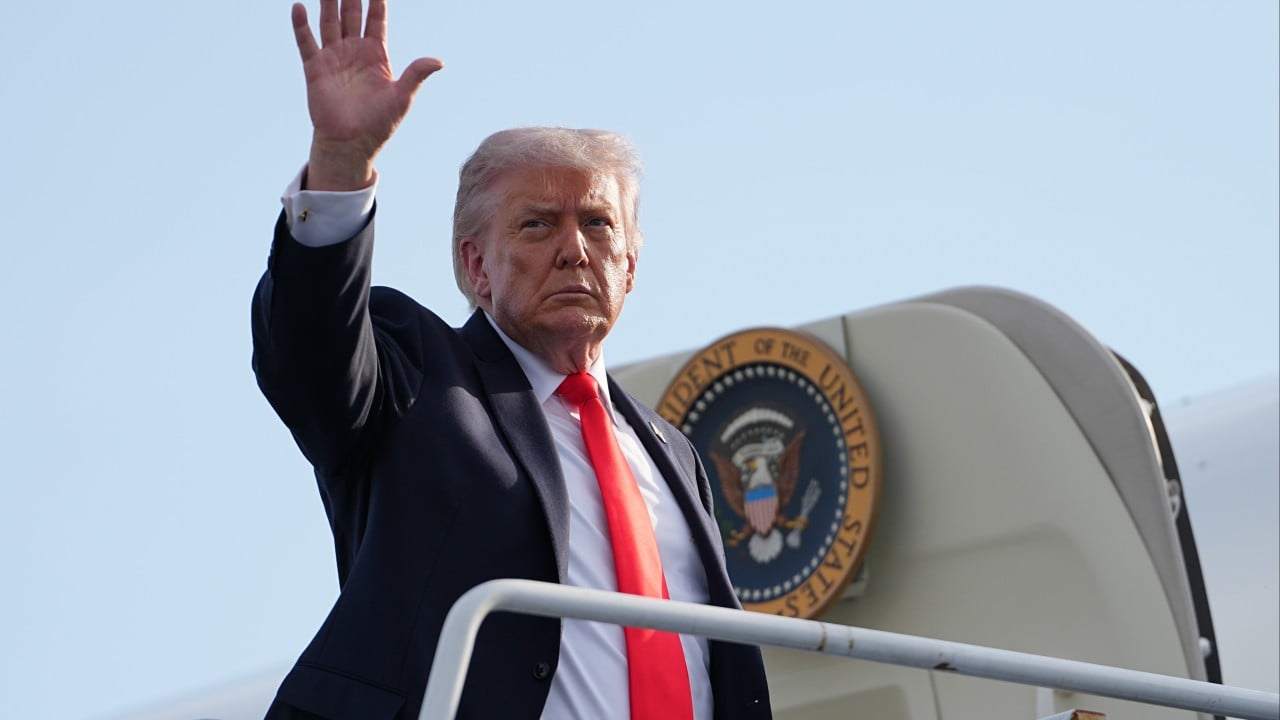
The United States Air Force is currently racing against a self-imposed holiday deadline to transform a high-end gift into a symbol of American power. The plan involves a Boeing 747-8, originally part of the Qatari royal fleet, being fast-tracked for service as the primary presidential transport by July 4. This isn't just about optics or saving a few bucks on a plane that was essentially handed over for free. It is a desperate attempt to bypass the chronic delays and staggering costs of the formal VC-25B program, which has been mired in contract disputes and technical failures for years.
The current fleet of VC-25A aircraft—the modified 747-200s we recognize as Air Force One—is aging out of the sky. These airframes are nearly 35 years old. Maintaining them is no longer a matter of routine service; it is an exercise in industrial archaeology. Parts have to be custom-machined because the original suppliers went out of business decades ago. Using a "gifted" luxury jet from Qatar sounds like a stroke of genius on paper, but the reality inside the hangars tells a different story.
The Shell Game of Presidential Aviation
To understand why the Pentagon is eyeing a Qatari hand-me-down, you have to look at the wreckage of the existing replacement contract. Boeing is currently billions of dollars in the hole on the VC-25B project. That project involved two 747-8s originally built for a bankrupt Russian airline, Transaero. When that deal collapsed, the U.S. government stepped in to buy the "white tail" aircraft at a discount. However, modifying a commercial jet to meet the hardening requirements of the Commander-in-Chief is not as simple as swapping out the seats and painting a blue stripe on the nose.
The Qatari jet, a 747-8BBJ (Boeing Business Jet), arrives with a world-class interior that would make a billionaire blush. It has staterooms, gold-plated fixtures, and medical suites. But it lacks the one thing a President actually needs to survive a crisis: survivability.
Integrating the necessary defensive suites—including infrared countermeasures, electromagnetic pulse (EMP) shielding, and secure satellite communication arrays—usually takes years of engineering. Forcing this onto a Fourth of July timeline suggests that the administration is willing to sacrifice some of these "hardened" features in exchange for a functioning, reliable airframe that won't break down on a tarmac in a foreign country. It is a trade-off between the prestige of a new plane and the raw necessity of a jet that actually flies.
Engineering the Impossible Deadline
Military aviation experts are skeptical of the "ready by July" narrative. The sheer volume of wiring required for secure "Top Secret" communications is enough to fill several miles of cable. In a standard VC-25B build, the interior is stripped to the bare metal so that every wire can be shielded and inspected. If the Air Force plans to keep the Qatari luxury interior intact, they are facing a nightmare of interference and security vulnerabilities.
There is also the matter of the "Nuclear Football." The presidential aircraft serves as a flying command center. It must be able to coordinate a nuclear strike while under fire. This requires specialized antennas and radomes that are not present on a luxury gift jet. Installing these components requires cutting into the fuselage, which triggers a massive recertification process with the FAA and the Air Force’s own safety boards.
If they hit the July 4 deadline, it will likely be a "soft launch." The plane might look like Air Force One, and it might carry the President, but it will probably lack the full suite of combat capabilities found on the legacy fleet. It would be a "shuttle" rather than a "war room."
The Geopolitical Price Tag
Nothing in global diplomacy is truly free. Qatar’s decision to hand over a multi-million dollar asset to the U.S. military is a calculated move in a larger regional power play. By embedding their "gift" into the very fabric of the American presidency, Qatar secures a level of soft power that cannot be bought with traditional lobbying.
Why the Gift Matters
- Defense Ties: Qatar hosts Al Udeid Air Base, the largest U.S. military installation in the Middle East.
- Energy Leverage: As a massive exporter of Liquified Natural Gas (LNG), Qatar is essential to European energy security.
- Political Insurance: A Qatari jet flying under the "Air Force One" callsign is a permanent reminder of the bilateral bond, making it much harder for future administrations to pivot away from Doha.
Critics argue that the U.S. should not be reliant on foreign gifts for its most sensitive military assets. There is a psychological cost to the American image. For a century, the presidential plane has been a 100% American product, built to American specifications from the ground up. Flying in a jet that was previously used by Middle Eastern royalty sends a message of decline, suggesting that the "Arsenal of Democracy" can no longer afford to build its own flagship.
The Boeing Factor and Fixed Price Traps
The move to the Qatari jet is a stinging rebuke to Boeing. The aerospace giant has been bleeding cash on fixed-price defense contracts. Under these deals, the company—not the taxpayer—pays for cost overruns. Boeing has already lost over $2 billion on the VC-25B program. By pivoting to the Qatari airframe for immediate needs, the government is essentially telling Boeing that its delays are no longer being tolerated.
However, this creates a bifurcated fleet. If the Air Force operates the Qatari jet alongside the legacy VC-25As and the eventual VC-25Bs, the maintenance logistics become a nightmare. You end up with three different types of 747s, each with unique parts, flight manuals, and pilot certifications. This is the opposite of efficiency. It is a reactive move born of necessity, not a proactive strategy.
Security Holes in the Luxury Lining
The most significant risk is the "backdoor" problem. When an aircraft is built from scratch for the President, the Air Force monitors every bolt and every chip from the factory floor. With a jet that has already spent years in foreign service, the security sweep must be absolute.
Every square inch of the plane must be X-rayed to ensure there are no passive listening devices or "sleeper" malware embedded in the avionics. Qatar is an ally, but in the world of signals intelligence, everyone is a target. The idea that a jet could be prepped for the President in a matter of months while ensuring it is "clean" from a counter-intelligence perspective is a tall order for even the most skilled technicians at Andrews Air Force Base.
The Cost of the "Quick Fix"
Taxpayers might think a free plane saves money, but the conversion costs for the Qatari 747-8 could easily reach nine figures. You aren't just paying for paint. You are paying for the engineering hours to integrate hardware that the plane was never designed to carry.
The engines on the 747-8 are the GEnx-2B67, which are significantly more efficient than the old engines on the 747-200. This provides a massive boost in range, allowing the President to fly further without refueling. That is a tangible benefit. But if the plane cannot withstand the thermal pulse of a nearby detonation or keep the President in contact with the Pentagon during a jamming event, the fuel efficiency doesn't matter.
We are watching a collision between political theater and military reality. The July 4 deadline is a PR goal. The Air Force knows that a plane is only "Air Force One" if it can perform the mission under the worst possible conditions. If this jet is rushed into service without those systems, it is nothing more than a very expensive, very fast flying office.
The decision to move forward with this aircraft proves that the current state of American heavy manufacturing is in a tailspin. We are now in a position where the leader of the free world is reliant on a refurbished gift because our primary defense contractors cannot deliver a replacement on time or on budget.
This isn't a victory for American ingenuity; it is a salvage operation.
The technicians at the 89th Airlift Wing are currently working three shifts to make this happen. They are stripping out the excess luxury to make room for the iron. They are checking every weld and every circuit. If the blue and white jet touches down on July 4, the crowd will cheer, but the engineers will be holding their breath. They know that underneath the fresh coat of paint is a complex web of compromises that define the modern era of American procurement.
The mission now is to ensure those compromises don't become catastrophes when the stakes are higher than a holiday photo op.