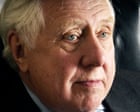
Roy Hattersley, the former Deputy Leader of the Labour Party who died at 93, is being eulogised as a titan who saved his party from ideological self-destruction in the 1980s. Prime Minister Keir Starmer led the chorus, praising his decades of service and his unyielding belief in a more equal Britain. Neil Kinnock remembered him as a socialist of deep conviction.
Yet the conventional narrative framing Hattersley purely as the pragmatic architect of moderate Labour misses the central paradox of his political life. He spent the first half of his career fighting the hard left to make Labour electable, only to spend the second half fighting his own party's modernisers to save its socialist soul.
He was the quintessential "nearly man" of British politics. First elected as the Member of Parliament for Birmingham Sparkbrook in 1964, he served 33 years in the House of Commons, but held true Cabinet power for a mere two and a half years as Secretary of State for Prices and Consumer Protection under James Callaghan. His death marks the end of an era, but more importantly, it illuminates the unresolved friction at the heart of the British political left.
The Civil War for the Party Soul
To understand Hattersley, one must look at the brutal internal warfare of the early 1980s. Following the collapse of the Callaghan government in 1979, the Labour Party lurched drastically to the left under Michael Foot. Activists aligned with the Militant Tendency began systematically purging moderate MPs through aggressive deselection campaigns.
Hattersley did not retreat. Alongside fellow moderates, he established Labour Solidarity in 1981 to shore up the party's crumbling centre.
This was not a safe administrative task. It was a vicious, back-alley political street fight. While the "Gang of Four" abandoned ship to form the Social Democratic Party (SDP), Hattersley insisted that the institutional Labour Party was the only viable vehicle for social democratic change in Britain.
When Neil Kinnock took the leadership in 1983, Hattersley accepted the role of Deputy Leader. Together, they forged a double act that spent nine grueling years dragging the party back toward sanity. They dropped unilateral nuclear disarmament, abandoned total opposition to the European Economic Community, and expelled the Trotskyist entryists who had colonised local constituency parties.
The Betrayal of the Market
The bitter irony of Hattersley's life is that the administrative machinery he built to defeat the hard left was subsequently weaponised by Tony Blair to marginalise everything Hattersley actually believed in.
He thought he was saving democratic socialism. Instead, he cleared the path for New Labour.
[Traditional Labour (Hattersley)] ---> [The 1980s Civil War] ---> [New Labour (Blair)]
       (Wealth Redistribution)         (Purging the Hard Left)        (Market-Led Economics)
For Hattersley, equality was not a rhetorical flourish; it was a measurable economic objective. He believed in wealth redistribution through aggressive taxation and comprehensive state education. When New Labour took power in 1997, Hattersley watched in horror as Blair and Gordon Brown embraced market-led solutions, private finance initiatives in public services, and tolerated widening income gaps.
He became one of the government's most devastating critics. Writing from his column in The Guardian and speaking from the backbenches of the House of Lords, the man once reviled by the left as a right-wing traitor became an unlikely hero to the socialist socialist rank-and-file. He argued that New Labour had sacrificed its core purpose on the altar of focus groups and middle-class voter appeasement.
A Career Measured in Disappointment
By any conventional metric of political ambition, Hattersley’s career was an epic in frustration. He entered Westminster with the glittering promise of a future premier, yet spent more than two decades on the opposition benches.
His solitary spell in the Cabinet was spent managing a portfolio—Prices and Consumer Protection—that was effectively an exercise in managing national decline amidst rampant inflation. He was a passionate pro-European who watched Britain drift toward Euro-scepticism, and a champion of comprehensive education who saw his party introduce academy schools and university tuition fees.
+-----------------------------------+-----------------------------------+
| Hattersley's Core Principles       | The Eventual Reality              |
+-----------------------------------+-----------------------------------+
| Aggressive wealth redistribution  | Rise of deregulated finance       |
| Pure comprehensive education      | Introduction of tuition fees      |
| Strict Europhilia                 | The Brexit withdrawal             |
+-----------------------------------+-----------------------------------+
His political longevity was sustained not by the accumulation of titles, but by an insatiable appetite for the argument itself. When Jeremy Corbyn seized the leadership in 2015, Hattersley broke cover once more, castigating the leadership for its failure to confront antisemitism and its passive stance on Brexit. He fought the left, then the right, then the left again.
The Last Intellectual Heavyweight
Beyond the committee rooms, Hattersley belonged to a generation of politicians who viewed writing and intellectual output not as a post-retirement hobby, but as a core requirement of public life. He authored over 20 books, ranging from political memoirs to heavyweight biographies of John Wesley and turn-of-the-century prime ministers.
He wrote his own copy. He formulated his own arguments.
This contrasts sharply with the managed, hyper-sanitised political class of the 2020s, where policy is dictated by special advisers and statements are scrubbed by communications teams. Hattersley was often pompous, occasionally stubborn, and frequently wrong about the shifting tides of public opinion, but he was entirely authentic.
The tributes flowing from Downing Street today praise a "giant of the movement," but the modern Labour Party operates on a blueprint that Hattersley spent his final decades warning against. His death is not just a moment of mourning for an elder statesman. It is a stark reminder that the battle over what the Labour Party exists to achieve—and whether it can ever truly balance electoral survival with radical economic equality—remains entirely unresolved.