The defense mechanism is as old as modern public relations. When a powerful public figure faces accusations of deep-seated racial bias, the immediate response is rarely a nuanced discussion of policy or systemic impact. Instead, the strategy almost always pivots to the personal rolodex. If a man can count one of the most famous Black artists in global history among his former social circle, the logic goes, the accusation of prejudice must automatically dissolve.
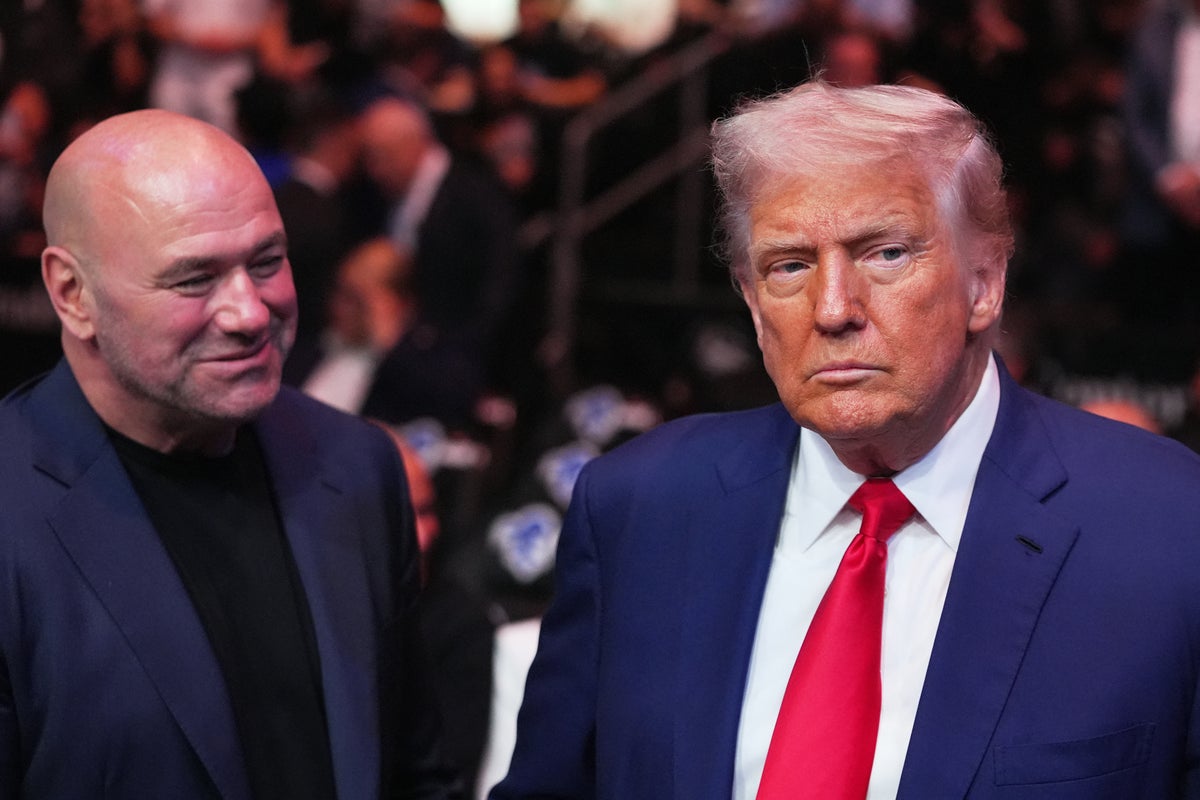
This is the exact logical framework UFC CEO Dana White deployed during an interview on The New Yorker Radio Hour. Defending his longtime friend and political ally Donald Trump against persistent labels of racism and fascism, White offered a strikingly specific historical receipt. He pointed to Trump’s mid-1990s relationship with Michael Jackson, noting that the late pop star frequented Trump’s properties and spent time around his family. To White, this proximity serves as an absolute, ironclad inoculation against charges of bigotry.
It is a comforting perspective for those who view human relationships through a purely transactional lens. However, the reliance on high-profile friendships to disprove structural animus ignores how power, celebrity, and wealth operate in American life.
The Utility of the Black Icon
Using proximity to legendary Black figures as a shield against political critique fundamentally misinterprets the nature of modern prejudice. For decades, America’s elite social circles have operated on a tier system where extreme wealth and global fame supersede standard social boundaries. A billionaire real estate developer hosting the world’s biggest pop star at Mar-a-Lago is an exercise in mutual branding, not an indicator of egalitarian social views.
The elite ecosystem allows for isolated pockets of admiration. It is entirely possible for an individual to harbor deep biases against a marginalized demographic as a collective while maintaining warm, transactional relationships with extraordinary individuals from that exact group. History is littered with examples of figures who carved out exceptions for the exceptional.
When Dana White argues that a relationship with Michael Jackson renders prejudice impossible, he reduces a complex socio-political reality to a simple checklist. The argument presumes that racism is solely an overt, cartoonish hatred that prevents any positive interaction with a person of color. It ignores the far more common reality of selective tolerance, where Black individuals are accepted, embraced, and defended only when their cultural capital or financial clout makes them undeniable.
When Celebrity Logic Collides with Structural Reality
During the interview, the conversation took an awkward turn when the reality of Jackson's own complicated history entered the frame. When reminded of the severe, documented allegations of child abuse that trailed Jackson throughout his life, White shifted ground, stating he was unaware of the specifics but re-emphasizing that Trump had defended Jackson at the time.
This exchange highlights the insular nature of the celebrity defense narrative. The focus remains locked entirely on loyalty, optics, and personal alliances, completely detached from broader social consequences or institutional accountability.
The defense falls apart under minimal scrutiny because it fails to address the actual basis of the critique leveled against figures like Trump. The accusations of racial bias aimed at the political apparatus do not stem from who sat in the VIP lounge at a Florida resort in 1994. They are rooted in observable, modern public actions. For instance, the discussion touched upon a controversial social media post shared by Trump that depicted former President Barack Obama in a deeply derogatory, racially charged manner.
Faced with this direct example, White’s defense mechanism was to plead ignorance to the specific post while doubling down on a blanket guarantee of his friend’s character.
"I don't know about the Obama thing, to speak on that," White remarked, before asserting that Trump is "on your team" regardless of race or religion.
This response represents a broader rhetorical pattern within modern sports and entertainment management. When forced to confront uncomfortable evidence of racial animus from powerful allies, the strategy is to look away from the specific offense, claim unfamiliarity with the data point, and retreat to abstract assertions of personal warmth.
The Broadcaster Strategy and the Nuance Gap
The sports world, particularly the fighting subculture championed by the UFC, has perfected this method of compartmentalized morality. In this environment, loyalty is the ultimate currency, and political critique is dismissed as mere noise generated by an out-of-touch media establishment.
By treating a decades-old friendship with a pop icon as a definitive rebuttal to contemporary political actions, the commentary relies on the assumption that audiences prefer simple, character-driven narratives over systemic analysis. It assumes the public will value a vintage photograph or a nostalgic anecdote more than the tangible impact of political rhetoric and policy.
This approach creates a massive nuance gap in public discourse. It replaces a serious examination of rhetoric, institutional power, and societal impact with a superficial debate about personal associations. The danger of this framework is that it successfully distracts from the core issue. Instead of evaluating the societal consequences of a political leader's words and policies, the conversation is dragged into a circular debate over the contents of a 1990s guest list.
A person's character is not a static ledger balanced by a single, high-profile association. True structural critique requires analyzing public actions, policy decisions, and systemic rhetoric. Relying on the celebrity alibi is a tactical retreat from that responsibility, signaling an inability to defend public conduct on its own merits.