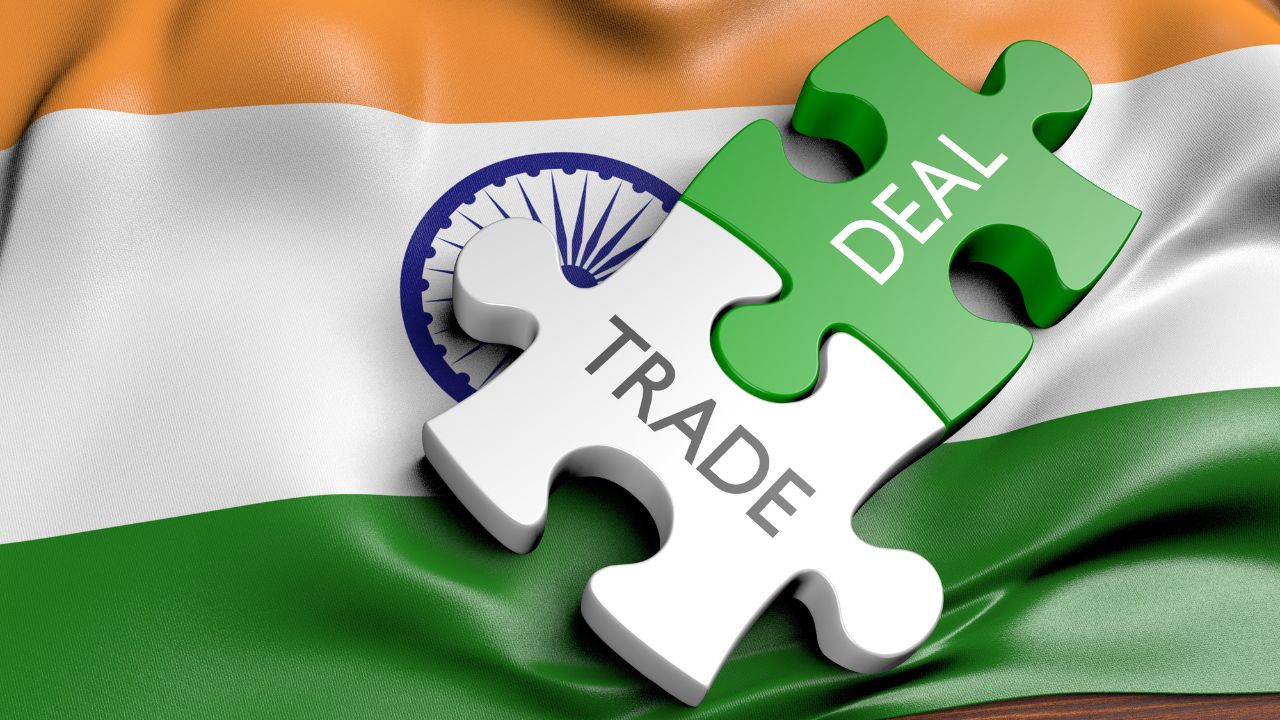
India is on the verge of a strategic pivot in its trade architecture. Commerce Minister Piyush Goyal has signaled that the Comprehensive Economic Partnership Agreement (CEPA) with Oman is slated for implementation as early as June 1. While the diplomatic machinery in Muscat and New Delhi hums with efficiency, a starkly different story is unfolding across the Atlantic. Negotiations with Chile have hit a series of structural snags that expose the limitations of India’s current trade expansion strategy.
This isn't just about moving containers. It is about energy security, the global shift toward green hydrogen, and the desperate need for India to secure critical minerals before China locks down the remaining global supply.
Why Oman is the linchpin
Oman is not a massive market by volume, but its geography is a superpower. For New Delhi, this deal is the first major domino in a broader Gulf Cooperation Council (GCC) strategy. By securing a deal with Muscat, India gains a friendly, stable entry point into the Arabian Peninsula that bypasses some of the more complex regional rivalries.
The math for Indian exporters is straightforward. Over 80% of Indian goods currently face a 5% import duty in Oman. Removing this barrier immediately benefits the labor-intensive sectors that the government is desperate to propping up: textiles, leather, and agricultural products. But the real prize lies in the industrial inputs coming the other way.
Oman serves as a primary source for chemical fertilizers and petroleum products. In a world where supply chains are increasingly weaponized, having a duty-free, guaranteed corridor for urea and DAP (Diammonium Phosphate) is a matter of national food security. Without these inputs, the Indian agrarian economy remains vulnerable to price shocks from more volatile actors.
The Green Hydrogen gamble
Beyond the immediate trade in goods, the CEPA is a blueprint for the energy transition. Oman has some of the most aggressive green hydrogen targets in the world. India possesses the engineering talent and the manufacturing capacity for electrolyzers. By integrating their economies now, New Delhi is positioning itself to be the primary technology partner for Oman’s transition away from fossil fuels. This creates a feedback loop where Indian firms build the infrastructure that eventually provides the carbon-neutral fuel India will need to power its own heavy industries.
The Chile friction
If Oman is the success story, Chile is the cautionary tale. The logic for a deepened trade agreement with Santiago is undeniable on paper. Chile sits on the world's largest lithium reserves and is a massive producer of copper. As India pushes for mass EV adoption and massive electrical grid upgrades, Chile should be its most important partner in the Southern Hemisphere.
The reality is messier.
The current negotiations are stuck in the "Product Specific Rules" (PSR) trap. Chile operates with a high degree of economic openness and expects the same from its partners. India, conversely, remains protective of its domestic manufacturing base, particularly in the chemicals and machinery sectors.
The Lithium bottleneck
The most significant hurdle is the "Value Addition" requirement. India wants to import raw lithium to process it domestically, supporting the "Make in India" initiative. Chile, however, is increasingly interested in moving up the value chain themselves. They are less inclined to remain a mere quarry for the world’s rising powers. They want investment in local processing plants, something Indian firms have been slow to commit to compared to their Chinese counterparts.
Furthermore, there is the issue of agricultural sensitivities. Chile is a global powerhouse in fruit and wine exports. Any significant tariff reduction in these areas triggers immediate political backlash from Indian farmers in the north. This leaves negotiators in a deadlock: India cannot get the minerals it needs without giving up protections on the high-value agricultural goods that Santiago demands.
The ghost of the RCEP exit
To understand why Goyal is pushing the Oman deal so hard, one must look back at India’s 2019 exit from the Regional Comprehensive Economic Partnership (RCEP). Since walking away from that massive trading bloc, India has been forced to play a game of bilateral catch-up.
The strategy has shifted from "Big Tent" agreements to "Laser-Focused" deals. The success with the UAE and the looming implementation with Oman show that this works when the partners have complementary economies—India provides the labor and technology, the Gulf provides the capital and energy.
Chile is different because it is a competitor in certain industrial spaces and a defensive player in others. The "Challenges" Goyal mentioned regarding Chile are a polite way of saying that the two nations have fundamentally different views on what "fair trade" looks like. Chile wants a bridge; India wants a filter.
Logistical nightmares and the freight factor
Even if the Oman deal starts on June 1, the shadow of the Red Sea crisis hangs over every shipment. Negotiating a 0% tariff means little if freight insurance premiums have tripled due to regional instability.
Oman’s ports, particularly Salalah and Sohar, are positioned outside the most dangerous chokepoints of the Strait of Hormuz and the Bab al-Mandab. This makes them vital transshipment hubs. For Indian exporters, the CEPA isn't just about saving 5% on duties; it’s about securing a "safe harbor" status for their goods in a maritime environment that is becoming increasingly unpredictable.
Comparing the two tracks
| Feature | Oman (CEPA) | Chile (Expanded PTA) |
|---|---|---|
| Primary Goal | Energy & Fertilizer Security | Critical Mineral Access |
| Major Hurdle | Red Sea Logistics | Value Addition Norms |
| Status | Implementation expected June 2026 | Indefinite Negotiation |
| Geopolitical Weight | High (Entry to GCC) | Critical (Lithium/Copper) |
The reality of the June 1 deadline
Deadlines in international trade are often more aspirational than fixed. While Goyal’s confidence suggests the legal scrubbing of the Oman text is complete, the final hurdle is always the domestic industry’s last-minute lobbying.
Indian petrochemical giants have expressed concerns about "dumping" of Omani plastics. These firms have significant political capital. If the government proceeds with the June 1 launch, it will be a clear signal that the Prime Minister’s Office has prioritized long-term strategic alignment over the short-term protectionism of a few domestic conglomerates.
Chile, meanwhile, will likely remain in the "study group" phase for the foreseeable future. Until India can offer a compelling investment package that goes beyond just buying raw ore, the South American nation has little incentive to lower its guard.
The contrast is clear: the road to Muscat is paved with mutual necessity, while the path to Santiago is blocked by the very industrial policies India hopes to protect. Success in the Gulf is a win, but it does not solve the looming resource scarcity that only a South American breakthrough can address.
New Delhi must decide if it is willing to trade its protectionist habits for the raw materials of the future. Until then, the Chile deal will remain a footnote in the shadow of the Gulf's success.