Political communication typically operates on a resource-allocation framework where parties trade capital—measured in advertising spend, media relationships, and policy dissemination—for marginal gains in voter preference. However, the systematic deployment of colloquial nomenclature by Donald Trump reveals an alternative optimization strategy: high-yield moniker engineering. By analyzing his public deconstruction of the portmanteau "Dumocrat" and his mechanical dissection of the orthography of the word "dumb" during public rallies, we can isolate a repeatable model of cognitive capture that operates entirely outside traditional political marketing rules.
This strategy acts as a linguistic monopoly. Rather than engaging in the high-cost, low-yield task of policy-driven persuasion, moniker engineering targets the structural constraints of voter memory and media distribution algorithms. The goal is not intellectual alignment, but the reduction of complex multi-variable ideological debates into single-variable, high-salience cognitive heuristics (mental shortcuts).
The Three Pillars of Moniker Engineering
To understand how a public spelling lesson on a monosyllabic insult functions as an asymmetric political asset, the mechanism must be broken down into its three component operational phases.
1. The Variable Discard Phase
In his rhetorical explanation of the "Dumocrat" label, Trump explicitly detailed the structural modifications required to build the term: discarding the silent terminal letter 'B' from the word "dumb" and extracting the character 'E' from "Democrat." In linguistic terms, this is the elimination of administrative overhead. By removing structural elements that do not contribute to phonetic or emotional velocity, the term achieves maximum cognitive efficiency. The remaining phonetic engine can be memorized instantly and repeated without friction across decentralized digital networks.
2. Semantic Anchoring
The process replaces an abstract political classification ("Democrat") with a fundamental cognitive assessment ("dumb"). This is a deliberate execution of semantic anchoring. Once an opponent's brand identity is successfully tethered to a baseline trait like cognitive deficit, every subsequent policy position, public statement, or legislative effort by that opponent is filtered through the primary anchor. The burden of proof shifts entirely to the target, who must constantly expend energy disproving the negative anchor rather than advancing their own policy narrative.
3. The Structural Redundancy Bypass
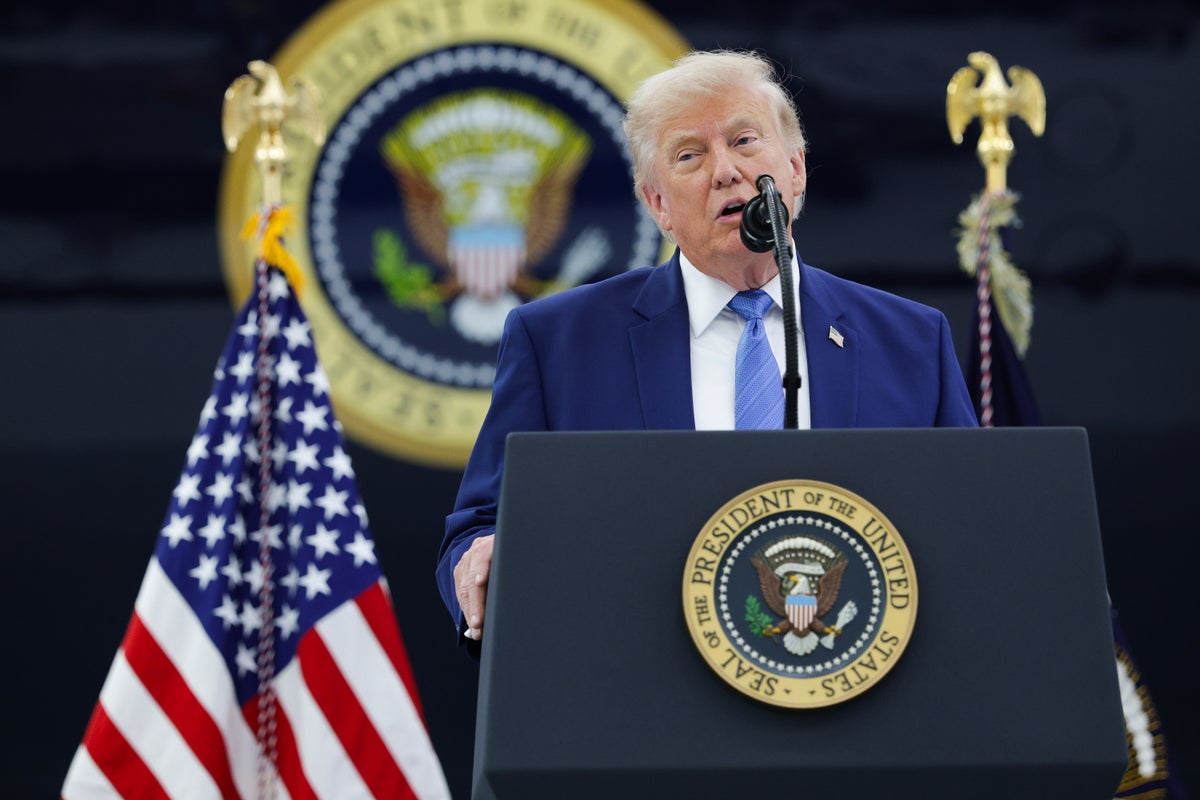
During his rally explanations, Trump noted that while the letter 'B' is orthographically mandatory for the word "dumb," it is functional dead-weight in spoken communication. Pointing out this orthographic quirk serves a dual purpose. First, it establishes a populist rapport by framing standard grammatical conventions as unnecessary institutional elite structures. Second, it deepens the cognitive stickiness of the insult by transforming a basic pejorative into an interactive, multi-step explanation. The audience does not merely hear an insult; they are walked through the manufacturing process of the linguistic tool itself.
The Attention Cost Function and Media Revenue Models
Traditional political campaigns operate under a linear cost function: to increase message penetration, a campaign must scale its financial inputs across television, digital, and grassroots channels. Moniker engineering creates a non-linear relationship where a zero-cost rhetorical asset generates exponential earned media value.
This asymmetry relies on a fundamental bottleneck in the modern media landscape: the algorithmic optimization of outrage and novelty. Media institutions operating on ad-supported revenue models face strict traffic requirements. A standard policy brief from an opposition leader offers low engagement metrics. Conversely, a sitting or former president delivering an ad-hoc, granular breakdown of how he spelled a schoolyard insult to target Hakeem Jeffries or the wider Democratic National Committee creates an immediate optimization loop.
[Rhetorical Moniker Engineering]
               │
               ▼
[Algorithmic Outrage / Novelty]
               │
               ▼
[Immediate Media Optimization Loop] ──► [Maximizes CTR & Engagement]
               │
               ▼
[Systemic Amplification of Nickname]
The press covers the spectacle to maximize click-through rates and user engagement. This coverage systematically amplifies the underlying nickname to millions of non-attendees, effectively subsidizing the politician's distribution costs.
The second limitation of standard political counter-strategies is the institutional reflex to engage in fact-checking or tone policing. When external analysts or legacy media networks publish breakdowns dissecting the crudeness of the "Dumocrat" label, they inadvertently validate the primary objective of the strategy: keeping the specific semantic anchor at the absolute center of public discourse. The media architecture is structurally incapable of ignoring the asset, meaning the moniker engineer effectively dictates the editorial agenda of their direct opposition.
Cognitive Load Management and the Liquidation of Nuance
Voter behavior data consistently demonstrates that the vast majority of the electorate operates under strict cognitive load constraints. Between professional, familial, and financial obligations, the average citizen lacks the bandwidth to evaluate complex legislative frameworks, such as the macroeconomic implications of cross-border tariff structures or the multi-tiered institutional failures highlighted in the DNC's post-2024 election autopsy reports.
Moniker engineering exploits this information asymmetry by liquidating nuance. It replaces systemic analysis with visceral, easily digestible binary choices.
- Policy Debates: Require high cognitive investment, long-form attention spans, and structural literacy.
- Moniker Engineering: Demands zero cognitive investment, relies on preexisting emotional biases, and functions through rapid-fire association.
When the DNC spends millions of dollars on a post-election autopsy to diagnose structural party vulnerabilities, they are producing a high-density corporate document. A moniker engineer can neutralize the impact of that multi-million-dollar analysis in a thirty-second rally segment by framing the entire institution as fundamentally lacking basic competence—symbolized by the revised spelling of their party name. The high-cost, analytical asset of the institution is thoroughly eclipsed by the low-cost, high-velocity narrative asset of the individual.
Execution Matrix: Comparative Historical Moniker Efficacy
The structural success of the "Dumocrat" pivot relies on a framework tested across dozens of political targets over more than a decade. The mechanics remain uniform: isolate a specific behavioral, physical, or institutional vulnerability and compress it into a permanent linguistic label.
| Target Class | Historical Moniker | Targeted Operational Vulnerability | Long-Term Strategic Outcome |
|---|---|---|---|
| Institutional Competitors | Low Energy Jeb | Bureaucratic inertia; lack of grassroots passion | Permanent devaluation of establishment lineage |
| Ideological Challengers | Lyin' Ted | Perceived political opportunism and shift in policy positions | Eradication of the opponent's core credibility anchor |
| General Opposition | Dumocrats | Systematic policy failures and institutional incompetence | Complete flattening of party platform into a single pejorative |
The execution matrix reveals that the specific words chosen are less critical than their phonetic harshness and their alignment with latent voter anxieties. The strategy does not require absolute factual accuracy to succeed; it requires absolute repetition and institutional predictability from the target.
The primary vulnerability of this model lies in market saturation. If every political actor adopts identical moniker engineering tactics, the structural novelty degrades, and the electorate develops a form of rhetorical immunity. This forces the engineer to continuously escalate the sharpness or absurdity of the linguistic adjustments to maintain the same level of media penetration. The transition from basic adjectives ("Crooked," "Sloppy") to granular, multi-step spelling demonstrations represents this exact operational escalation.
Strategic Playbook for Hyper-Fragmented Communication Environments
In an era defined by fractured media ecosystems, decentralized distribution networks, and rapidly decaying attention spans, the traditional rules of political messaging are obsolete. The operational reality is that the public space is no longer governed by the quality of an argument, but by the efficiency of its distribution mechanics.
Organizations and strategists looking to survive this environment must recognize that attempting to counter high-velocity moniker engineering with traditional, fact-heavy defensive communication is an asymmetric losing proposition. Defense must be abandoned in favor of structural redirection. The only viable counter-strategy is to starve the linguistic engine of its primary fuel: attention. This requires completely ignoring the semantic provocations, refusing the bait of media-driven outrage cycles, and aggressively deploying independent, highly compressed counter-narratives that operate on the same level of cognitive efficiency.
For a deeper dive into the specific tactical history behind these rhetorical shifts, the analysis titled Beyond 'Sneaky' DiFi: Here's why Trump has gotten 'Sloppy' with his nicknames for rivals provides an extensive cataloging of how these branding exercises evolved from early primary campaigns through executive governance. This context shows how consistent the underlining communication blueprint has remained across different political cycles.