The consumer wearable market operates on a razor-thin margin between biometric fidelity and industrial miniaturization. At a $399 base price point paired with an ongoing $5.99 monthly subscription fee, the Oura Ring 5 tests whether a 40 percent reduction in physical volume provides enough utilitarian value to justify hardware upgrade cycles for existing users or higher friction for new entrants. Evaluating this device requires stripping away consumer marketing and examining three fundamental axes: photoplethysmography (PPG) signal-to-noise dynamics, thermal and acoustic volume reduction, and long-term customer lifetime value (LTV) economics.
The Volumetric Compression Model: 6.09mm Engineering Constraints
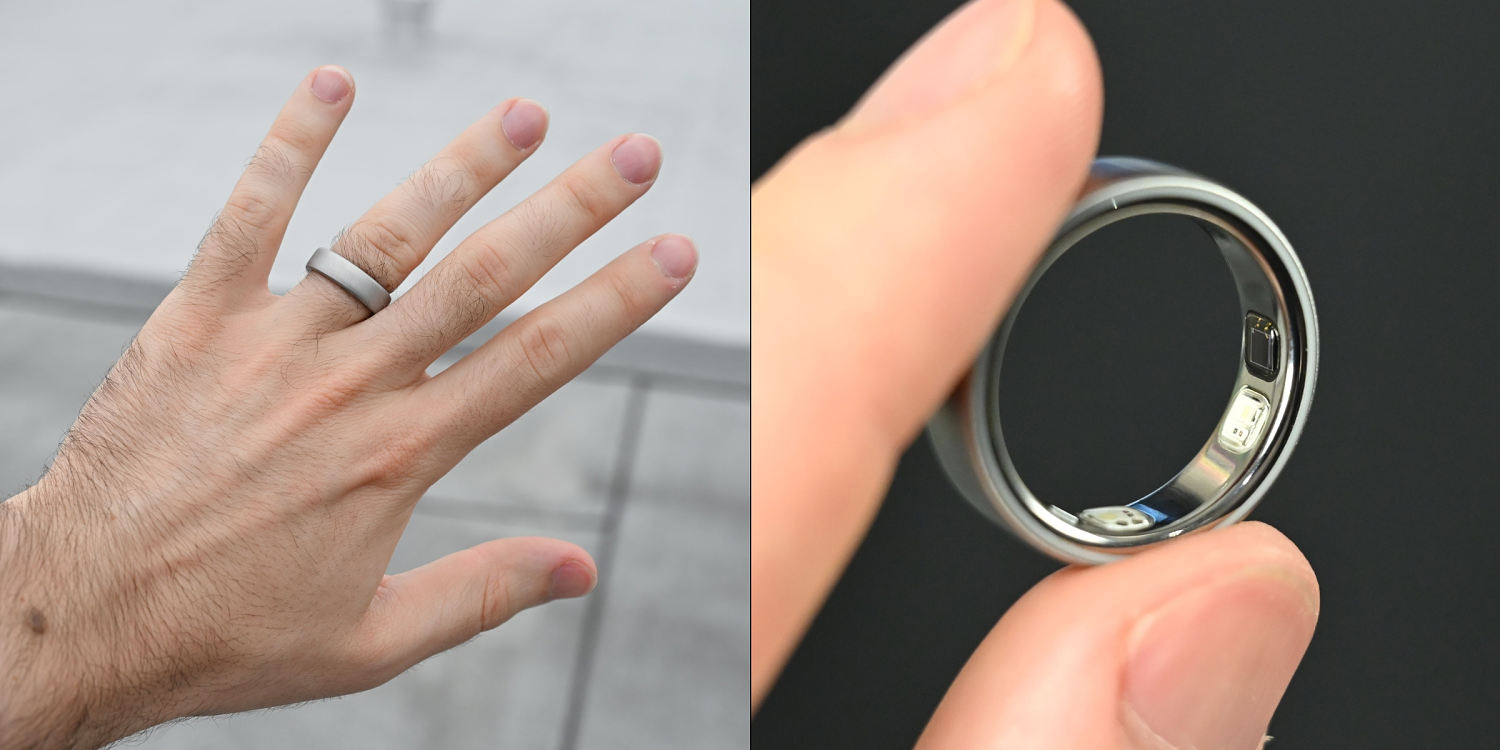
Reducing smart ring volume by 40 percent requires radical real estate rearrangement on the flexible printed circuit board (FPCB). The Oura Ring 5 narrows its width from 7.9mm down to 6.09mm and decreases thickness from 2.88mm to 2.28mm, dropping total mass to roughly 2 grams depending on size.
This spatial compression imposes structural engineering compromises across three distinct physical layers:
- Internal Battery Density: Standard lithium-polymer cells degrade rapidly when scaled down without altering chemistry. Maintaining a 6-to-9 day battery life claim within a 2.28mm shell requires shifting toward high-density solid-state or custom pouch cell geometry.
- Structural Shell Integrity: Eliminating interior epoxy in favor of a full non-allergenic titanium inner and outer frame prevents mechanical torsion from damaging internal traces, but restricts sizing options strictly to sizes 6 through 13, cutting off the extreme sizes (4, 5, 14, and 15) available in previous generations.
- Sensor Dome Projection: Decreasing sensor dome protrusion to 0.7mm improves epidermal contact comfort, yet increases sensitivity to displacement artifact during high-velocity digit movement.
The primary mechanical vulnerability of finger-based wearables remains rotational sliding. When an optical sensor shifts 15 degrees off the radial artery pathway, signal loss occurs immediately.
Signal Pathway Optimization vs. Optical Emitter Power
Hardware revisions in smart rings traditionally rely on adding more physical photodetectors to capture scattered light across varying skin tones and finger geometries. The Oura Ring 4 utilized 18 signal pathways across 3 photodetectors. The Oura Ring 5 reverses this trend, dropping to 12 signal pathways supported by 2 photodetectors and 2 tri-LED arrays (red, green, and infrared).
[Oura Ring 4 Architecture]
18 Pathways -> Low LED Intensity -> High Spatial Distribution -> High Power Draw

[Oura Ring 5 Architecture]
12 Pathways -> 4x LED Brightness -> High Transmittance -> Low Power Draw
To compensate for 33 percent fewer optical pathways, the light-emitting diodes operate at four times the luminous intensity of the previous generation. This architectural trade-off operates on specific biophysical mechanics:
Nighttime Heart Rate Variability (HRV) Accuracy
Higher intensity infrared light penetrates deeper into subcapillary tissue beds. This increased signal strength directly addresses the skin pigmentation attenuation problem, yielding a reported 12 percent improvement in nighttime HRV metric stability despite fewer collection points.
Motion Artifact Suppression in Active Tracking
Green LEDs, which target superficial arterial pulsations during movement, require high sample rates. Quadrupling optical power allows the algorithm to extract clean pulse wave signals during automatic activity detection (AAD), improving workout heart rate tracking accuracy by up to 19 percent compared to prior baselines.
Thermal Drift Management
Driving LEDs at quadruple power generates localized thermal output. Because body temperature sensing relies on micro-degree variations to map circadian phase shifts and early illness detection, the digital temperature sensor must be thermally isolated from the optical driver circuitry. Any failure in heat dissipation leads to false-positive temperature spikes in the user's basal body data.
Software Margin Expansion and Health Radar Integration
Hardware alone no longer sustains hardware companies. The financial engine driving the Oura platform is its recurring membership structure ($5.99/month or $69.99/year). The deployment of software features such as "Health Radar," nighttime blood pressure signal tracking, and GLP-1 weight-loss protocol integrations demonstrates an intentional shift from passive physiological tracking to active clinical decision support.
The economic model of the hardware-plus-subscription stack breaks down into clear unit economics:
- Base Hardware Margin: A starting price of $399 (Silver/Black) to $499 (Gold/Stealth) establishes an initial gross margin profile designed to cover retail distribution, custom charging dock manufacturing, and warranty reserves.
- Accessory Upsell: The introduction of an optional $99 anodized aluminum wireless charging case yields high gross margin percentages while capturing travel-focused consumers requiring extended off-grid power.
- Subscription LTV Expansion: Over a 36-month retention window, an active subscriber contributes $215.64 in high-margin recurring software revenue, raising total customer monetization to over $600 per unit sold.
Integrating third-party telehealth layers (such as Counsel Health) directly inside the app establishes a marketplace model where Oura monetizes user access to clinical consultations without incurring medical liability or physician overhead.
Biometric Utility vs. Consumer Alternatives
Evaluating whether the Oura Ring 5 delivers measurable returns depends entirely on the user's specific performance tracking requirements.
+------------------------+-----------------------+------------------------+
| Feature Variable       | Oura Ring 5           | Wrist Wearables        |
+------------------------+-----------------------+------------------------+
| Form Factor / Mass     | Ultra-light (~2g)     | Moderate-Heavy (30-60g)|
| Sleep Compliance Rate  | High (Unobtrusive)    | Moderate (Bulky)       |
| Live Workout Display   | Low (Phone Required)  | High (On-wrist HUD)    |
| Biometric Precision    | High (Arterial PPG)   | High (Arterial PPG)    |
| Battery Endurance      | 6-9 Days              | 1-3 Days (Smartwatch)  |
+------------------------+-----------------------+------------------------+
For users prioritizing continuous passive tracking—specifically sleep architecture, sleep apnea risk via nocturnal breathing disturbances, and basal temperature trends—the 2.28mm profile eliminates the friction points inherent to wrist-worn displays. Conversely, athletes requiring real-time visual feedback during high-intensity interval training or powerlifting will find ring-based form factors inherently limited. Finger expansion during heavy exertion distorts optical reading clarity, and the absence of an integrated display forces reliance on a secondary smartphone interface.
Strategic Deployment Recommendation
Purchase the Oura Ring 5 only if your primary operational goal is frictionless, non-intrusive sleep and recovery tracking, and you are prepared to commit to the ongoing subscription cost.
If you currently wear an Oura Ring 4, do not upgrade unless your specific finger geometry falls into the narrower width requirements (6.09mm), or you require the enhanced LED signal penetration for deep-tissue optical tracking. Existing users holding Generation 3 hardware will experience a structural jump in PPG sensor reliability, battery endurance, and wearability.
For users seeking an active workout companion with live biometric feedback on wrist displays, allocate capital toward dedicated GPS sports watches or chest-strap telemetry monitors instead.