Defending critical infrastructure against modern cyber threats requires moving away from manual patch management. When weaponized artificial intelligence automates vulnerability discovery, human security operations centers face an asymmetric disadvantage. The offensive asymmetry allows malicious actors to execute automated, concurrent scans and targeted exploits at scale, turning traditional human-led vulnerability management into a significant bottleneck.
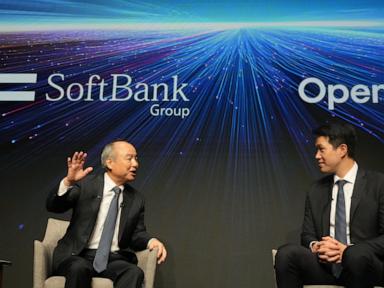
To alter this economic and operational dynamic, SoftBank Group Corp., SoftBank Corp., and their joint venture SB OAI Japan GK have introduced "Patching as a Service." Built on specialized OpenAI cybersecurity models, the initiative targets the 3,000 enterprise organizations that manage Japan’s transport networks, airports, power grids, and essential infrastructure. Examining this deployment reveals the architectural mechanics of machine-accelerated defense, its economic implications, and the operational limitations of AI-driven vulnerability management.
The Asymmetric Core: Machine Gun Offense vs. Bolt Action Defense
Traditional vulnerability assessment depends on discrete execution phases: periodic scanning, manual CVE (Common Vulnerabilities and Exposures) prioritization, and human remediation engineering. When adversaries integrate specialized large language models (LLMs) into their workflows, this sequential approach fails.
The threat vector changes in two ways:
- Automated Exploit Generation: Adversaries use generative models to synthesize custom exploit code immediately after a zero-day vulnerability or unpatched flaw is revealed, eliminating the historical buffer time between discovery and exploitation.
- Polymorphic Scanning Concurrency: Malicious AI engines can simultaneously alter scanning payloads and target millions of distinct endpoints. This bypasses signature-based intrusion detection systems and overwhelms defensive teams with massive volumes of alert data.
This shift creates a clear defensive vulnerability. Human analysis operates on a linear timescale, while AI-driven attacks scale exponentially. Defending critical infrastructure requires an analytical engine capable of parsing system architectures, identifying configuration flaws, and calculating remediation plans at machine speed.
Architectural Mechanics of Patching as a Service
The enterprise offering engineered by SB OAI Japan combines OpenAI's foundation model capabilities with the local infrastructure and operational data of SoftBank Corp. The service does not directly deploy code fixes to live production systems. Instead, it functions as an expert diagnostics and planning engine. The operational architecture follows a three-stage pipeline.
[System Architecture / Codebase Input]
                 │
                 ▼
┌───────────────────────────────────────────────┐
│ Stage 1: LLM-Driven Vulnerability Assessment  │
│ - Semantic parsing of dependencies & configs   │
│ - Identification of structural flaws           │
└───────────────────────────────────────────────┘
                 │
                 ▼
┌───────────────────────────────────────────────┐
│ Stage 2: Contextual Risk Prioritization       │
│ - Mapping vectors to network topologies       │
│ - Filtering out isolated non-critical alerts  │
└───────────────────────────────────────────────┘
                 │
                 ▼
┌───────────────────────────────────────────────┐
│ Stage 3: Automated Remediation Blueprinting    │
│ - Generation of deterministic code patches    │
│ - Isolation strategies for legacy software    │
└───────────────────────────────────────────────┘
                 │
                 ▼
[Expert Human Review & Manual Deployment]
1. LLM-Driven Vulnerability Assessment
Standard security scanners rely on deterministic rules and known signature matching, which often miss abstract logic flaws, complex race conditions, or misconfigurations across hybrid-cloud environments. The OpenAI-backed engine reads both raw codebase repositories and active system telemetry. By applying semantic understanding to software dependencies and configurations, the model identifies deep structural flaws that standard scanning tools routinely overlook.
2. Contextual Risk Prioritization
A common challenge for enterprise security teams is alert fatigue, where standard security tools generate thousands of low-level warnings without business context. The model addresses this by evaluating identified flaws against the organization's unique network topology. It determines whether a flaw is exposed to the public internet or contained behind multi-layer security controls. This analysis filters out isolated, non-critical alerts so engineers can focus on vulnerabilities that present an actual path for system intrusion.
3. Automated Remediation Blueprinting
Once a critical flaw is validated, the system builds a localized remediation strategy. For modern software architectures, this includes generating deterministic code patches or updated configuration files. For legacy industrial control systems (ICS) or supervisory control and data acquisition (SCADA) environments where direct code modifications are impossible, the engine drafts precise network isolation steps and custom firewall rules to block the exploit path.
Strategic Validation and the Internal Scaling Data
Before launching this service externally, SoftBank Corp. tested the cybersecurity models across its own massive telecommunications and digital infrastructure. This internal evaluation provided a vital proof-of-concept for the joint venture. Managing a sprawling telecom network involves handling diverse legacy billing systems, real-time core switching equipment, and modern cloud-native customer portals.
SoftBank used its security operations teams to validate the AI's diagnostic findings against real-world systems. This internal testing helped refine the model's prompting frameworks, reduce false-positive rates, and train the system on complex enterprise networking environments. The resulting operational knowledge was directly integrated into the client-facing advisory framework used by SB OAI Japan.
Enterprise Boundaries and the Human Bottleneck
While the integration of OpenAI’s cyber models changes defensive scaling, enterprise buyers must recognize the operational boundaries of the service. Patching as a Service functions strictly as an advisory and diagnostic platform; it does not feature autonomous execution or self-healing capabilities.
This structural boundary exists for clear reasons:
- Production System Risk: Allowing an unverified AI model to automatically push code patches or alter routing tables within an airport's air traffic control network or a power grid's distribution system creates severe operational risk. An incorrectly applied patch could cause an unintended system outage matching the impact of an actual cyberattack.
- The Deterministic Enforcement Requirement: LLMs are probabilistic engines designed to predict the most contextually appropriate response. Because they lack absolute deterministic guarantees, an intermediate layer of human verification remains necessary.
The human element stands as the primary constraint on overall remediation speed. The AI model can condense weeks of scanning, correlation, and patch engineering down to mere minutes. However, the overall time-to-remediation is still bound by how fast an organization's change-management board, systems engineers, and QA teams can review, test, and manually deploy the recommended fixes.
Geopolitical Realities and AI Market Sovereignty
The alliance between SoftBank and OpenAI highlights a broader shift toward localized AI software ecosystems. In an environment defined by tightening technology export controls and rising digital sovereignty concerns, critical infrastructure providers cannot rely on generic, public cloud services. Data protection laws and national security mandates require that infrastructure telemetry remain inside national borders.
The creation of SB OAI Japan GK directly addresses this constraint. By deploying dedicated enterprise models tailored for the domestic corporate environment, the joint venture allows Japanese infrastructure operators to use advanced models without exporting sensitive system data across borders. This structural localization gives SoftBank a strong competitive position within Japan's enterprise security market, establishing a defensive moat against foreign security vendors that lack local operational partnerships.
The immediate rollout strategy addresses this adoption friction by offering complimentary vulnerability diagnoses to large-scale infrastructure organizations. This approach lowers initial barriers to entry and helps SoftBank build a comprehensive dataset of structural vulnerabilities across Japan's enterprise landscape.
Enterprise security leaders should view this development as a clear indicator of where corporate defense is moving. As offensive cyber tools grow more automated and complex, manual security management is no longer a viable long-term strategy. The future of enterprise defense relies on machine-accelerated diagnostics paired with human-governed deployment. Organizations that fail to adopt automated remediation planning risk leaving their defense teams entirely overwhelmed by AI-scaled threats.