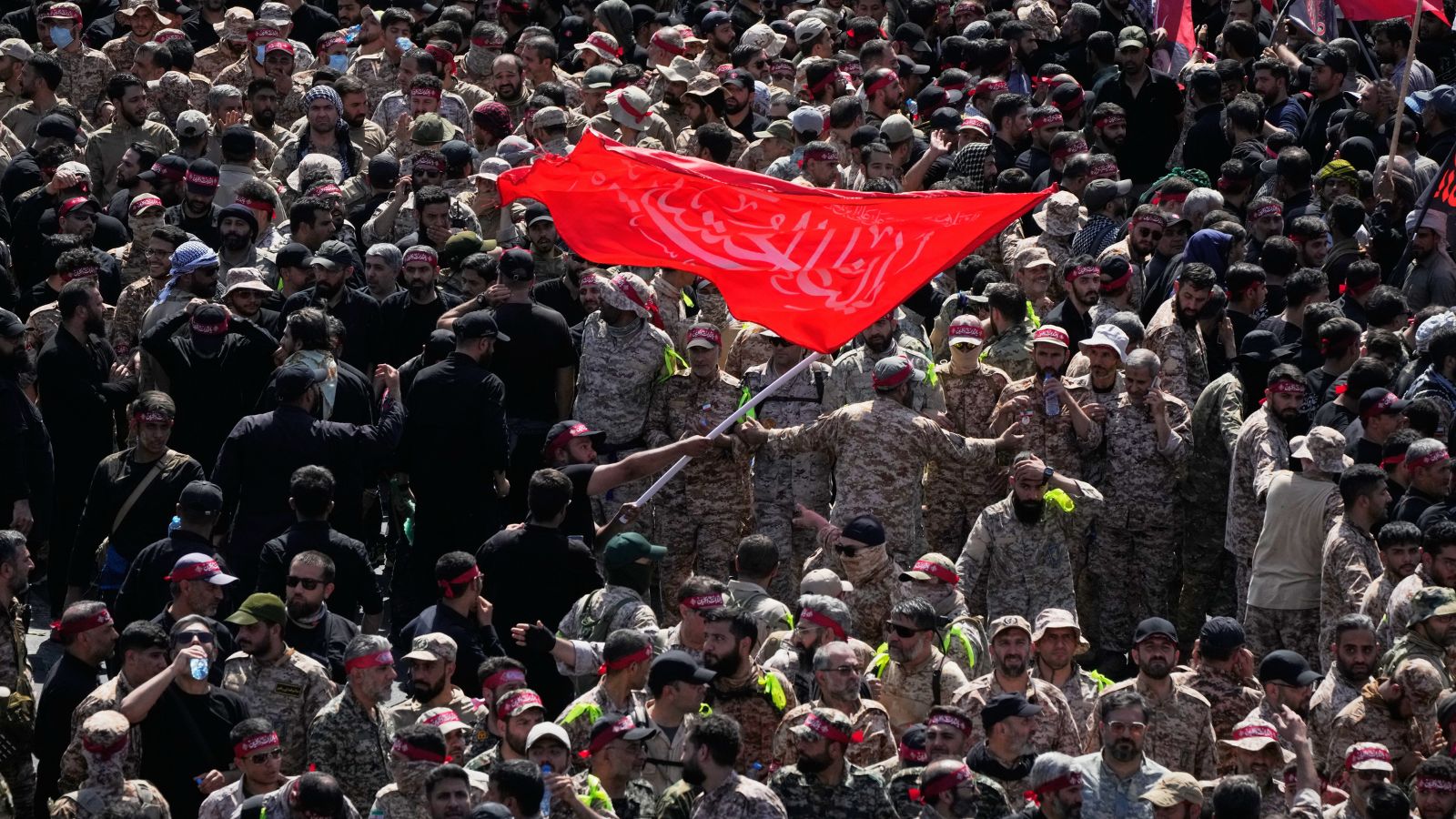
The United Kingdom’s deployment of the National Security (State Threats) Act 2026 to execute a "proscription-like" designation of Iran’s Islamic Revolutionary Guard Corps (IRGC) represents a fundamental structural shift in counter-terrorism jurisprudence. By treating an official arm of a sovereign foreign state with the same statutory penalties historically reserved for non-state actors under the Terrorism Act 2000, the British state is attempting to close an asymmetric operational loophole.
This legal escalation is directly driven by a spike in gray-zone kinetic actions on British soil, specifically a sequence of seven documented antisemitic and anti-dissident operations—including the March 2026 arson attacks on Hatzola community ambulances in Golders Green—publicly claimed by an Iranian front group, the Islamic Movement of Companions of the Right (IMCR). Analysts assess that the IMCR operates not as an autonomous entity, but as a shell structure engineered by the IRGC’s Quds Force to preserve plausible deniability while executing low-signature sabotage.
The strategic objective of the new policy is to disrupt the logistics, financing, and recruitment pipeline of these hybrid networks by radically lowering the evidentiary threshold required for domestic prosecution.
The Legal Architecture: Closing the Sovereign Immunity Loophole
Prior to the passage of the National Security (State Threats) Act 2026, British counter-terrorism frameworks suffered from a structural vulnerability when addressing state-sponsored asymmetric warfare. The Terrorism Act 2000 was designed to proscribe non-state actors (e.g., Al-Qaeda, Hezbollah). Attempting to proscribe an official state entity like the IRGC threatened to trigger severe diplomatic crises, such as the retaliatory closure of the British Embassy in Tehran, which acts as a critical Western intelligence listening post in the region. Furthermore, standard criminal prosecutions against state-directed operatives required proving a direct, unbroken evidentiary chain linking the individual actor to a foreign government entity—a high standard that routinely failed in open court due to intelligence-sharing restrictions and classified material protections.
The 2026 Act removes this bottleneck through three specific adjustments to the domestic legal architecture:
- Elimination of the Origin Nexus: Prosecutors no longer need to legally establish a direct connection to a foreign power during individual criminal trials. Once an organization is designated, proving that an individual assisted or acted on behalf of that specific organization is sufficient to secure a conviction.
- The 14-Year Support Penalty: Under the new guidelines, expressing a positive opinion, inviting financial or material support, or rendering logistical assistance to the IRGC, the IMCR, or Russia's GRU Volunteer Corps (which was designated simultaneously) carries a maximum sentence of 14 years in prison.
- The Sabotage Cost Function: Any individual convicted of executing physical sabotage—including arson, cyber-infrastructure disruption, or kinetic surveillance—on behalf of a designated group faces mandatory life imprisonment.
[Traditional Prosecution] -> Requires Direct Proof of State Nexus -> High Failure Rate due to Plausible Deniability
[2026 State Threats Act] -> Requires Proof of Organization Nexus Only -> Streamlined Prosecution Pipeline
This legal mechanism shifts the risk profile for domestic proxies. By expanding the definition of criminal liability from direct participation to indirect ideological or logistical optimization, the state creates an aggressive legal friction designed to freeze the network’s localized support structures.
The Proxy Cost Model: How the IRGC Minimizes Risk
To evaluate the potential efficacy of the UK’s new strategy, one must understand the economic and operational logic of the IRGC’s proxy model. The Quds Force utilizes a multi-tiered outsourcing framework designed to minimize political and kinetic retaliation while maximizing psychological and social disruption within target nations.
The operational framework relies on three distinct layers:
1. The Command Layer (IRGC-Quds Force)
Provides the strategic intent, target selection, intelligence packages, and financial capital. This layer remains strictly extraterritorial, insulated within Iran or secure regional hubs, rendering it immune to domestic UK law enforcement.
2. The Narrative Layer (Front Groups like IMCR)
A purely digital and informational shell. The IMCR serves as a brand to claim responsibility for attacks, absorbing the political fallout and focusing media attention away from state organs. This layer uses online propaganda channels to launder ideological narratives into targeted domestic demographics.
3. The Execution Layer (Local Proxies and Criminal Networks)
The primary vulnerability in the chain. The IRGC increasingly hires local criminal syndicates, radicalized individuals, or online recruits to carry out low-tech kinetic operations, such as the Golders Green stabbings or the ambulance arson plots. These actors are highly sensitive to risk-reward calculations.
By introducing a mandatory life sentence for sabotage and a 14-year penalty for mere administrative or digital alignment, the UK government is directly targeting the Execution Layer. The strategy aims to make the cost of contract violence unacceptably high for local criminals, breaking the IRGC’s ability to operationalize its intent on British soil.
Operational Bottlenecks and Strategic Limitations
While the National Security (State Threats) Act 2026 provides a sharper prosecutorial toolkit, a senior national security analysis reveals that proscription functions primarily as a bureaucratic and deterrent mechanism rather than an absolute operational shield. Several structural bottlenecks limit the real-world impact of the designation:
- The Rebranding Loophole: Because front groups like the IMCR are ephemeral digital constructs, the IRGC can dissolve a designated entity overnight and spin up a new front under a different moniker. This creates an administrative lag, forcing the Home Office into a perpetual cycle of reactive legal updates.
- The Radicalization and Informal Network Filter: A significant portion of the threat infrastructure does not rely on formal, traceable asset transfers. The funding of small-scale attacks (e.g., purchasing fuel for arson or basic bladed weapons) can be managed via decentralized hawala networks (informal value transfer systems) or small-scale cryptocurrency transactions that bypass traditional banking compliance checks.
- The Intelligence-to-Evidence Bottleneck: Converting highly classified intercepts from MI5 or GCHQ into admissible evidence that can be presented in a public courtroom remains difficult. Even with lowered legal thresholds, defending a case without exposing sensitive intelligence collection capabilities or sources is a constant operational trade-off.
Furthermore, the domestic strategy must be weighed against its geopolitical costs. Over the past year, MI5 has identified at least 20 potentially lethal plots orchestrated by Iranian networks within the UK. Escalating the legal conflict to target state organs directly limits diplomatic backchannels, which are critical for de-escalating broader kinetic confrontations in the Middle East or managing nuclear non-proliferation discussions.
Recommended Operational Playbook for Financial and Security Institutions
To maximize the defensive utility of the new designation, UK law enforcement and private sector financial compliance units must pivot from a purely reactive posture to systematic asset and narrative isolation. The real battleground lies in the secondary network supporting the IRGC's front operations.
First, financial compliance sectors must aggressively audit charities, cultural centers, and educational institutions suspected of serving as ideological or financial conduits for Tehran. By utilizing the broad definitions of "material assistance" under the 2026 Act, financial intelligence units can freeze funds at the first sign of structural alignment with designated entities, eliminating the need to wait for a definitive criminal link.
Second, digital forensic teams must focus heavily on online recruitment patterns. The parallel designation of Russia’s GRU Volunteer Corps highlights a shared adversarial playbook: using online platforms to source local actors for physical sabotage. Security networks must deployed automated behavioral tracking to flag unusual localized surveillance or spikes in regional extremist propaganda tied to newly emerged proxy brands.
The success of the UK’s strategy will not be measured by the declaration itself, but by the speed at which law enforcement uses these new legal powers to systematically dismantle the domestic execution layer.