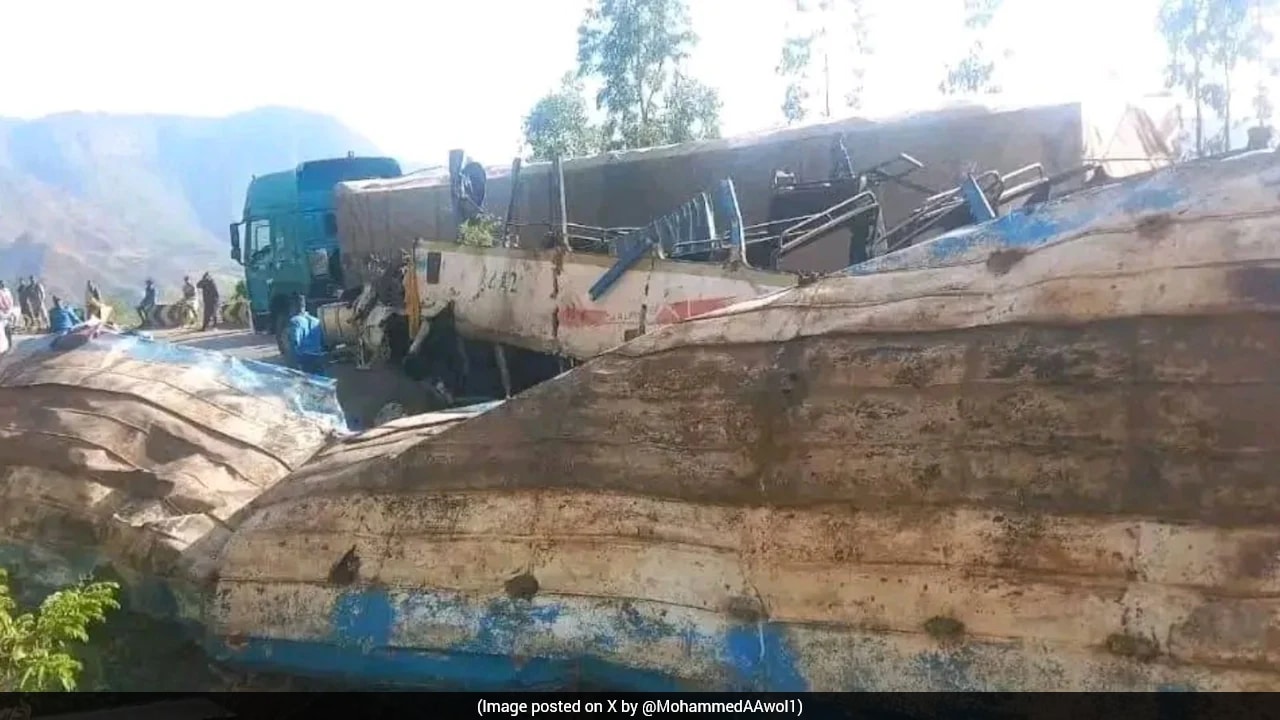
Rural mass transit systems in developing economic corridors frequently collapse due to predictable, compounding systemic failures rather than isolated operator errors. When an overcrowded passenger bus exits the roadway into a ravine in topography like the Ethiopian highlands, the incident represents the final breakdown in a chain of unmitigated risks. Mitigating these catastrophic transit failures requires understanding the three structural pillars that govern rural transport safety: vehicle mass dynamics, infrastructural topography, and regulatory enforcement deficits.
The primary vector of mass-casualty transit incidents is the systemic distortion of vehicle dynamics caused by payload inflation. Transport operators in under-regulated regions scale their revenue by maximizing passenger density per trip, fundamentally altering the physical properties of the vehicle. Learn more on a similar issue: this related article.
The Physics of Payload Inflation
A standard commercial bus is engineered around strict gross vehicle weight ratings (GVWR). When passenger volume exceeds these design limits, several mechanical thresholds fail simultaneously:
- Center of Gravity Elevation: Excess passengers, frequently accompanied by heavy cargo stored on roof racks, shift the vehicle's center of gravity upward and toward the rear axle. This vertical shift drastically reduces lateral stability, lowering the threshold of kinetic energy required to initiate a rollover during sudden directional changes.
- Brake System Thermal Overload: Kinetic energy scales linearly with mass ($KE = \frac{1}{2}mv^2$). A bus operating at 150% of its engineered capacity demands a proportional increase in braking force to decelerate. On prolonged descents, this energy dissipates as extreme heat within the brake drums or discs. Thermal saturation leads to brake fade, a condition where the friction coefficient of the braking material drops toward zero, rendering the vehicle unstoppable.
- Suspension and Steering Degradation: Severe overloading compresses suspension springs to their bump stops. This eliminates the vehicle’s ability to absorb surface irregularities, transferring mechanical shocks directly to the chassis and steering linkages. The operator loses precise directional control as tyres struggle to maintain consistent contact with the road surface.
Topographical Hazards and Infrastructure Deficits
The physical environment amplifies these mechanical vulnerabilities. In mountainous terrain, such as the Wolaita zone or similar highland regions, road design dictates the margin for error. Additional reporting by The Guardian explores related views on the subject.
The absence of engineered containment systems turns minor navigation deviations into fatal plunges. Standard high-risk corridors lack structural guardrails, runaway truck ramps, or clear recovery zones. Instead, unpaved or poorly maintained asphalt shoulders border steep drop-offs.
Erosional forces further degrade these perimeters. Seasonal rainfall undermines the sub-base of rural roads, causing edge failures. When an overloaded bus, suffering from compromised steering precision, approaches a sharp radius curve on a degraded mountain pass, the lateral forces encounter a surface incapable of providing necessary centripetal friction. The vehicle leaves the roadway not merely due to speed, but because the infrastructure lacks the tolerance to absorb standard mechanical variances.
The Enforcement Vacuum and Economic Drivers
The root cause of persistent overcrowding is an economic framework that incentivizes high-risk operations paired with a localized enforcement vacuum.
In transport networks characterized by low capital liquidity and high demand, operators operate on razor-thin margins. Fixed costs—such as fuel, vehicle acquisition, and informal road tariffs—remain constant regardless of passenger volume. Variable revenue is generated entirely by marginal passenger acquisition. Therefore, overloading is not an accidental oversight; it is an economic survival strategy executed by operators to offset low baseline fares.
Regulatory oversight fails to disrupt this economic calculation due to predictable institutional limitations:
[Economic Incentive: High Fixed Costs / Low Fares]
       │
       ▼
[Operator Behavior: Overloading to Maximize Marginal Revenue]
       │
       ▼
[Enforcement Gap: Intermittent Checkpoints + Non-Standardized Fines]
       │
       ▼
[Systemic Outcome: Normalized Deviancy & Structural Transit Failure]
Intermittent roadside checkpoints rely on visual inspections rather than calibrated weigh-in-motion axle scales. This subjective enforcement allows operators to obscure compliance metrics. Furthermore, when punitive fines are lower than the potential revenue generated by extra passengers, operators treat citations as a standard cost of doing business. This normalization of deviance ensures that unsafe vehicles remain operational until a catastrophic mechanical failure occurs.
Strategic Interventions for Corridor De-risking
Resolving mass transit vulnerabilities requires shifting from reactive emergency response to proactive structural engineering and economic realignment.
The first priority is the deployment of passive infrastructure interventions. Municipalities must prioritize the installation of low-cost, high-engineered gravel arrestor beds on sustained down-gradients to capture vehicles suffering from thermal brake failure. Concurrently, high-risk curves require the installation of deep-anchored steel W-beam guardrails capable of redirecting the kinetic energy of mid-sized commercial transport vehicles.
The second priority demands a restructuring of the enforcement mechanism. Regulatory bodies must replace manual checkpoints with automated, data-driven monitoring systems. Integrating digital passenger manifesting with automated weight-sensor plates at major transit terminals eliminates on-road enforcement subjectivity. By restricting terminal departures to vehicles verified within GVWR limits, the systemic risk of payload inflation is mitigated before the vehicle enters high-risk topographical corridors.
The final element is the formalization of rural transport cooperatives. By transitioning independent, cash-dependent operators into structured corporate entities, regional governments can subsidize baseline operations. This shifts the financial model away from per-capita passenger volume toward route-mileage compliance, removing the economic incentive to overload vehicles and directly addressing the root cause of rural transit disasters.