Epidemic containment in active conflict zones fails not because of medical scarcity, but because of a breakdown in institutional trust. When local populations forcibly expel healthcare workers from displacement camps—as observed during the worsening Ebola crisis in the Democratic Republic of Congo—the breakdown is a predictable response to misaligned incentives and security externalities. To contain a highly lethal pathogen like Ebola virus, intervention strategies must treat community trust as a finite, quantifiable asset rather than a moral abstraction.
The acceleration of an outbreak within internally displaced persons (IDP) camps can be mapped through three distinct operational bottlenecks: the securitization of public health, the distortion of local economies by international aid, and the information asymmetry between epidemiological models and local realities.
The Securitization Bottleneck and Trust Depletion
The deployment of armed security forces to protect medical personnel creates a immediate paradox in public health delivery. While intended to guarantee physical safety, military or paramilitary escorts transform medical interventions into perceived exercises in state coercion.
In conflict-affected regions of the Congo, the state apparatus is frequently viewed by displaced populations with historical skepticism or outright hostility. When epidemiological teams arrive flanked by state forces, the medical response inherits the political liabilities of those forces. This dynamic triggers a predictable sequence of behavioral feedback loops:
- Identification: Local populations conflate the neutral objectives of epidemiological containment with the political objectives of the state or armed factions.
- Evacuation and Concealment: Symptomatic individuals actively avoid surveillance networks, preferring to remain hidden within the dense population of IDP camps to escape forced isolation.
- Resistance: The physical perimeter established around treatment facilities is perceived as an occupying presence, leading to organized civil resistance and the expulsion of medical assets.
This securitization framework creates an environment where the reproduction number of the virus ($R_0$) increases artificially. Because symptomatic individuals go underground, the time between symptom onset and isolation widens. Every additional day a patient remains un-isolated within a high-density displacement camp multiplies secondary transmission vectors exponentially.
Economic Distortions and the Weaponization of Aid
The influx of capital, logistics, and foreign personnel into a resource-constrained environment generates acute macroeconomic shocks at the micro-local level. In the context of an Ebola response, these shocks alter the social fabric of IDP camps, fueling the anger that drives health workers away.
International interventions typically operate on accelerated procurement timelines, paying premium rates for local labor, rent, and supplies. This creates an "Ebola Economy" where the financial resources dedicated to a single disease dwarf the baseline funding for chronic health issues like malaria, measles, or malnutrition, which frequently claim more lives locally than Ebola itself.
Displaced populations perceive this hyper-targeting as a misalignment of humanitarian priorities. From the perspective of a camp resident, the international apparatus ignores systemic, daily mortality risks but spends millions to contain a specific pathogen that threatens global health security. This disparity generates suspicion that the intervention is self-serving rather than altruistic.
Furthermore, the concentration of resources within the containment infrastructure creates new vectors for corruption. When access to employment, clean water, or sanitation is tied exclusively to the Ebola response matrix, it alienates local leadership structures that have been bypassed by international NGOs. The resulting resentment is directed at the most visible manifestation of this economic asymmetry: the front-line health worker.
Information Asymmetry and the Failure of Top-Down Metrics
Epidemiological models rely heavily on quantitative inputs—contact tracing lists, PCR cycle threshold values, and geographic coordinates. However, these models fail when they do not account for the qualitative variables of human behavior under duress.
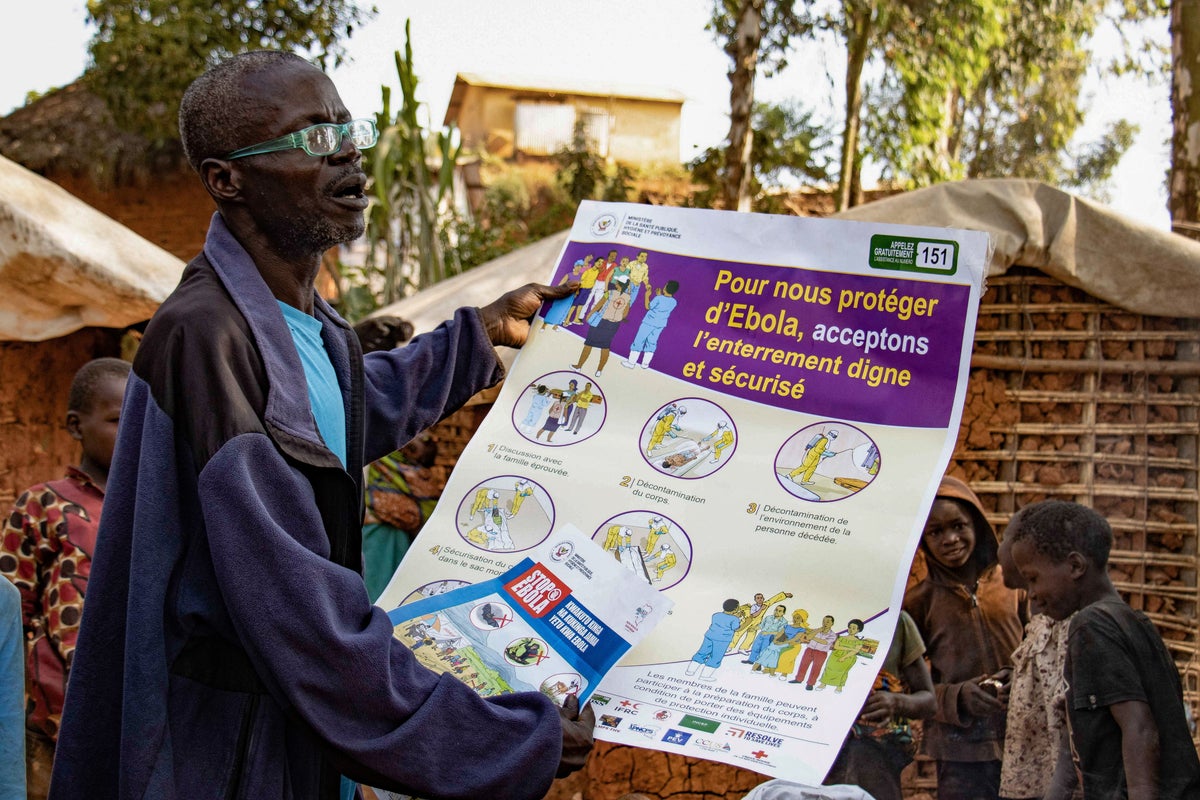
The standard operational playbook dictates immediate isolation of suspected cases and safe, dignified burials. Both protocols run directly counter to deep-seated cultural frameworks regarding familial care and funerary rites. When external teams enforce these protocols without adjusting for local customs, they create an information vacuum.
Because the mechanisms of viral transmission (such as post-mortem viral shedding) are explained through technical jargon rather than accessible, culturally grounded analogies, the community develops alternative hypotheses to explain the mortality around them. In many instances, the high mortality rate inside isolation units is interpreted not as the result of late-stage viral progression, but as evidence that the treatment centers themselves are processing centers for organs or tools of state-sponsored elimination.
Once these conspiracy theories gain traction, the utility of standard contact tracing drops to near zero. Respondents systematically withhold names of contacts, render geographic tracking data inaccurate, and render surveillance infrastructure blind.
Strategic Realignment: The Decentralized Engagement Matrix
To reverse the trajectory of an escalating outbreak in volatile environments, the intervention model must shift from a centralized, securitized posture to a decentralized, asset-based framework. This requires an operational overhaul across three primary axes.
Transition to Localized Care Nodes
The centralized Ebola Treatment Center (ETC) must be decoupled into smaller, community-managed isolation nodes. These low-transit facilities should be staffed primarily by trained community members, with international specialists acting strictly in advisory, back-end roles. By lowering the physical and visual profile of the isolation infrastructure, the perceived threat of the facility diminishes. Families must be granted visual access to their relatives within these nodes to eliminate the "black box" perception of isolation.
Demilitarization of Logistics
Security cannot be achieved through superior firepower without destroying the operational theater. Escorts must be phased out in favor of negotiated access agreements mediated by neutral, local actors such as traditional leaders, religious figures, and local civil society organizations. If an area remains too volatile for unescorted medical access, the intervention must rely entirely on remote technical support and pre-positioned supply drops managed by local stakeholders who possess indigenous legitimacy.
Radical Transparency in Resource Distribution
To mitigate the destabilizing effects of the Ebola Economy, interventions must adopt a horizontal funding structure. For every dollar allocated directly to Ebola containment, a fixed percentage must be diverted to reinforce the existing, baseline health infrastructure of the host community. Addressing concurrent crises—such as repairing water points or distributing antimalarial medications alongside Ebola surveillance—neutralizes the grievance that the international community values global security over local lives.
The crisis in the Democratic Republic of Congo's displacement camps is not a failure of medical science. The vaccines and therapeutics available are highly effective. The failure lies in the structural execution of the response, which treats the social ecosystem as a blank canvas rather than a complex, highly reactive system. Until containment strategies treat institutional trust as an absolute prerequisite for clinical efficacy, external interventions will continue to catalyze the very resistance that accelerates viral spread. The final strategic play requires abandoning the top-down containment model in favor of an infrastructure owned and insulated by the community itself.