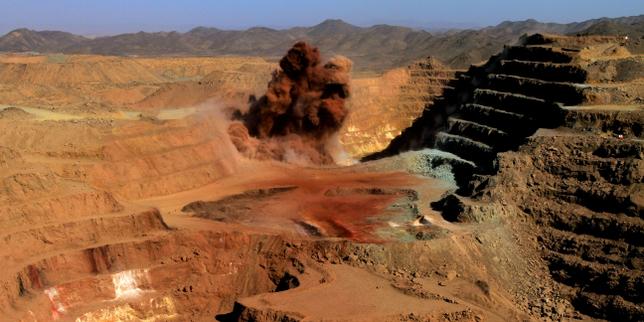
The collapse of an artisanal gold mine in northern Sudan, resulting in the deaths of 15 miners, represents a predictable structural failure governed by identifiable geotechnical and economic vectors. Media coverage of these events consistently treats them as isolated, tragic accidents. In reality, these incidents are the logical output of a specific cost function where immediate extraction yields are maximized at the expense of structural integrity and safety infrastructure.
Understanding the systemic vulnerability of informal mining operations requires shifting focus from the immediate trigger of a collapse to the underlying operational and geological mechanics. Artisanal and Small-Scale Gold Mining (ASGM) exists within a high-risk, low-capital framework. By deconstructing the physical constraints of artisanal tunneling, the economic incentives driving structural neglect, and the regulatory void in remote regions like Northern State, we can map the precise failure chain that defines informal extraction.
Geotechnical Failure Mechanisms in Unregulated Shafts
The structural stability of any underground mining excavation depends on the balance between the stress of the surrounding rock or soil and the strength of the support system. In institutional mining, this is managed through rigorous geomechanical modeling, rock bolting, shotcreting, and timbering. In artisanal settings, these engineering controls are systematically absent.
Artisanal operations in northern Sudan primarily target alluvial deposits and weathered quartz veins. These geological formations are inherently unstable. Weathered rock exhibits high porosity and low cohesive strength, making it highly susceptible to deformation under lithostatic pressure—the weight of the overlying earth.
The failure sequence in an artisanal shaft typically follows three distinct phases:
- Tensile Cracking in the Roof: As miners excavate laterally from a vertical shaft to follow a gold-bearing vein, they create an unsupported span. Without structural reinforcement, the roof of the tunnel undergoes tensile stress. Because soil and weathered rock have poor tensile strength, micro-fractures develop rapidly.
- Progressive Sloughing: Small fragments of earth begin to detach from the roof and walls. This process alters the geometry of the tunnel, shifting the stress concentrations further into the surrounding unexcavated material and expanding the failure zone.
- Massive Shear Failure: The remaining pillars or the unreinforced roof reach their ultimate compressive strength limit. The structure suffers a sudden, catastrophic shear failure, resulting in the immediate subsidence of the overlying strata into the workings.
This geomechanical vulnerability is compounded by environmental variables. Northern Sudan features an arid climate where the upper soil layers are held together primarily by negative pore water pressure, or suction. Any sudden change in moisture content—such as localized flash flooding or water ingress from primitive washing operations—destroys this suction. The soil loses its apparent cohesion instantly, triggering immediate collapse.
The Economic Cost Function of Informal Extraction
The technical deficiencies of artisanal mining cannot be separated from the economic realities of the informal gold supply chain. Artisanal miners operate within a volatile, capital-constrained market where survival depends on minimizing upfront capital expenditure (CapEx) and maximizing short-term operational cash flow.
In a formal mining enterprise, safety and structural integrity are viewed as long-term asset protection measures. For an artisanal miner working an unmapped, insecure plot, the investment horizon is measured in days or weeks. This creates a powerful disincentive to invest in structural inputs.
We can model the economic decision-making of informal mining operators through a basic optimization problem where profit ($\Pi$) is maximized:
$$\Pi = (V \times P_g) - (C_x + C_s + C_r)$$
Where:
- $V$ is the volume of ore extracted.
- $P_g$ is the local market price of gold (typically heavily discounted from the London Bullion Market Association spot price due to middleman margins).
- $C_x$ is the direct cost of extraction (labor, primitive tools, fuel for basic pumps).
- $C_s$ is the cost of structural safety and stabilization (timber supports, proper shaft lining, ventilation).
- $C_r$ is the cost of regulatory compliance or informal rents (bribes, local fees).
Because $P_g$ is fixed by external informal networks and $C_r$ is unavoidable for operational survival in a given territory, operators can only increase profit margins by driving down $C_s$ or rapidly increasing $V$.
Timber is exceptionally scarce and expensive in the desert landscapes of northern Sudan. Importing structural timber to a remote mining site requires significant capital. Consequently, operators treat $C_s$ as a flexible variable, frequently reducing it to zero. They replace engineered support structures with makeshift props or leave the tunnels completely unreinforced, relying purely on the hope that the self-supporting capacity of the rock will hold until extraction is complete.
This economic calculation shifts the true cost of production onto the labor force in the form of physical risk. The miners, often operating under debt bondage or piece-rate compensation structures, accept these conditions because alternative economic opportunities in the region are non-existent.
Jurisdictional Cavities and the Supply Chain Bottleneck
The recurrence of mining disasters in Sudan's Northern State highlights a broader institutional reality: the presence of a jurisdictional cavity. A jurisdictional cavity occurs when a sovereign government maintains nominal territorial claim over an area but lacks the logistical capability, administrative infrastructure, or political will to enforce regulatory standards.
The formal regulatory framework for mining in Sudan, overseen by the Ministry of Minerals and the Sudanese Mineral Resources Company (SMRC), exists primarily on paper or is concentrated around a few large-scale joint ventures. In the remote northern deserts, enforcement mechanisms disintegrate due to several structural factors:
- Geographic Dispersion: Artisanal mining sites are highly mobile and scattered across vast, inhospitable terrain. Tracking new shafts as they open and close requires satellite surveillance and continuous ground patrols, both of which are beyond the current fiscal capacity of regional authorities.
- The Informal Gold Ecosystem: Gold is a highly liquid asset with a high value-to-weight ratio, making it incredibly easy to smuggle. Much of the gold produced in informal Sudanese mines bypasses official central bank channels, flowing instead into regional transit hubs like Dubai via parallel financial networks. Because the state does not capture significant tax revenue from the point of extraction, it lacks the financial incentive to fund the oversight of these regions.
- Political Instability: Persistent internal conflict weakens centralized administrative control. When state resources are monopolized by security priorities, civil regulatory bodies like mining inspectorates are defunded and stripped of enforcement authority.
This regulatory vacuum allows unsafe extraction methodologies to become the regional operational baseline. Without fear of closure, asset seizure, or criminal liability, mine operators have no structural motivation to alter their risk profiles.
Operational Risk Mitigation Within Capital Constraints
Eliminating artisanal mining collapses entirely is an unrealistic goal given the macroeconomic drivers involved. However, reducing the frequency and lethality of these failures requires moving away from the binary approach of either ignoring the sector or attempting to ban it outright. Punitive bans merely drive the activity deeper into the informal sector, worsening safety conditions.
A pragmatic strategy focuses on low-cost, high-yield structural interventions that align with the capital constraints of the miners.
Localized Structural Stabilization
Instead of demanding expensive imported timber or concrete lining, regional development programs and informal mining associations should focus on local materials and basic engineering principles. The introduction of standardized "cribbing" techniques using low-cost, modular local stones or compressed earth blocks can provide sufficient compressive resistance to prevent progressive sloughing.
Geometric Optimization
Artisanal miners routinely dig vertical shafts with perfectly perpendicular walls, which concentrates shear stress at the corners. Training miners to slope the walls of open-pit entries or to excavate vertical shafts with a slight trapezoidal taper dramatically reduces the likelihood of sudden wall failure.
Basic Hydrological Management
Because water ingress is a primary catalyst for structural failure in arid soils, simple diversion techniques are critical. Constructing elevated earthen berms around the perimeter of shaft openings prevents surface runoff from draining into the workings during sudden rain events, preserving the natural matrix suction of the soil.
A Predictive Outlook for the Artisanal Gold Sector
The trajectory of informal gold mining in Sudan and similar transitional economies will be dictated by macroeconomic pressures. As long as global economic uncertainty sustains high gold prices, the incentive to exploit marginal, high-risk deposits will intensify.
If regional governance remains fractured, the gold sector will undergo further balkanization. Local military factions and informal syndicates will tighten their grip on extraction sites, using the revenue to fund localized power structures. In this scenario, operational safety will degrade further, as extraction speeds will be prioritized over long-term site viability.
True stabilization of the sector will only occur if formal gold refineries and international buyers enforce strict provenance and safety tracking at the point of purchase. Until the financial reward for illegally extracted gold is systematically lower than the cost of implementing basic structural safety, the physical mechanics of poor rock mechanics and unreinforced earth will continue to claim lives across the informal mining landscape. Mining operators will continue to treat human capital as a consumable asset, balancing the cost of a collapse against the immediate value of the recovered ore. Strategic intervention must therefore focus on altering the economic equation at the local purchasing hub, making market access conditional on verifiable shaft stabilization practices.