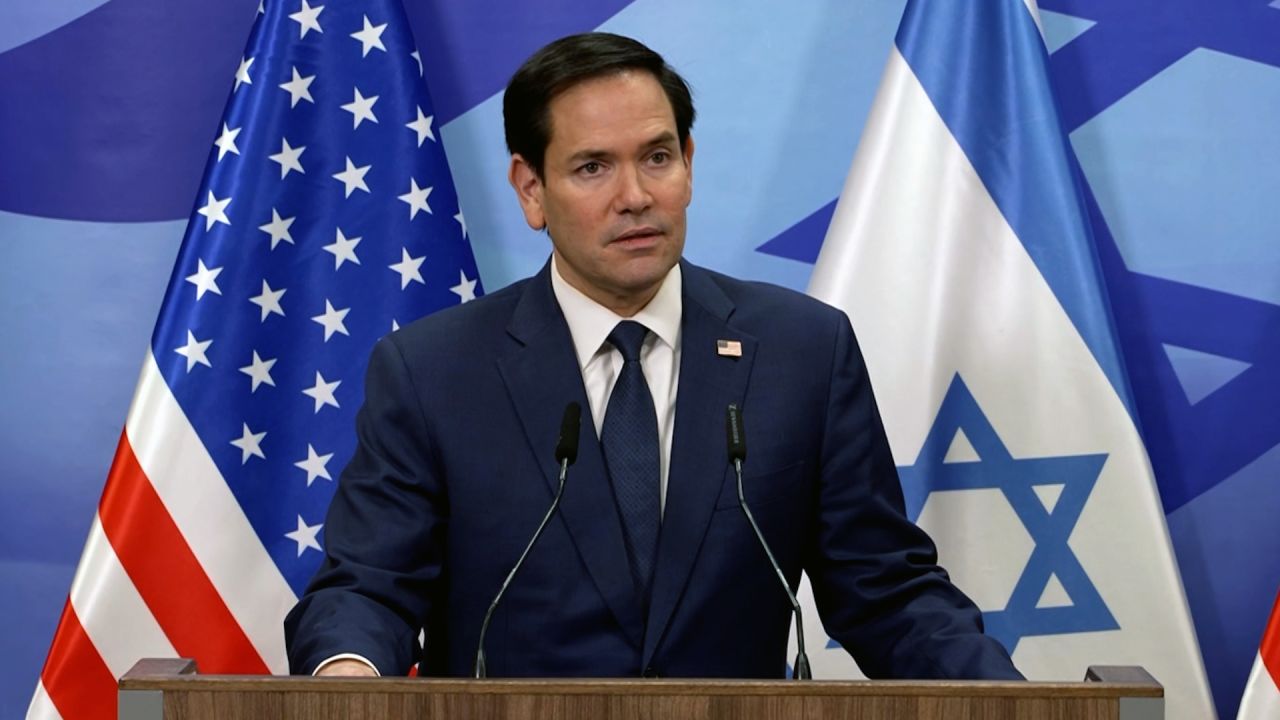
We’re officially a month into the most significant military conflict in the Middle East in decades, and the mixed signals coming out of Washington are enough to give anyone whiplash. On one hand, you’ve got reports of the 82nd Airborne Division prepping for deployment; on the other, Secretary of State Marco Rubio is sitting down with Al Jazeera to insist that President Trump "always prefers diplomacy."
It’s a classic carrot-and-stick routine, but the stakes this time around are nuclear. If you’re trying to figure out if we’re headed for a thirty-year occupation or a quick exit, you have to look at what Rubio actually said—and what he carefully avoided.
The Strategy Behind the Al Jazeera Sit Down
Rubio didn't choose Al Jazeera by accident. By speaking to a major Arabic-language outlet, he’s talking directly to the "street" in the region and the intermediaries in Doha and Muscat who are currently carrying water between Washington and Tehran. The message was simple: the U.S. doesn't want to own Iran, but it’s done living with the Iranian regime’s current "shield" of missiles.
He made it clear that the current campaign, which began on February 28, isn't about traditional nation-building. It’s a surgical, albeit massive, dismantling of specific capabilities. We’re talking about the systematic destruction of the Iranian Navy, their air force, and specifically their "missile belt." Rubio’s logic is that once you take away their ability to hold the world's energy supply hostage, the regime’s leverage evaporates.
Diplomacy Through Intermediaries
One of the most telling parts of the interview was Rubio’s admission that "messages and some direct talks" are happening through third parties. Despite the public posturing from Tehran denying any negotiations, the backchannels are clearly humming. Rubio hinted at "fractures" within the Iranian leadership.
Think about that for a second. The U.S. and Israel already took out Supreme Leader Ayatollah Ali Khamenei on day one of the war. Now, the Trump administration is essentially waiting to see who emerges from the smoke with enough authority to actually sign a deal. Rubio basically said the U.S. would be "heartbroken" if the regime didn't change, but they’re willing to talk to anyone who can "deliver" a non-nuclear, non-terror-sponsoring Iran.
The Strait of Hormuz is the Ultimate Red Line
If there’s one thing that could turn this from an air war into a ground war, it’s the Strait of Hormuz. Rubio was blunt: the waterway will open "one way or the other."
Iran has used the threat of closing the Strait as its primary economic weapon for years. By claiming sovereignty over international waters, they’ve tried to turn the world's most important oil chokepoint into a "toll road." Rubio’s stance is that this is illegal under international law and fundamentally unacceptable to the global economy.
While the U.S. only gets a small fraction of its energy through those waters, our allies in Europe and Asia are totally dependent on them. Rubio is signaling that if a "coalition of nations" has to go in and forcibly keep those lanes open, they’ll do it. This isn't just a U.S. interest; it’s a global one.
Misconceptions About Boots on the Ground
There’s been a lot of chatter about a massive ground invasion. Rubio tried to shut that down, stating the U.S. can achieve its objectives—destroying missile factories and drone sites—without a large-scale ground force.
He didn't deny the reports about the 82nd Airborne, but he characterized it as a contingency plan rather than an active invasion force. The goal isn't to occupy Tehran. It’s to "defang" the regime so they can’t hide behind a zone of immunity anymore. Honestly, the U.S. has no appetite for another 20-year nation-building project, and Rubio knows it.
What’s Actually Happening on the Ground
The numbers are starting to get grim. Iranian authorities claim over 1,340 people have been killed since the strikes began. On the U.S. side, we’ve lost at least 13 service members to retaliatory drone and missile strikes.
Current U.S. Objectives according to Rubio
- Nuclear Denial: Iran can never, under any circumstances, possess a nuclear weapon.
- Missile Dismantling: The total destruction of short-range ballistic missiles that threaten neighbors like Saudi Arabia and the UAE.
- Maritime Security: Ensuring the Strait of Hormuz remains an international waterway, not an Iranian lake.
- Ending Proxy Support: Cutting off the billions spent on groups like Hezbollah and Hamas.
The Shadow of the 2026 Reality
We aren't in 2015 anymore. The "strategic patience" of the past is gone. Rubio’s rhetoric suggests that the administration sees this as a closing window. They believe that in another year or two, Iran’s missile technology would have been so advanced that they would be "immune" to conventional pressure.
The strategy is "violence as a bridge to diplomacy." They’re hitting the regime hard to force the "reasonable" elements—if they exist—to the table. It’s a high-stakes gamble. If the regime doesn't fracture and instead rallies the population against the "foreign invaders," we’re looking at a much longer and bloodier conflict.
Moving Forward
The next few weeks are critical. Rubio says they’re "ahead of schedule" on destroying military infrastructure. If you’re watching this play out, keep your eyes on two things: the price of WTI crude oil and the status of the airports in Kuwait and Bahrain. If the U.S. can keep those logistics hubs open and the oil flowing, they’ll keep the pressure on.
If you're an American in the region, the State Department's advice is clear: get out now while the departure plans are still being implemented. Over 9,000 have already left, and the window for civilian travel is shrinking as airspaces continue to close. Don't wait for a "final" warning. If you have the means to depart, use them. The intensity of this conflict is about to shift, and you don't want to be caught in the middle when it does.


