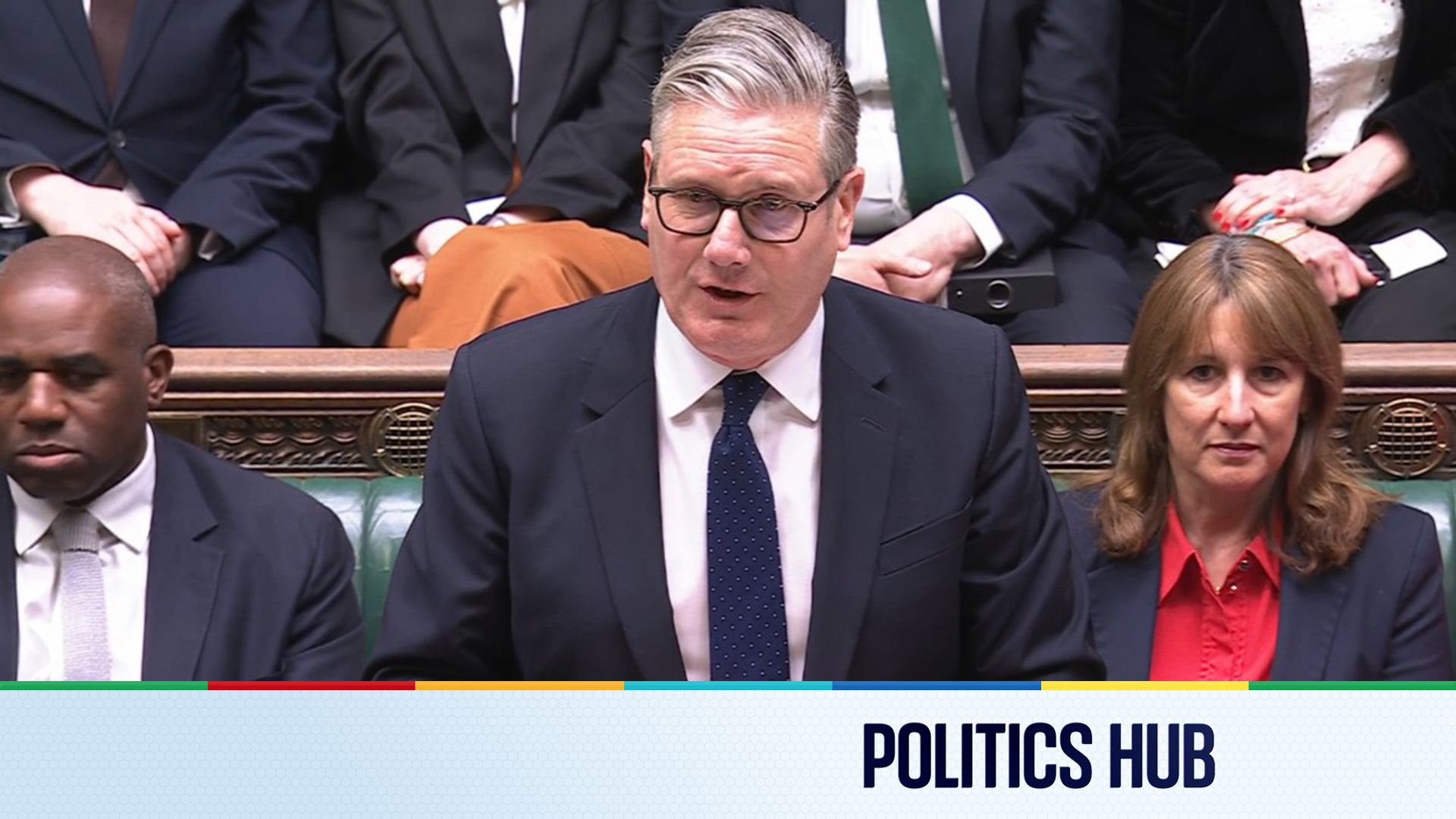
The press is currently obsessed with whether Keir Starmer misled the House of Commons regarding the vetting process for Lord Mandelson’s potential diplomatic appointment. They are hunting for a "gotcha" moment, a technical lie, or a procedural slip-up. They are missing the forest for the trees.
The real story isn't whether the Prime Minister followed the specific steps of a vetting checklist. The story is that the checklist itself is now a cosmetic mask for the total politicization of the British state. We are witnessing the final collapse of the "Northcote-Trevelyan" era—the idea of a permanent, neutral civil service—and the media is busy arguing over HR paperwork.
The Vetting Myth and the Illusion of Oversight
Most people believe "vetting" is an objective, binary process. You either pass or you fail based on a set of rigid security and ethical criteria. In reality, at the highest levels of government, vetting is a tool used to provide plausible deniability.
When a Prime Minister wants a specific individual in a high-stakes role—like a plum diplomatic post in Washington or a seat at the heart of trade negotiations—the vetting process isn't a barrier. It’s a negotiation. I have seen this play out in the private sector for decades: the more powerful the candidate, the more "flexible" the compliance department becomes.
The controversy surrounding Mandelson isn't about security clearances. It’s about the fact that the government is trying to use a 19th-century administrative framework to justify 21st-century patronage. By focusing on whether Starmer "misled" the Commons, the opposition and the media are implicitly accepting that if the paperwork had been done correctly, the appointment would be fine.
It wouldn't be fine. It would still be the installation of a political titan into a role traditionally reserved for career diplomats who don't bring forty years of partisan baggage to the table.
The Lazy Consensus on Ministerial Accountability
The standard narrative right now is that Starmer has a "transparency problem." This is a shallow take. Starmer doesn't have a transparency problem; he has an "institutional capture" problem.
The "lazy consensus" suggests that if we just had more oversight, more committees, and more rigorous vetting, we could fix the system. This is a fallacy. Adding more layers of bureaucracy doesn't stop political appointments; it just makes them more expensive and slower.
Let's look at the logic. If the Prime Minister admits he bypassed or accelerated vetting, he’s a liar. If he proves he followed every rule to the letter, he’s a bureaucrat. Either way, the outcome is the same: the person he wants gets the job. The obsession with the process of the appointment ignores the utility of the appointment.
Why the "Expert" Critique is Wrong
Constitutional experts will tell you that the Ministerial Code is the "glue" holding the government together. They are wrong. The Ministerial Code is a suicide note for anyone who takes it literally.
In a hyper-polarized political environment, the "Code" is simply a weapon. If you are a high-level insider, you know that the rules are written to be interpreted, not followed. When the PM says he didn't mislead the Commons, he is operating on a definition of "misleading" that was crafted by lawyers to survive a select committee hearing, not to inform the public.
- Misconception: Vetting is a shield against corruption.
- Reality: Vetting is a filter that ensures the "right" kind of person gets through while providing a paper trail to blame if things go south.
The Diplomatic Vacuum
While Westminster bickers over who said what to whom in the tea room, the actual machinery of British diplomacy is grinding to a halt. The message being sent to the Foreign, Commonwealth & Development Office (FCDO) is clear: your decades of service and expertise are irrelevant if a "Big Beast" from the 1990s wants your office.
This isn't just about Mandelson. It’s about the broader trend of "Envoys" and "Special Representatives" who bypass the traditional hierarchy. We are moving toward a US-style spoils system where the civil service is merely the janitorial staff for the political class.
If we want a political diplomatic corps, we should be honest about it. Let’s stop pretending that these appointments are vetted for "neutrality." They aren't. They are vetted for loyalty and efficacy.
The Economic Cost of Political Patronage
The markets hate uncertainty, but they love influence. The push for Mandelson—or any figure of his stature—is a signal to global capital that the UK is "open for business" through backroom channels rather than transparent regulatory frameworks.
I’ve seen corporations spend millions on lobbyists specifically because the official channels of government have become so clogged with "vetting" and "compliance" that nothing gets done. When the government starts appointing the lobbyists to the actual jobs, the circle is complete.
This creates a two-tier system:
- The Official Path: For everyone else, filled with red tape and "holistic" reviews.
- The Mandelson Path: For the elite, where the rules are a suggestion and the Prime Minister is your personal reference.
Stop Asking if Starmer Lied
The question "Did the Prime Minister mislead the Commons?" is the wrong question. It’s a distraction designed to keep the public focused on a soap opera instead of a structural collapse.
The right question is: Why do we still have a vetting system that can be so easily manipulated by whoever holds the keys to Number 10?
If the system is robust, it should be impossible for a PM to even be accused of misleading anyone, because the data would be public and the process would be automated. The fact that it remains a "he-said, she-said" over vetting documents proves that the process is intentionally opaque.
We don't need "better" leaders who tell the truth more often. We need a system that assumes leaders will lie and makes it impossible for them to do so without immediate, systemic failure.
The Hard Truth About "Trust in Politics"
Politicians love to talk about "restoring trust." It’s their favorite phrase when they are in opposition. Once in power, they realize that "trust" is a liability. It’s much easier to manage a cynical public than a trusting one.
By keeping the debate focused on the minutiae of Mandelson’s vetting, the government ensures that the public remains cynical about the people in charge, rather than skeptical of the institutions themselves.
The Mandelson affair is a masterclass in controlled opposition. You fight over the vetting, you lose the argument on the appointment, and meanwhile, the fundamental shift toward a partisan bureaucracy continues unabated.
The Unconventional Path Forward
If we actually wanted to fix this, we would do the following:
- Abolish Confidential Vetting for Political Appointees: If a non-civil servant is being considered for a major role, their entire vetting file (minus sensitive home addresses or national security secrets) should be public.
- Statutory Independence: Give the Civil Service Commission the power to veto appointments without a parliamentary override.
- End the "Lords" Loophole: Stop using the House of Lords as a waiting room for diplomatic postings.
But these things won't happen. Because the people currently complaining about Mandelson want to be the ones appointing their own "Mandelsons" in five or ten years.
The End of the "Honour" System
We are operating on an "honour" system in an age where honour is a depreciated currency. The Prime Minister says he didn't mislead the Commons. The documents say something else. The media says it's a scandal.
It’s not a scandal. It’s the business model.
The institutional inertia of the UK government is such that it requires these "Big Beasts" to bypass the very systems the government claims to champion. It is a paradox of power: to make the machine work, you have to break the rules of the machine.
So, stop looking for the lie. The lie is the idea that the process matters. The only thing that matters is the appointment. The rest is just theatre for a public that still believes the rules apply to the people who write them.
The British state is being dismantled from the inside out, and we are arguing over the font size on the vetting forms.
Get used to it. The "Mandelson Model" is the new standard. Transparency is dead, and "vetting" is just the name of the game we play while the real decisions are made in the dark.


:strip_icc()/pic2513216.jpg)