The rain in London doesn’t just fall; it seeps. It finds the hairline fractures in the masonry of 10 Downing Street, a building that has housed the ambitions and eventual despairs of fifty-eight Prime Ministers. Inside, the air is thick with the scent of old floor wax and the frantic, muted tapping of smartphone keyboards. Keir Starmer sits at the center of this hive, a man who built his career on the steady, methodical application of the law, now finding himself judged by a much more volatile jury: the British public.
The numbers coming off the wire aren't just statistics. They are an indictment. Across the heartlands and the suburban fringes, the maps are changing color, and not in the direction the man in the glass house intended. Local elections are often dismissed as "midterm blues" or "protest votes," but when the ground beneath your feet shifts this violently, you don't call it a tremor. You call it a collapse.
The Anatomy of a Cold Shoulder
To understand the weight of a crushing local defeat, you have to look past the podiums and the television makeup. Imagine a councilor in a town like Blackpool or a borough in the West Midlands. Let’s call him David. David has spent fifteen years knocking on doors, fixing broken streetlights, and arguing over bin collections. He is the granular reality of political power. On election night, David watches as his neighbors—people he’s known for decades—walk past him at the polling station without meeting his eyes. When the tallies come in, David loses his seat by a margin that suggests he wasn't just disliked, but ignored.
Multiply David by hundreds. That is the "crushing" reality facing the Prime Minister. It is a mass severance of the cord between the governing elite and the governed.
The facts are stark. The Labour Party, under Starmer’s stewardship, hasn't just lost a few seats; they’ve lost the narrative of inevitability. The "Change" promised during the general election has, for many, felt more like a slow-motion stagnation. Voters are looking at their energy bills, their wait times at the GP, and the crumbling concrete in their children’s schools, and they are asking: Is this it?
The Ghost of 1995
History is a cruel teacher because it provides the map but hides the potholes. Starmer often looks to the ghosts of predecessors who weathered similar storms. He remembers the mid-90s, when the incumbent Conservatives were being hollowed out at the local level, signaling a tidal wave that would eventually wash them away. The irony is that he is now the one standing on the shore, watching the tide go out.
But he isn't budging.
In the corridors of power, there is a specific kind of silence that precedes a statement of intent. When Starmer stepped before the cameras to announce he planned to remain in office, he wasn't just speaking to the journalists. He was speaking to the rebels in his own backbenches—the ones already whispering in tea rooms about "direction" and "leadership challenges."
He is leaning on the mandate of a five-year term, a legalistic shield against a political sword. To Starmer, the law is a structure. If you have the numbers in Parliament, you have the right to rule. But politics isn't a courtroom. It’s a theater, and the audience is currently throwing tomatoes.
The Invisible Stakes of "Staying the Course"
Why stay? Why endure the humiliation of a public rejection and the inevitable "Dead Man Walking" headlines?
The answer lies in the psychological makeup of the Prime Minister himself. This is a man who rose to the top of the Crown Prosecution Service by being the most prepared person in the room. He believes in the "long game" with a fervor that borders on the religious. In his mind, the current pain is a necessary side effect of the "tough choices" required to fix a broken economy.
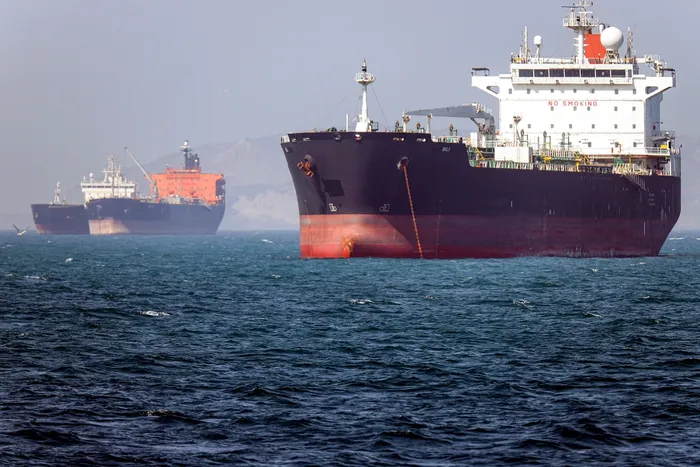
Consider the metaphor of a ship captain trying to turn a massive oil tanker in a narrow strait. The rudder is turned, the engines are straining, but to the people standing on the deck, it looks like the ship is still heading straight for the rocks. Starmer is convinced the turn has begun. The public is convinced they can hear the hull grinding against the reef.
The stakes are invisible but absolute. If he stays and fails to turn the tide, he doesn't just lose an election; he destroys the brand of his party for a generation. If he leaves, he admits that the project was a hollow shell. So, he digs in. He uses words like "stability" and "resolve" while the world outside uses words like "unresponsive" and "out of touch."
The Human Cost of Political Inertia
Behind the polling data is a deeper, more human fatigue. There is a woman in Manchester—let’s call her Sarah—who voted for "Change" six months ago. She didn't vote for a specific policy; she voted for a feeling. She wanted the constant, low-level anxiety of the last decade to lift.
Today, Sarah looks at the news and sees a Prime Minister insisting that everything is on track while her reality remains unchanged. The disconnect creates a vacuum. And in politics, vacuums are never filled by anything good. They are filled by cynicism, by radicalism, and by a growing sense that the people in the glass house simply cannot see through the steam on the windows.
The decision to stay in office despite a crushing defeat is presented as strength. But there is a fine line between resilience and denial. Starmer is betting that the memory of the British public is short—that by the time the next national vote rolls around, the local bloodbath will be a footnote. It is a gamble of breathtaking proportions.
The Echo in the Halls
There is no "In Conclusion" here, because the story isn't over. It is unfolding in real-time in the grim expressions of Cabinet ministers and the angry emails hitting the inboxes of MPs.
The Prime Minister remains. He sits at the mahogany desk where Churchill, Thatcher, and Blair sat before him. He looks at the same maps, hears the same rain against the glass, and insists that he is the man for the moment. The power of the office is a strange thing; it can make a man feel invincible even as the walls are being dismantled around him.
The lights remain on at Number 10 late into the night. From the street, the building looks solid, ancient, and unmoving. But inside, the floorboards are creaking under the weight of a man trying to stand perfectly still while the earth beneath him continues to slide.
He is still there. For now. But the rain is still falling, and the water is rising.