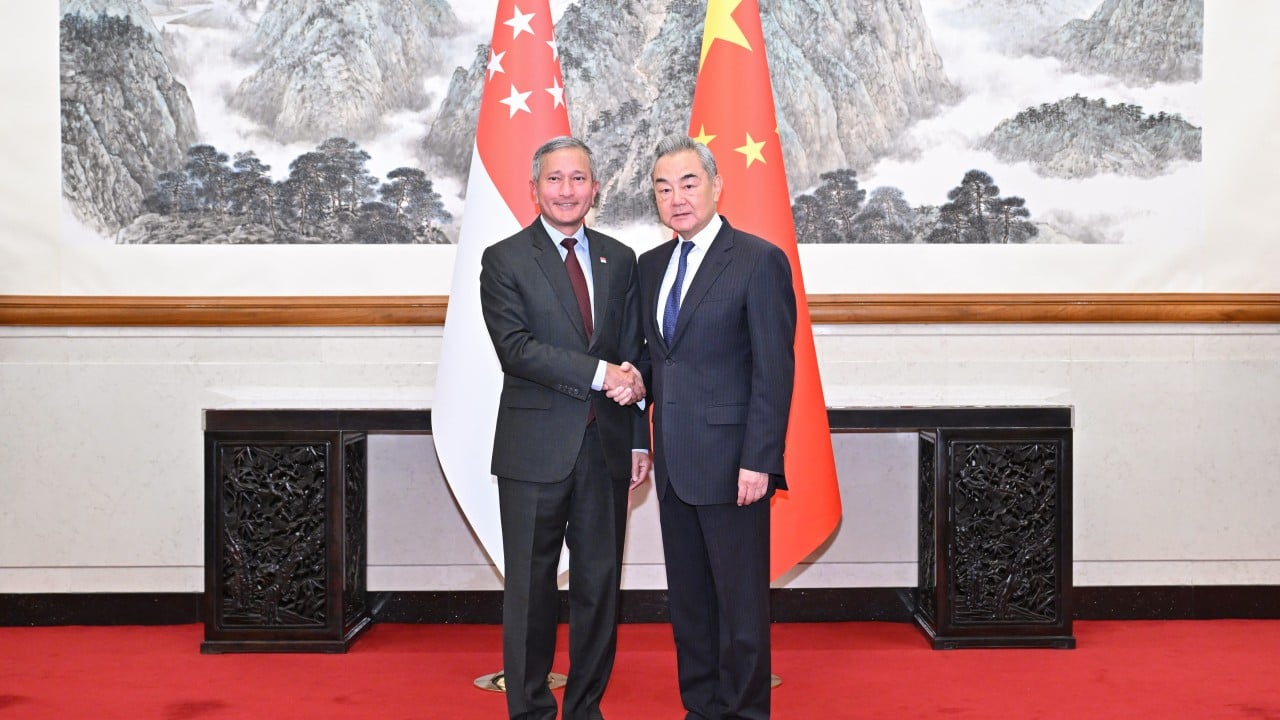
Diplomats love a good photo op. They shake hands, nod solemnly, and sign joint statements promising to keep the Malacca Strait free, open, and secure. The recent diplomatic theater between China and Singapore reaffirming transit rights in the world's most choked maritime chokepoint is the latest installment of this performance art.
It is a comforting narrative. It is also entirely irrelevant.
The lazy consensus among mainstream geopolitical analysts is that international law and bilateral goodwill are the bedrock of maritime security. They treat treaties like unbreakable shields. Having spent two decades analyzing maritime supply chains and watching how shipping lanes actually operate when tension spikes, I can tell you that these diplomatic assurances are worth less than the paper they are printed on.
When a real crisis hits, international law evaporates. Power dictates transit, not platitudes.
The Chokepoint Fallacy
The Malacca Strait handles over 90,000 vessels a year. It carries roughly one-quarter of the world’s traded goods and a massive chunk of China's energy imports. Because of this, the conventional wisdom insists that everyone has a shared interest in keeping it open.
This is a fundamental misunderstanding of naval strategy.
The value of a chokepoint is not its openness. Its value is the ability to close it. Beijing suffers from what former President Hu Jintao famously termed the "Malacca Dilemma"—the terrifying realization that a hostile naval power could blockade the strait and starve China of energy.
Singapore and China reaffirming transit rights changes absolutely nothing about this structural vulnerability.
- The Law of the Sea is Optional: The United Nations Convention on the Law of the Sea (UNCLOS) guarantees transit passage through international straits. But history shows us that when a state's survival is at stake, UNCLOS is ignored.
- Neutrality is a Luxury: Singapore prides itself on being a neutral, stable hub. But in a high-intensity conflict, neutrality is a luxury that major powers will not respect. A hub can be bypassed or blockaded just as easily as a nation-state.
- The Physics of Shipping: The strait is narrow, shallow in parts, and ridiculously congested. It doesn't take a full naval blockade to close it. A single scuttled mega-vessel or a handful of smart mines would halt traffic for weeks.
The Real Power Play is Already Moving Underground
While diplomats talk about keeping the water open, the real players are investing billions to render the Malacca Strait obsolete.
China is not relying on Singapore's goodwill or diplomatic pacts. They are building the China-Pakistan Economic Corridor (CPEC) to pump oil directly from Gwadar port to Xinjiang. They are funding deep-water ports in Myanmar to bypass the strait entirely. They are investing heavily in the Northern Sea Route through the melting Arctic.
If you want to know what a government actually believes, ignore their press releases. Look at their capital expenditure.
China is spending hundreds of billions to build workarounds. That tells you everything you need to know about how much they trust "reaffirmed transit rights."
The Illusion of Bilateral Stability
Let's dissect the relationship. Singapore is a critical partner for China, acting as a financial gateway and a steady diplomatic interlocutor. But Singapore also hosts a logistical command unit for the US Navy and regularly permits American littoral combat ships and P-8A Poseidon surveillance aircraft to operate from its bases.
To pretend that a bilateral statement between Singapore and China guarantees maritime stability is to ignore the elephant in the room: the United States.
[US Naval Presence in Singapore] <---> [Malacca Strait Chokepoint] <---> [Chinese Energy Import Reliance]
Singapore cannot guarantee transit rights to China if the United States decides to enforce a blockade. Singapore simply does not possess the kinetic naval power to defy an American carrier strike group. Conversely, if China decides to assert total control over its near-abroad, Singapore’s diplomatic protests will not stop the People's Liberation Army Navy from dictating who gets to pass.
Stop Asking if the Strait Will Close
The mainstream media constantly asks if the Malacca Strait could be closed. That is the wrong question.
The right question is: Who will control the terms of its closure?
Maritime transit is not a right; it is a capability. If you cannot defend your shipping containers with a destroyer, your "right" to transit exists only at the whim of the guy who owns the destroyer.
Imagine a scenario where regional tensions flare over Taiwan or the South China Sea. Insurance underwriters in London will instantly skyrocket premiums for vessels transiting the Malacca Strait. Commercial shipping will ground itself long before a single shot is fired. The market will close the strait before the navies do.
No amount of diplomatic reassurance from top diplomats will convince a commercial hull underwriter to risk a $300 million container ship in an un-insurable war zone.
The Flawed Premise of "Freedom of Navigation"
We hear the phrase "freedom of navigation" thrown around like a universal truth. It isn't. It is a specific geopolitical construct maintained by American naval hegemony since 1945.
As that hegemony shifts toward a multipolar reality, the rules change. We are moving away from a globalized commons where everyone plays by the same rules, and entering an era of transactional maritime corridors.
- Corridor Imperialism: Expect to see protected convoys for friendly nations and bureaucratic harassment, safety inspections, or outright denials for adversaries.
- The Weaponization of Maritime Chokepoints: The Bab-el-Mandeb and the Strait of Hormuz have already shown how non-state actors and regional powers can disrupt global trade using relatively cheap technology. The Malacca Strait is next.
To look at the Malacca Strait today and see a secure, rules-based shipping lane because two diplomats shook hands is a triumph of hope over historical literacy.
The Hard Truth for Global Supply Chains
If your corporate strategy relies on the assumption that the Malacca Strait will always remain an open, frictionless highway because international law demands it, you are exposed to catastrophic risk.
The downside to acknowledging this reality is that it forces businesses to face uncomfortable truths. Diversifying supply chains away from this single chokepoint is extraordinarily expensive. It means building redundancy, holding more inventory, and accepting lower margins in exchange for resilience. Most executives would rather look at a vague diplomatic statement, tick the "geopolitical risk managed" box, and go back to sleep.
That is a mistake.
The diplomatic dance between China and Singapore is not a guarantee of future peace. It is a symptom of extreme anxiety. Stable systems do not require constant, public reassurance that they are still working. The very fact that these statements must be made repeatedly is the clearest sign that the foundation is cracking.
Stop listening to what the diplomats say. Watch what the navies do. Prepare for a world where transit is bought with firepower, not negotiated with pens.