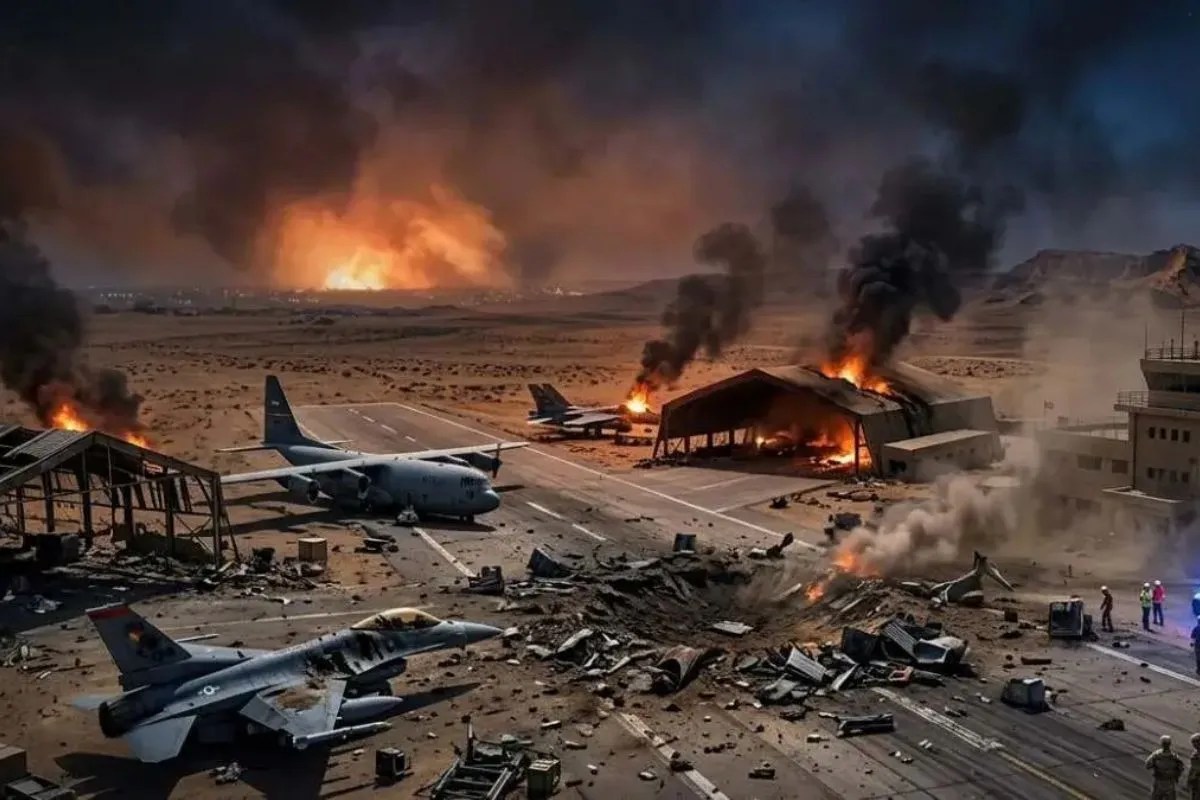
The headlines always follow the exact same predictable pattern when tragic casualties occur at remote military outposts in the Middle East. Media outlets instantly rush to cover troop deaths, drone strikes, and ballistic missile barrages through a hyper-narrow lens of immediate retaliation and military escalation. They frame these events as sudden, isolated tragedies born purely out of a sudden spike in regional hostility.
That framing is fundamentally broken. It ignores how these remote outposts are actually deployed, monitored, and maintained.
When news broke regarding American casualties at outposts like Tower 22 on the Jordan-Syria border, media narratives instantly fixated on tactical drone capabilities and missile specifications. Commentators argued about air defense interception percentages and debated whether radar systems suffered a technical glitch.
They completely missed the strategic picture.
I have spent years analyzing force-protection posture and defense logistics in contested regions. When you look past the sensationalized headlines, you realize that the tragedy isn't just about a stealthy drone sneaking past a radar grid. It is about a flawed operational posture that treats static forward bases as permanent, low-risk logistics hubs while leaving them structurally vulnerable to cheap, asymmetric attrition.
The Asymmetric Math Modern Defense Strategy Ignores
Standard news coverage wants you to believe this is a high-tech arms race. It isn't. It is an economic and tactical mismatch of brutal proportions.
Defense contractors and traditional military strategists love high-cost solutions. They want to talk about multi-million-dollar interceptors, integrated radar arrays, and sprawling electronic warfare domes. But when a hostile actor can launch dozens of low-cost, one-way attack drones costing a fraction of a single interceptor missile, the math breaks down instantly.
Imagine a scenario where an attacker spends fifty thousand dollars total on a swarm of off-the-shelf, low-altitude drones, while the target must expend millions of dollars in defensive munitions just to buy time.
Even with high interception rates, simple statistics dictate that saturation points will eventually be reached. Expecting 100% defense against continuous, low-cost saturation attacks on a static point in the desert isn't just unrealistic—it's a fundamental misunderstanding of probability.
Mainstream media frames these incidents as sudden defensive failures. The reality? They are the predictable outcome of using static, fixed-position bases to counter fluid, asymmetric warfare.
The Trap of Static Presence in Asymmetric Zones
Why do bases like Tower 22 exist in such exposed locations? Media outlets routinely repeat official press releases, calling them critical nodes for counter-terrorism operations and regional stabilization.
That is the comfortable narrative. The uncomfortable reality is that many of these outposts remain long after their primary strategic objectives have evolved, operating under routine administrative conditions rather than an active combat footing.
When an outpost transforms over time from an agile tactical position into a semi-permanent logistical base, inertia sets in:
- Defense postures default to routine patrol and surveillance schedules rather than dynamic evasion.
- Base infrastructure relies on soft-walled housing and predictable living quarters to accommodate long-term personnel.
- Identification Friend or Foe (IFF) protocols get bogged down by heavy daily supply traffic, creating operational blind spots that attackers can exploit.
When a low-flying attack drone follows a friendly supply drone returning to base, it isn't a miraculous tactical breakthrough by the attacker. It is an inevitable exploitation of routine administrative complacency.
Reporting on the technical specifications of the drone misses the point entirely. The primary failure wasn't radar hardware; it was operational design.
Stop Asking How to Stop Every Drone (Ask Why We Build Static Targets)
When analysts are asked on air how to prevent future casualties, they almost always give the same tired advice: install more air defense batteries, deploy more counter-UAS electronic systems, and harden base perimeters.
This advice sounds proactive, but it reinforces the exact strategic flaw that caused the problem in the first place.
Adding more defensive hardware to a fixed location simply creates a larger, more expensive static target. It forces commanders into a perpetual defensive posture where they must be right every single second of every day, while an adversary only needs to get lucky once with a low-cost munition.
If defense planners actually want to secure personnel and project power effectively, they need to break out of this fixed-base mindset.
1. Shift from Static Outposts to Highly Mobile Tactical Units
Permanent outposts in exposed desert terrain are sitting ducks for long-range surveillance and saturation strikes. Power projection in high-risk zones must rely on fast, highly mobile, rapid-relocation teams that never stay in one coordinate long enough for an adversary to establish a targeting solution.
2. Disperse Logistics Instead of Centralizing Risk
Concentrating hundreds of service members and critical infrastructure into small, highly visible footprints creates high-value targets. Logistics must be decentralized across smaller, modular, and un-crewed supply nodes.
3. Accept the Hard Limits of Hardened Air Defense
Air defense systems are necessary, but treating them as an impenetrable shield is dangerous hubris. Electronic warfare, kinetic interceptors, and directed-energy weapons all have blind spots, thermal limits, and ammunition constraints. Operational planning must assume that air defenses will fail under saturation, and base architecture must reflect that reality from day one.
The Real Cost of Ignoring Operational Reality
It is easy to blame enemy capabilities or isolated equipment failures when tragedy strikes. It avoids uncomfortable conversations about strategic doctrine and force posture.
Continuing to deploy service members to exposed, static outposts while relying on expensive, reactive defense shields guarantees one thing: adversaries will continue to refine their low-cost saturation tactics until the math forces a retreat.
Until defense planners stop treating static bases as low-risk logistics hubs, the same tragic headlines will keep repeating.
Stop buying more multi-million-dollar Band-Aids for a fundamentally broken posture. Move the targets, break the routine, or pull them out. Everything else is just waiting for the next strike.