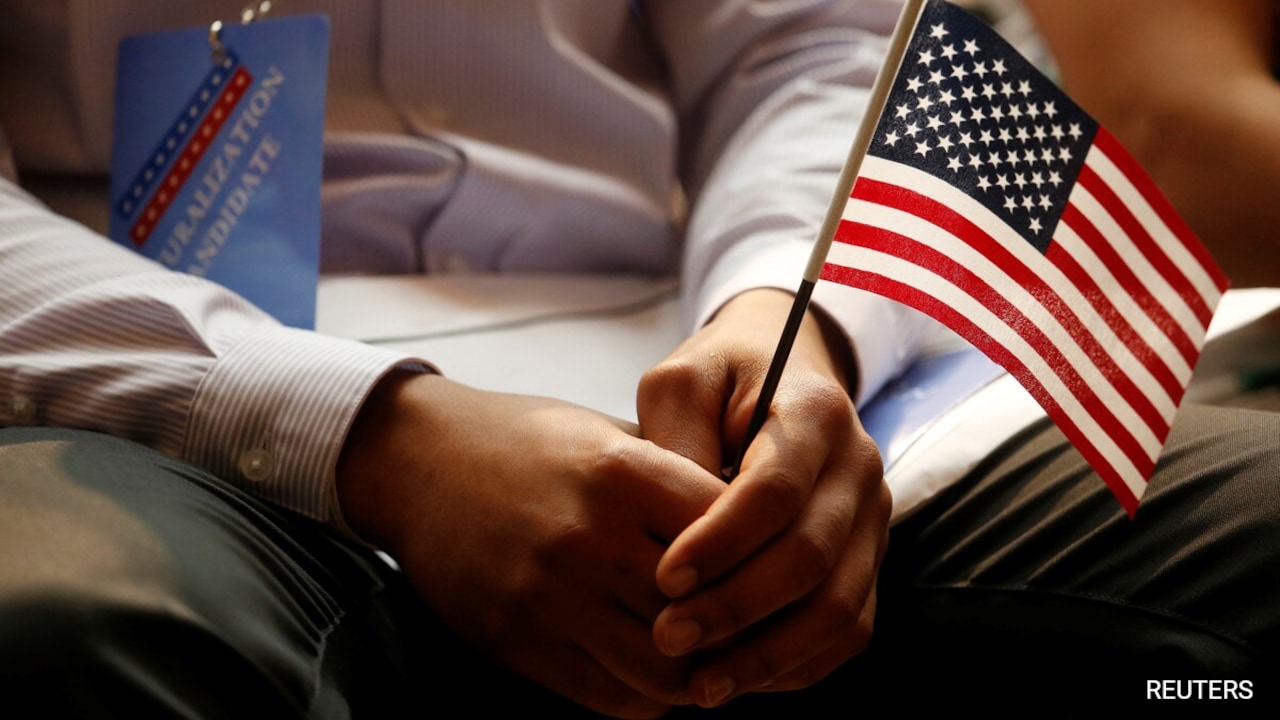
The fluorescent lights of a standard office cubicle do not buzz, but they possess a specific, crushing silence. For an engineer holding a temporary visa, that silence is thick with a countdown. Every April, a lottery takes place. It is not a lottery for wealth or luxury. It is a lottery for the right to keep sitting in that exact chair, to keep paying rent on an apartment down the street, and to keep building a life in a country that treats your existence as a statistical variable.
Consider a hypothetical engineer named Aarav. He is a composite of a dozen real people who have sat across from immigration attorneys, staring at a screen, waiting for an update from the United States Citizenship and Immigration Services. Aarav graduated at the top of his class at a state university. He writes clean, elegant code for an American logistics company. He pays his taxes on time. He loves local coffee shops. Yet, his entire future hinges on a random computer selection process known as the H-1B lottery.
When the system works as intended, it is a crapshift. When the system is gamed, it is a tragedy.
For years, a quiet frustration brewed within the tech corridors of Silicon Valley and the federal offices of Washington, D.C. Whispers turned into data, and data turned into an algorithmic reckoning. The federal government began pulling back the curtain on a massive, coordinated manipulation of the visa system. It was a scheme where large IT consulting firms, colloquially known as "body shops," flooded the lottery with multiple registrations for the same individuals. They stacked the deck. They turned a system meant for specialized talent into a high-volume numbers game.
The scale of the manipulation came into sharp focus when federal investigators started naming names.
The Weight of the Numbers
To understand how a system cracks, look at the sheer volume of pressure applied to it. In a typical year, the U.S. government caps the number of available H-1B visas at 85,000. For a long time, the number of applicants hovered around two hundred thousand. High odds, but fair.
Then came the digital shift. The government introduced an online registration portal designed to simplify the process. Instead of submitting thousands of pages of paper applications upfront, companies merely had to pay a nominal ten-dollar fee to enter a candidate's name into the digital hat. It was cheap. It was easy.
It was exploited.
Suddenly, the total number of registrations skyrocketed past half a million, then towards nearly eight hundred thousand. The math ceased to make sense. The pool of actual human beings seeking visas had not quadrupled overnight. Instead, a specific subset of outsourcing giants had figured out a loophole. By using multiple shell companies or partnering with affiliated entities, they submitted five, ten, or fifteen registrations for a single worker.
If Aarav has one ticket in the raffle, and a competitor has twelve tickets entered by various front organizations, Aarav loses. The independent American company trying to hire him loses. The integrity of the entire immigration infrastructure loses.
During a major federal probe into this visa fraud, a prominent official from the Trump administration pointed a finger directly at the corporate entities driving this imbalance. Among the names raised in the context of these systemic practices was Cognizant, a massive technology services provider. The mention was not an isolated critique; it was a symptom of a broader structural disease that federal investigators were determined to excise.
The government’s investigation revealed that a vast percentage of the unprecedented spike in lottery entries came from these duplicate filings. It was an industrial-scale operation designed to monopolize the visa supply, leaving traditional tech firms, startups, and honest applicants scrambling for the remaining crumbs.
The Architecture of the Loophole
How does an outsourcing giant justify this to themselves? In the corporate boardroom, it is not framed as fraud. It is framed as optimization.
Imagine a giant conveyor belt. On one end, you have an endless supply of cheap, young labor overseas. On the other end, you have American corporations looking to cut costs on their IT infrastructure, testing, and maintenance budgets. The outsourcing firm acts as the bridge. To maximize profits, they need to move as many bodies across that bridge as possible.
When the entry fee dropped to ten dollars, the financial barrier vanished. The strategy became obvious: flood the zone.
+-------------------------------------------------------+
|                THE EMBATTLED LOTTERY                  |
+-------------------------------------------------------+
|  Standard Applicant:                                  |
|  [ One Real Job Offer ] ---> ( 1 Entry )  ---> 12% Chance|
|                                                       |
|  System-Gaming Outsourcer:                            |
|  [ Multiple Shell Jobs ] ---> ( 10 Entries ) ---> 75% Chance|
+-------------------------------------------------------+
The system was designed for the world's most exceptional minds—the researchers, the inventors, the architects of tomorrow. Instead, the architecture of the loophole repurposed it to import thousands of mid-level support staff whose primary qualification was that their employers knew how to manipulate a database.
The real casualties of this optimization are the people who played by the rules. Consider the small-scale tech startup trying to hire a single, specialized machine-learning expert from a European university. They submit one application. They pay thousands in legal fees. They wait. Their business plan depends on this one individual. When the lottery results come back, they are rejected, shut out by a tide of automated entries generated by an outsourcing conglomerate.
This is where the corporate meets the personal. The abstract data points on a federal indictment represent real people whose lives are abruptly derailed.
The Interrogation of an Empire
When federal authorities began issuing fraud notices and launching audits, the panic in the IT services sector was palpable. The government was no longer just denying visas; they were looking at patterns of systemic collusion.
Investigators looked at the IP addresses from which registrations were submitted. They looked at the bank accounts paying the fees. They looked at the job descriptions, which were often identical copy-paste templates with minor title changes. The facade began to crumble.
For a company like Cognizant, being highlighted in discussions surrounding visa abuse carries significant reputational weight. These firms rely on the trust of Fortune 500 clients who want efficient tech support, not the legal liabilities associated with a federal immigration crackdown. The focus on these entities forced an uncomfortable conversation about the business model of tech outsourcing itself.
The defense from the industry has historically been a variation of a shrug: we are working within the rules provided to us. If the system allows multiple entities to petition for the same worker, why shouldn't we maximize our chances?
But there is a line between aggressive compliance and deliberate subversion. When multiple distinct companies share the exact same ownership, the exact same HR directors, and submit identical petitions for the exact same person to work on the exact same project, the argument of "independent job offers" evaporates. It becomes a coordinated conspiracy to defraud the United States government.
The Human Cost of Unfair Odds
The true damage of this fraud cannot be measured in corporate stock prices or federal fine totals. It is measured in the quiet anxieties of living out of a suitcase.
When an honest applicant loses the lottery year after year because the odds have been artificially suppressed, the clock runs out. In the United States, an international student on an Optional Practical Training visa typically has between one and three years to secure an H-1B. If their name is not drawn, they must leave.
Think of the couples forced to make sudden decisions about marriage just to stay in the same country. Think of the parents explaining to their children why they have to sell their house and move to a land the kids have never known. Think of the years of hard work, sleepless nights during finals, and loyalty to an employer, all wiped out because an automated system preferred a candidate with twelve fake entries over a candidate with one real one.
The visa system creates a strange, bifurcated reality. Outwardly, you are a successful professional contributing to the wealthiest economy on earth. Inwardly, you are fragile. You avoid changing jobs because the paperwork might trigger an audit. You avoid traveling abroad to visit sick relatives because a border agent might deny you re-entry on a whim. You live in a state of suspended animation.
The federal crackdown was a rare moment where the interests of American tech workers, honest immigrant professionals, and domestic startups aligned. Everyone wanted the scammers out of the room.
The Shifting Tides
The pressure from the probe eventually forced structural changes. The federal government realized that policing the fraud after the fact was an endless game of whack-a-mole. They needed to alter the mechanics of the machine itself.
Recent adjustments to the selection process have sought to tie the lottery to the unique individual rather than the number of registrations filed on their behalf. If an individual has ten companies filing for them, they get one entry in the selection pool. If their name is drawn, they can choose which legitimate job offer to accept.
This single change deflated the entire outsourcing strategy overnight. The numbers dropped. The odds for independent, honest applicants began to normalize.
But the scars of the era of unchecked fraud remain. An entire generation of international talent remembers the years when the system was openly rigged, when corporate giants could buy up the American Dream in bulk, and when the federal government looked the other way. The mention of major firms in federal fraud investigations serves as a historical marker—a reminder of what happens when human capital is treated as nothing more than a volume metric on a balance sheet.
Aarav still sits in his cubicle. The lottery has changed, but the anxiety remains. The system is still a machine, and machines are always vulnerable to those who know how to rewrite the code for their own benefit. The struggle for a fair shot continues, one application, one life, and one entry at worst-case odds at a time.