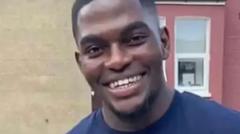
In a darkened editing suite in London, a producer clicks a mouse. On the screen, a life ends. This isn't a Hollywood dramatization with soaring strings and choreographed stunts; it is the grainy, jittery reality of a police body-worn camera. The man on the screen is Chris Kaba. The date was September 2022. But for the BBC’s Panorama team, the work of framing that moment for the British public was just beginning.
Broadcasting is often described as a window into the world, but windows can be tinted. They can be angled to catch the light in a specific way, or they can be smudged by the very hands trying to clean them. When the BBC aired its documentary Chris Kaba: The Shooting, they weren't just reporting a news item. They were navigating a minefield of grief, systemic tension, and legal scrutiny. Now, years later, the media regulator Ofcom has ruled that the window was, in one specific and vital area, tilted too far.
The Weight of a Silence
To understand the friction between a broadcaster and a police watchdog, you have to look at what happens when the cameras aren't rolling. The Independent Office for Police Conduct (IOPC) exists in a space of perpetual tension. They are the investigators of the investigators. Their credibility relies on a perception of total, clinical neutrality.
When the BBC sat down to tell the story of Chris Kaba—a 24-year-old unarmed Black man shot through a car windscreen by a firearms officer—the stakes were higher than mere ratings. The narrative was already fractured. On one side, a grieving family and a community demanding justice for what they saw as a systemic failure. On the other, a police force feeling increasingly besieged and a legal process that demanded silence until the facts were weighed in court.
The documentary sought to bridge this gap. However, the IOPC felt the BBC had done more than bridge it; they felt the BBC had misrepresented their very soul.
The Complaint in the Room
The core of the dispute wasn't about the tragedy itself, but about a single interview. The IOPC’s then-Director General, Sal Naseem, had spoken to the BBC. In the finished film, his words were used to help build the narrative of the investigation. But the IOPC argued that the BBC’s editing created a false impression. They claimed the documentary suggested the IOPC had already reached certain conclusions or held specific biases that it simply hadn't.
Ofcom’s job is to be the referee in this high-stakes game of perception. They don't look at whether a story is "sad" or "important"—they look at whether it is fair.
Consider the "Fairness" requirement in UK broadcasting. It isn't a suggestion. It is a legal obligation. If you interview a public body about an ongoing, sensitive criminal investigation, you carry the weight of that body’s reputation in your hands. If you cut a sentence in a way that changes a "maybe" to a "definitely," you aren't just editing; you are reshaping reality.
The Split Decision
Ofcom did not give the IOPC everything they wanted. Life, and regulation, is rarely that clean. The regulator rejected several parts of the watchdog’s complaint, acknowledging that the BBC has a right—and a duty—to examine matters of intense public interest. The BBC is allowed to have a perspective. It is allowed to be a watchdog itself.
However, the "partially upheld" ruling focuses on a specific failure to represent the IOPC’s position accurately regarding the timeline and the nature of the investigation. The regulator found that the BBC had not been sufficiently clear about the IOPC's role, potentially leading viewers to believe the watchdog was further along or more definitive in its stance than it actually was.
This might seem like a technicality. It might feel like arguing over the font size on a warning label while the house is on fire. But in the world of public trust, these technicalities are the bricks and mortar. If the public cannot trust that a police watchdog is being portrayed accurately, they cannot trust the investigation. If they cannot trust the investigation, the verdict—whatever it may be—will never bring peace.
The Human Cost of Narrative
Behind the legal filings and the regulatory jargon are people. There is the family of Chris Kaba, for whom every news cycle is a fresh wound. There is the firearms officer, whose life was placed under a microscopic lens that most of us will never experience. And there are the investigators at the IOPC, who occupy perhaps the loneliest job in the country: being hated by the police for being too harsh and hated by the public for being too lenient.
The BBC’s error, according to Ofcom, was a failure of balance in a moment where balance was the only thing holding the social fabric together.
Imagine a scale. On one side, you have the raw, emotional power of a family’s loss. It is heavy. It pulls the scale down with the weight of centuries of racial tension and modern-day grief. To balance that, you don't need "pro-police" propaganda. You need the cold, hard, boring facts of due process. You need the "if," the "but," and the "subject to further evidence."
When the BBC trimmed those "ifs" and "buts" for the sake of a more compelling 23-minute story, the scale tipped.
The Ripple Effect
What happens when a regulator upbraids the national broadcaster? Usually, it's a quiet correction on a website or a brief mention at the end of a news segment. But the impact is felt internally for years. Producers become more cautious. Lawyers spend more time in the editing room than creatives do.
The danger is "chilling effect." We need the BBC to ask the hard questions. We need them to point the camera at the things the state would rather keep in the dark. If the result of this Ofcom ruling is that broadcasters become too afraid to touch police shootings, then the public loses.
But there is a different lesson here. The lesson is that the truth is rarely a straight line. It is a messy, tangled web of perspectives. A master storyteller doesn't ignore the parts of the web that don't fit the plot; they weave them in, even if it makes the story more complicated.
The Chris Kaba documentary was an attempt to make sense of a moment that defied logic. It was a search for a "why" in a situation where the "how" was still being litigated. By failing to accurately represent the watchdog's caution, the BBC didn't just fail a regulator—they missed an opportunity to show the public exactly how difficult and slow the path to accountability truly is.
The Final Frame
The screen goes black. The credits roll. In the silence of a living room, a viewer is left with a feeling. That feeling is the most powerful tool a journalist has. If that feeling is based on a slightly skewed version of the facts, it is a house built on sand.
Ofcom’s ruling is a reminder that in the rush to tell a story that matters, the "how" is just as important as the "who." We live in an era where trust is the most expensive currency on earth. It is earned over decades and lost in a single, poorly-cut soundbite.
The story of Chris Kaba continues to evolve through the courts and through the collective memory of the city. The BBC will move on to the next documentary, and the IOPC will move on to the next investigation. But the ghost of that 23-minute film remains, a quiet warning to every storyteller with a camera: the lens is never just a piece of glass. It is a choice. And every choice has a consequence.