The Scent of 1994
The air inside was always a specific temperature. It was a chilled, artificially circulated climate designed to combat the heavy, humid steam rising from dozens of stainless steel warming pans. If you close your eyes, you can probably still smell it. The sharp, vinegar tang of salad dressing mixing with the yeast of hot yeast rolls. The sweet, heavy glaze of honey-baked ham drifting into the deep-fried crunch of chicken tenders.
To a kid standing under the glowing sneeze guard, the buffet wasn’t a restaurant. It was a kingdom.
For decades, the all-you-can-eat buffet was the ultimate manifestation of the American Dream, served on a heavy ceramic plate. It promised radical autonomy. In a world where adults constantly told you "no," the buffet said "yes." Yes to soft-serve ice cream before dinner. Yes to a mountain of mashed potatoes next to a slice of pizza. It was the only place where the working class could experience the intoxicating thrill of limitless abundance for $8.99.
But the lights are dimming on the golden era of the sneeze guard. The great American buffet is dying, and its demise tells us more about our changing relationship with community, economics, and our own bodies than any corporate financial report ever could.
The Calculus of Abundance
To understand how we lost the buffet, we have to understand how we built it. The business model was always a high-stakes psychological game played between the owner and the customer. It relied on a fragile, unwritten contract.
Consider a hypothetical family of four entering a mid-tier buffet chain in the late 1990s. Let’s call them the Millers. Frank, the father, is determined to "get his money's worth." He bypasses the salad bar entirely. He heads straight for the carving station, stacking his plate with roast beef and fried shrimp.
The restaurant owners knew Frank was coming. They didn't fear him.
Buffet economics operated on a system of aggressive cross-subsidization. While Frank was gorging on high-cost proteins, his wife was filling up on low-cost pasta salad, and his two children were eating twenty cents' worth of Macaroni and cheese alongside a mountain of cheap, air-filled soft serve. The house always won because the average human stomach can only hold about one to two liters of food.
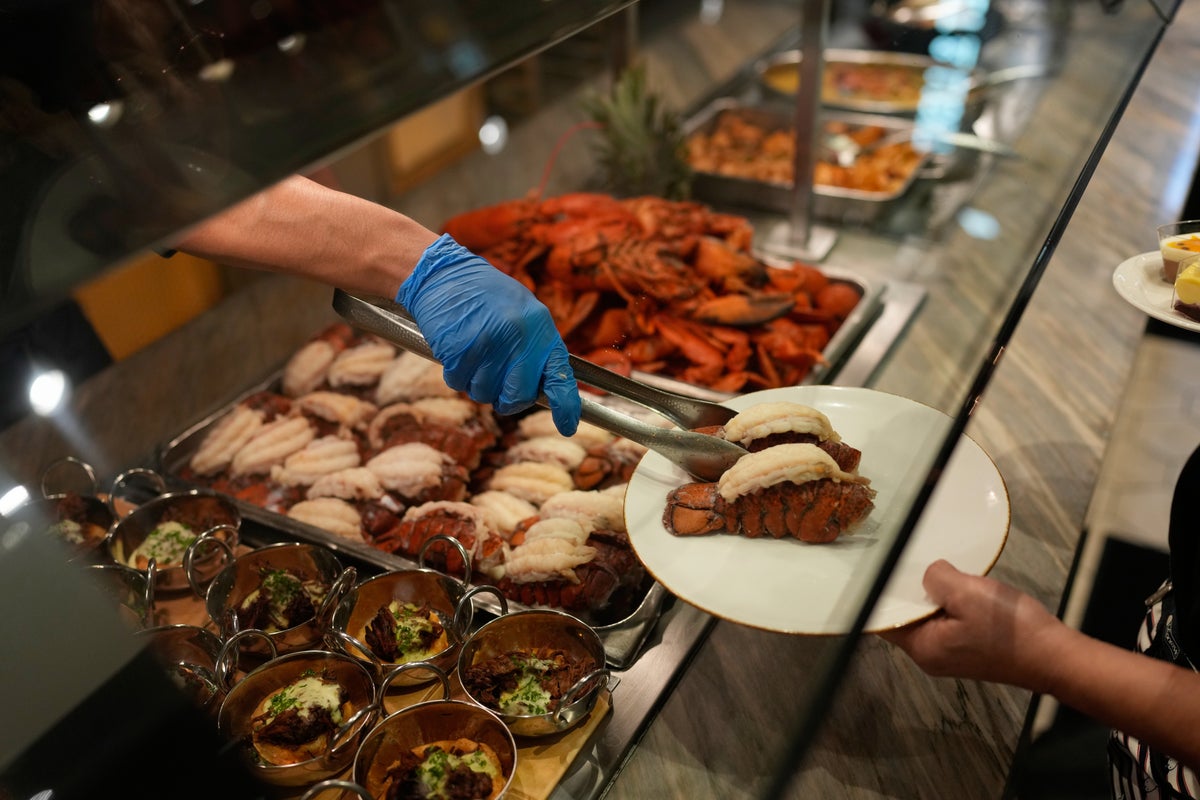
The industry mastered the art of subtle architectural manipulation. Plates were purposefully kept small—usually seven to nine inches—forcing customers to walk back and forth, allowing their brains time to register full signals. The expensive meats were carved slowly by an employee, creating a psychological barrier and a physical line that discouraged seconds. Meanwhile, the starch-heavy sides were accompanied by giant tongs, practically begging you to scoop a mountain of potatoes onto your plate.
It was a beautiful, chaotic dance of supply and demand. By eliminating waitstaff, buffets saved massively on labor costs. Food was prepped in massive batches, reducing individual plate presentation time to zero. In 1998, chains like Old Country Buffet, Ryan’s, and Golden Corral were expanding at a breakneck pace, anchoring strip malls across the nation. They were the secular town squares of suburban America, places where Sunday church crowds and high school football teams rubbed shoulders over bowls of chocolate pudding.
Then, the world shifted.
The Great Disconnect
The decline didn't happen overnight. It began with a subtle change in how we view health and corporate culture.
By the mid-2000s, the cultural conversation around food underwent a massive transformation. The low-fat craze of the late twentieth century gave way to an obsession with ingredients, sourcing, and freshness. Phrases like "farm-to-table" and "organic" entered the mainstream lexicon.
The buffet, by its very nature, could not adapt to this new world.
A buffet cannot easily look fresh. Food that sits under a heat lamp for forty-five minutes undergoes a slow, tragic metamorphosis. The cheese hardens into a shiny plastic rind. The lettuce wilts under the glare of incandescent bulbs. As younger generations grew more conscious of what they were putting into their bodies, the idea of a communal trough became less appealing. The thrill of abundance was replaced by the anxiety of contamination.
But the real assassin was inflation and the brutal reality of food waste.
In a traditional restaurant, a chef knows exactly how many steaks were ordered and how many went into the trash. In a buffet, predicting demand is an operational nightmare. If a storm hits at 7:00 PM on a Friday, thousands of dollars of fully prepared food must be thrown away. As wholesale food prices climbed throughout the 2010s, the margin for error evaporated.
The numbers tell a grim story. Buffets operate on razor-thin margins, often hovering around one to two percent. When the cost of beef, poultry, and dairy spiked, owners faced a catastrophic choice: raise prices and alienate their core working-class demographic, or lower food quality and lose everyone.
They tried a bit of both. The quality slipped. The crowds thinned. The magic was gone.
The Day the World Scrubbed Its Hands
If the buffet industry was suffering from a slow, chronic illness, 2020 was the sudden, catastrophic heart attack.
The global pandemic fundamentally rewrote our relationship with shared spaces and public surfaces. Overnight, the core mechanism of the buffet—dozens of strangers touching the same metal ladles, breathing near the same trays of food—became a public health nightmare. Government mandates shut down self-service dining across the globe.
Think about the sheer panic of that era. We were wiping down grocery bags with bleach wipes. The idea of standing in line behind someone coughing while waiting for a scoop of mac and cheese felt like an act of extreme recklessness.
Many of the biggest players could not survive the freeze-frame. Ovation Brands, the parent company of Old Country Buffet and Ryan's, filed for bankruptcy. Hundreds of locations closed their doors permanently, their iconic neon signs unceremoniously ripped from brick facades. Golden Corral, the undisputed king of the industry, saw its revenue plummet and was forced to temporarily pivot to cafeteria-style service, where workers plated the food for customers.
The unwritten contract was broken. We realized that the illusion of limitless abundance required a level of trust in our fellow citizens that we no longer possessed.
What We Lose When We Order In
It is easy to mock the buffet. Food critics have long sneered at them as monuments to American overconsumption and poor culinary taste.
But that critique misses the deep social utility of these spaces. The buffet was one of the last truly democratic spaces in American life. It didn't care about your tax bracket, your wardrobe, or your background. It was a haven for senior citizens on fixed incomes who could spend three hours nursing a coffee and a plate of cobbler without being rushed by a waiter looking to turn a table. It was a lifesaver for large, low-income families who knew exactly what their bill would be before they sat down, with no hidden costs or upcharges for extra sides.
Today, our dining experiences are increasingly atomized. We sit in our cars at drive-thru lanes, or we stare at our phones while a delivery driver leaves a lukewarm bag of takeout on our porch. We pay more for less, isolated in our own private bubbles of consumption.
The decline of the all-you-can-eat buffet is more than just a shift in restaurant trends. It is a symptom of a society that is becoming more expensive, more isolated, and more cynical.
A few survivors remain, clinging to the edges of highways and the hearts of rural communities. They are packed on Sunday mornings with people who still crave that specific, nostalgic warmth. But the era of the grand American smorgasbord as a cultural powerhouse is over.
Next time you pass one of those remaining neon signs, look at the families walking through the doors. They aren't just looking for a meal. They are looking for a world where everything is already paid for, the choices are entirely theirs, and the plates are waiting to be filled.