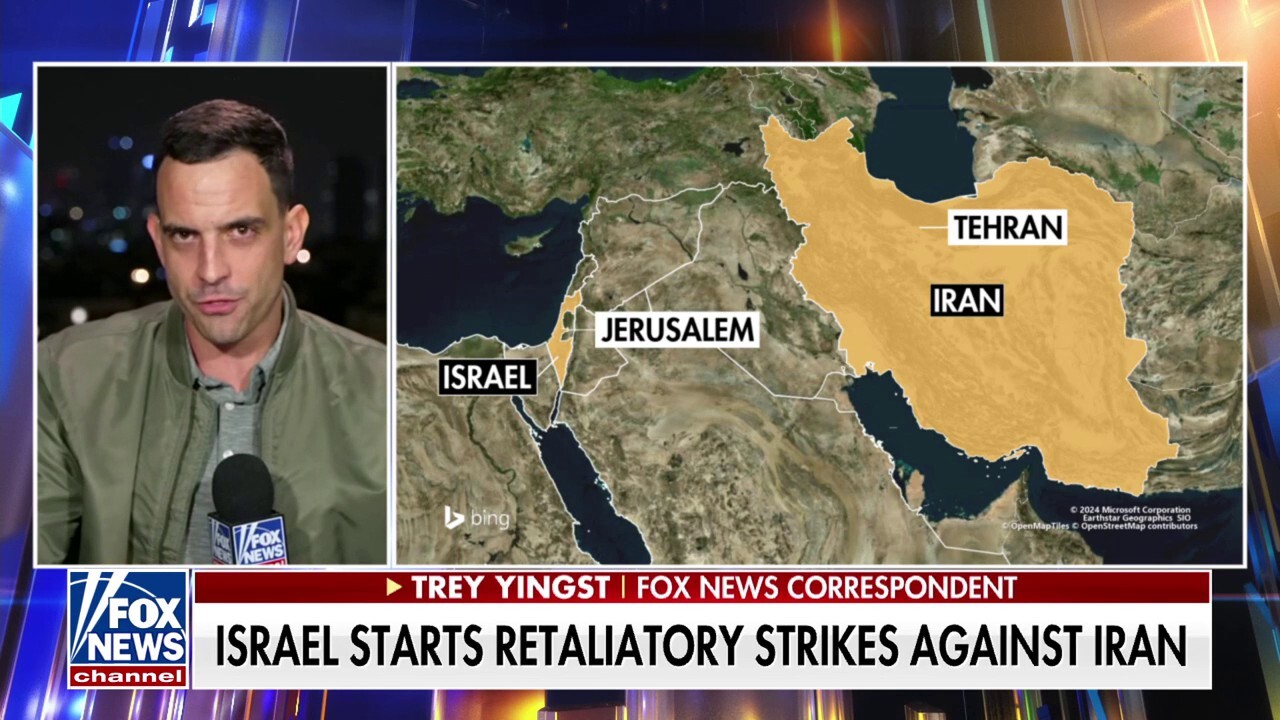
The shift in American executive rhetoric toward "blasting" Iranian targets represents more than political posturing; it signifies a recalibration of the escalatory ladder in the Persian Gulf. To evaluate the viability of a kinetic strike against Iran, one must move beyond the headlines and analyze the three structural pillars governing such a decision: the degradation of nuclear breakout timelines, the geography of retaliatory proxies, and the global energy supply chain's tolerance for disruption. A strike is not an isolated event but a variable in a broader equation of regional stability where the cost of inaction is weighed against the friction of an open-ended conflict.
The Architecture of Iranian Nuclear Hardening
Iran has spent decades diversifying and hardening its nuclear infrastructure, specifically focusing on the Natanz and Fordow facilities. Analyzing a potential strike requires understanding the distinction between superficial damage and structural degradation.
- Geological Defense Layers: The Fordow Fuel Enrichment Plant is situated deep within a mountain. Conventional munitions lack the penetration depth required to collapse these chambers. A successful kinetic operation would require the deployment of Massive Ordnance Penetrators (MOP), specifically the GBU-57, which requires B-2 or B-21 stealth platforms for delivery.
- Redundancy and Knowledge Transfer: Kinetic strikes can destroy centrifuges, but they cannot erase the intellectual capital of the Iranian Atomic Energy Organization. The primary bottleneck for Iran is not the physical machinery, which they have proven capable of mass-producing, but the timeline required to re-enrich uranium to weapons-grade levels (90% U-235).
- The Enrichment Math: Current estimates suggest a "breakout time"—the duration needed to produce enough fissile material for one weapon—measured in weeks. A strike aims to reset this clock by 18 to 24 months. However, the destruction of physical assets often incentivizes a state to move its program further underground, effectively ending international oversight and inspections.
Strategic Friction and the Proxy Variable
Any kinetic action against the Iranian mainland triggers an immediate activation of the "Axis of Resistance." This network functions as a distributed defense system designed to impose costs on U.S. assets and allies without requiring a direct state-on-state conventional war.
The Iranian retaliatory model relies on asymmetric saturation. By utilizing low-cost drones and short-range ballistic missiles via proxies in Lebanon, Iraq, Yemen, and Syria, Tehran can overwhelm sophisticated air defense systems like the Patriot or Iron Dome through sheer volume. The cost function of this exchange is heavily skewed: an interceptor missile costs millions of dollars, while the attacking drone may cost less than $20,000.
This creates a containment paradox. A strike intended to prevent a future nuclear war may immediately ignite a regional conventional war. The logic of the "blast" approach assumes that the shock and awe of the initial strike will paralyze Iranian command and control. Historical precedent suggests the opposite; external kinetic pressure tends to consolidate domestic political power in Tehran and validates the hardline argument for a nuclear deterrent as the only guarantee of regime survival.
The Economic Radius of the Strait of Hormuz
The most significant constraint on U.S. military options is the vulnerability of the Strait of Hormuz. Approximately 20% of the world’s liquid petroleum gas and oil consumption passes through this 21-mile-wide chokepoint. Iran’s "Anti-Access/Area Denial" (A2/AD) capabilities in the Persian Gulf represent a credible threat to global markets.
- Maritime Guerilla Warfare: Iran utilizes a swarm of fast-attack craft armed with anti-ship missiles. These vessels are difficult to target with traditional naval assets and can disrupt commercial shipping lanes within minutes.
- Sea Mine Deployment: The simple act of seeding the strait with naval mines would halt insurance coverage for tankers, effectively closing the gulf even if the mines are never detonated.
- The Price Shock: Economic modeling suggests that a total closure of the Strait of Hormuz could cause oil prices to spike by $30 to $50 per barrel within 72 hours. For the U.S. executive, the political cost of a domestic energy crisis often outweighs the strategic benefits of a limited strike.
The Calculus of Escalation Dominance
For a strike to be "successful" in a consulting or strategic sense, it must achieve Escalation Dominance. This means the U.S. must be able to respond to every Iranian counter-move with a more punishing blow, eventually forcing Tehran to sue for peace. The difficulty lies in the "grey zone" of Iranian operations. If Iran responds to a strike by sabotaging Saudi oil fields or cutting undersea internet cables via the Houthis, the U.S. faces the dilemma of whether to escalate to a full-scale invasion—a scenario with no clear exit strategy.
The "blast the hell out of" rhetoric ignores the Law of Diminishing Strategic Returns. The first 50 targets destroyed yield the highest value (nuclear labs, air defense hubs). Every target thereafter increases the risk of a protracted conflict while yielding less tactical gain.
The Kinetic-Diplomatic Feedback Loop
Military action is rarely an end in itself; it is a tool to force a change in diplomatic posture. The current logic suggests that by demonstrating a "credible threat of force," the U.S. can coerce Iran back to the negotiating table on more favorable terms. This theory, however, relies on the assumption that the Iranian leadership is a rational actor prioritizing economic stability over ideological goals.
If the goal is to prevent a nuclear Iran, the strategist must weigh three distinct paths:
- Surgical Attrition: Continuous, low-level sabotage and cyber-attacks (Stuxnet 2.0) that delay progress without triggering a full-scale retaliatory response.
- Comprehensive Decapitation: A massive strike aimed at the IRGC leadership and command structures. This carries the highest risk of regional war but offers the most significant short-term disruption.
- Containment and Deterrence: Accepting a "threshold" Iran (a state that can build a bomb but chooses not to) and surrounding it with a permanent, integrated regional missile defense shield involving Israel and the Gulf states.
The "blast" option falls into the second category. It is a high-beta strategy. It offers the potential for a total reset of the regional order but risks a systemic collapse of energy markets and a multi-front war that the U.S. military, currently pivoted toward the Indo-Pacific, is ill-equipped to manage simultaneously.
The operational reality is that "blasting" Iran is a tactical solution to a structural problem. Without a post-strike plan for regional governance or a mechanism to prevent the immediate reconstruction of nuclear facilities, kinetic action serves only as a temporary delay purchased at an astronomical geopolitical price. The strategic play is not the strike itself, but the credible buildup of localized conventional forces to a point where Iran perceives the cost of their nuclear program as higher than the cost of its abandonment. If the U.S. proceeds with a strike, it must be prepared for a "Day 2" that involves the total neutralization of the Iranian Navy and the occupation of key coastal territories—anything less is a half-measure that invites a more dangerous counter-response.