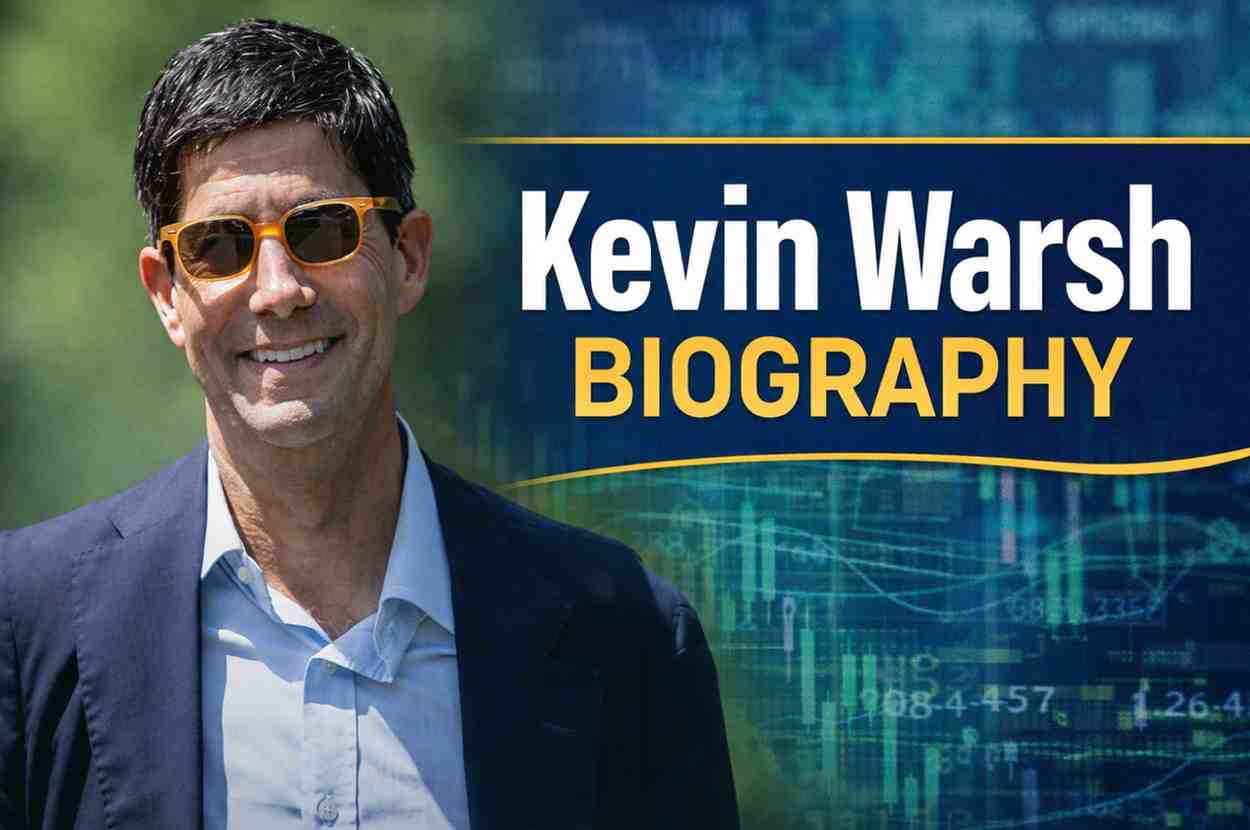
The financial press loves a cardboard cutout. When the name Kevin Warsh circulates for top-tier economic roles—whether it’s Treasury Secretary or Fed Chair—the narrative machine grinds out the same tired tropes. They call him the "young gun," the "Wall Street whisperer," or the "inflation hawk."
They are wrong.
If you’re looking at Kevin Warsh and seeing a rigid ideological warrior, you’ve been reading the wrong briefing notes. The common consensus paints him as a man of the 2008 crisis who learned to hate easy money. The reality is far more complex and, for many, far more unsettling. Warsh isn't a hawk; he’s a pragmatist who understands that the plumbing of the financial system matters more than the ivory tower theories taught at Harvard or Stanford.
The Myth of the Hard Money Zealot
Most commentators point to Warsh’s 2011 dissent against the Fed’s second round of quantitative easing (QE2) as proof of his hawkish DNA. They frame it as a moral stand against debasing the currency.
It wasn't.
Warsh wasn't arguing that money was too cheap on principle. He was arguing that the Fed was becoming a "price maker" instead of a "price taker." He saw that the central bank was effectively nationalizing the risk in the bond market, destroying the signal that markets use to allocate capital.
The "lazy consensus" says QE was a necessary evil to save the world. Warsh’s critique, which remains the most misunderstood document in modern central banking, was that QE didn't just save the system—it broke the system's ability to self-correct. He wasn't worried about a 3% inflation print; he was worried about a zombified economy where market prices mean nothing.
When you look at his record through this lens, his supposed "hawkishness" disappears. He is a structuralist. He cares about the machinery. If the machinery is clogged with excess liquidity that isn't reaching the real economy, he wants to flush it. That’s not ideology. That’s maintenance.
Why the "Wall Street Insider" Tag is a Distraction
Critics love to bring up his pedigree at Morgan Stanley. They use it as a shorthand to suggest he’s a puppet for the big banks.
I’ve spent two decades watching how these appointments actually play out. The academics—the Bernankes and the Yellens—often end up being far more subservient to the "too big to fail" crowd because they don't actually understand how a trading desk functions. They rely on models. When the models break, they panic and do whatever the bankers tell them is necessary to "prevent contagion."
Warsh is dangerous to the status quo precisely because he knows where the bodies are buried. He understands the repo market. He understands credit spreads. He understands that a bank's balance sheet is a work of fiction during a liquidity crunch.
In 2008, Warsh was the bridge between the Fed and the actual markets. While the PhDs were arguing over DSGE models, Warsh was on the phone figuring out which counterparty was about to blow up. To call him a "Wall Street guy" is to miss the point: he is a market mechanic who happens to have a high-end tailor.
The Reformer Nobody Wants to Admit They Need
The current obsession with "soft landings" and "dot plots" is a distraction from the real problem: the Fed has become a giant, bloated hedge fund for the federal government.
Warsh’s true value—and the reason he is often bypassed for the top spot—is his insistence on Fed accountability. He has been vocal about the fact that the central bank has taken on too much responsibility for the failure of fiscal policy.
- The Problem: Congress spends like a drunken sailor, and the Fed prints the difference.
- The Warsh View: The Fed should stop being the enabler.
This is the nuance the "hawk" label misses. A hawk wants higher rates to punish inflation. Warsh wants a narrower mandate because he knows that when the Fed tries to do everything (manage climate change, social equity, and full employment), it ends up doing nothing well except inflating asset bubbles.
Imagine a Warsh-Led Treasury
Think about the standard playbook. A new Treasury Secretary arrives, promises to "stabilize the markets," and proceeds to borrow another $2 trillion.
If Warsh took the helm, the shock wouldn't come from a sudden austerity program. It would come from a shift in how the U.S. manages its debt. Warsh has hinted for years that the Treasury should be issuing ultra-long-term debt—50-year or 100-year bonds—to lock in rates and protect the taxpayer from the volatility of the short-term market.
Why hasn't this happened? Because the current system benefits the primary dealers who make a killing on the constant churn of short-term paper. Warsh knows this. He’s seen the fee structures. He’s seen the spreads.
A Warsh Treasury would be a nightmare for the rent-seekers of the financial industry. He wouldn't dismantle the system; he would make it efficient. And in Washington, efficiency is a threat to everyone's budget.
The Downside of Disruption
Let’s be honest: there is a risk to the Warsh approach.
The global economy is currently addicted to the "Fed Put"—the belief that the central bank will always step in to stop a market crash. Warsh doesn't believe in the Put. If he were in charge, and the markets started to wobble because of poor corporate decisions, he might actually let them fall.
This is the "battle scar" perspective. I’ve seen what happens when you try to protect every investor from every loss. You end up with a brittle, fragile economy where nobody knows how to price risk. Warsh is willing to accept a period of volatility to restore sanity.
Are you?
Most people say they want a "free market" until their 401k drops 15%. Warsh is one of the few people in the room who understands that the 15% drop is often the medicine, not the disease.
Correcting the Narrative on "Youth and Experience"
When he was appointed to the Fed Board at 35, he was mocked for his age. Now, at 55, he’s seen as a veteran.
But the age debate was always a red herring. The real issue was that he hadn't spent thirty years in an economics department. He didn't have a "legacy" to protect.
The people who dominate the economic discourse today are the ones who built the current, failing framework. They are incentivized to tell you that the system is basically sound, provided we just tweak the interest rate by 25 basis points here or there.
Warsh isn't a part of that guild. He’s an outsider who worked his way inside and didn't like what he saw. He’s the guy who tells you your car’s transmission is shot while everyone else is trying to sell you a new air freshener.
The Strategy for the New Era
If you’re waiting for a return to the low-inflation, low-volatility world of the 2010s, you’re dreaming. We are in a world of supply shocks, geopolitical tension, and massive debt overhangs.
In this environment, the "consensus" candidate is the most dangerous person in the room. They will try to apply old solutions to new problems. They will "leverage" (to use a word I hate) the same failed strategies of the past decade.
Warsh offers a different path. It’s not a "hawk" path. It’s a "truth" path.
- Acknowledge that the Fed cannot fix the supply chain.
- Acknowledge that debt matters.
- Acknowledge that the market needs to be allowed to fail so it can eventually succeed.
This isn't about being a conservative or a liberal. It’s about being a realist. The real Kevin Warsh isn't the man the media describes. He’s the one they are afraid to actually listen to.
Stop looking for a savior who will keep the party going. Start looking for the person who knows where the circuit breaker is.
The party is over. It’s time for the mechanic to take the wheel.