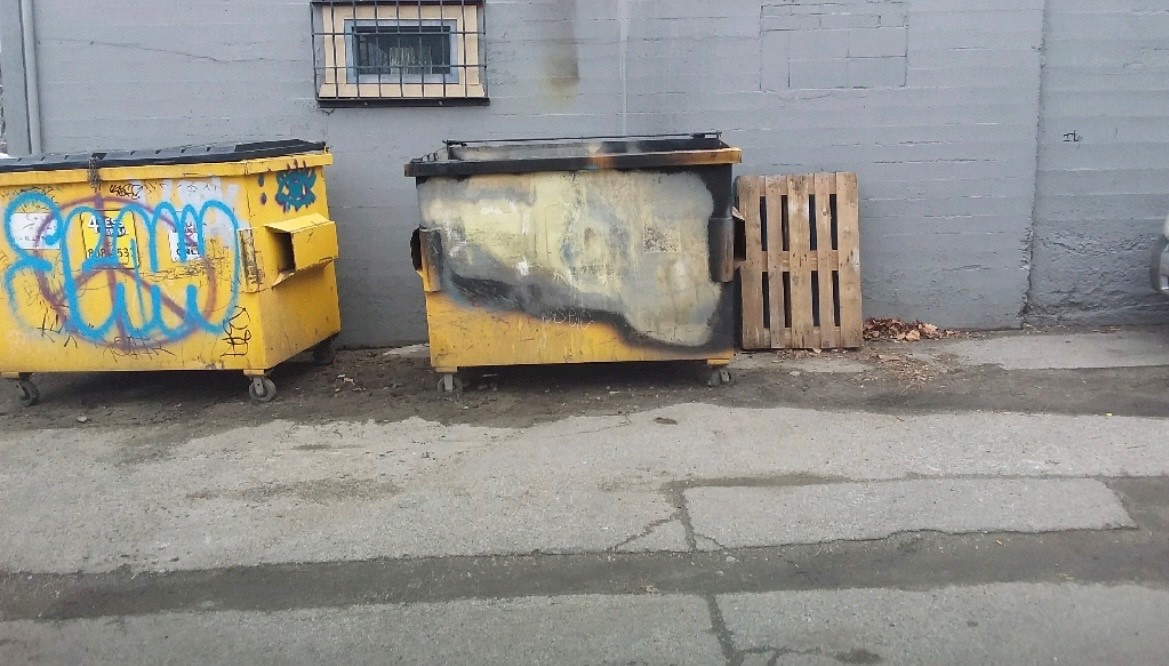
Kelowna’s downtown core is facing a quiet, smoldering catastrophe that has moved far beyond simple vandalism. Business owners are currently grappling with a surge in dumpster fires that threaten more than just waste bins; they are jeopardizing building integrity, skyrocketing insurance premiums, and the physical safety of staff. While local headlines often dismiss these incidents as isolated mischief, the financial reality is a mounting tax on an already strained retail sector. Merchants are spending thousands on steel enclosures and private security just to keep their storefronts from becoming the next pile of ash.
The Financial Friction of Urban Decay
To understand the weight of this issue, one must look at the ledger, not just the fire department’s incident log. When a dumpster goes up in flames, the immediate damage to the bin is the smallest part of the bill. The real cost lies in the secondary effects.
Heat from a standard commercial waste fire can easily reach temperatures high enough to crack masonry or melt siding. In the narrow alleys of Kelowna’s North End and downtown core, these bins are often situated directly against building envelopes. The result is structural damage that is rarely covered by basic liability policies without a significant deductible. For a small boutique or a family-run cafe, a $5,000 deductible is a month of profit gone in a single night of smoke.
Beyond the brick and mortar, the insurance industry is watching. Actuaries do not view Kelowna as a static environment. They see a trend line. As the frequency of these fires increases, the entire downtown zone is being reclassified as a higher-risk area. This leads to "premium creep," where every business on the block pays more because one or two bins are being targeted. It is a collective punishment for a localized failure in public safety.
Beyond the Misconception of Homelessness
The public narrative often shifts immediately to the unhoused population. It is a convenient shorthand, but it lacks the nuance required to solve the problem. While some fires are certainly the result of warming attempts gone wrong or improper disposal of smoking materials, a significant portion of the recent activity suggests something more deliberate.
Fire investigators have noted patterns that lean toward serial arson rather than accidental ignition. When three bins on the same street are lit within an hour, that isn't a struggle for warmth; it is a coordinated disruption. By focusing solely on the social aspect of the street population, the city risks ignoring the need for better lighting, more frequent waste pickup, and stricter enforcement of fire codes regarding bin placement.
The city’s current bylaws require businesses to secure their waste, yet the infrastructure to do so is often lacking. Many older buildings were not designed with internal waste rooms. This forces merchants to leave bins in accessible alleys, effectively providing the fuel for their own potential ruin. It is a systemic trap where the victim is blamed for the lack of a secure cage that the urban layout doesn't even allow them to build.
The Defensive Architecture of the Okanagan
Merchants are now being forced to play the role of amateur security consultants. We are seeing a shift toward "defensive architecture" in Kelowna. This isn't about aesthetics; it is about survival.
- Gravity-locked lids: Standard plastic lids are useless against a determined arsonist. Heavier, metal-reinforced lids with gravity locks are becoming the new standard.
- Enclosure mandates: Many businesses are shelling out $10,000 or more to build cinderblock enclosures. These structures must be fire-rated, which adds to the construction complexity and cost.
- Relocation strategies: Some owners are opting to lose valuable parking spaces just to move bins away from their back doors, trading convenience for a slim margin of safety.
This shift represents a fundamental change in how Kelowna does business. The cost of doing business used to include rent, labor, and inventory. Now, it includes a "fire tax" in the form of physical fortifications.
The Gap in Municipal Response
City Hall and the local fire department are in a difficult position, but the current strategy of "education and enforcement" is falling short of the mark. Issuing a fine to a business owner because their bin was set on fire by a third party is not a solution; it is a secondary victimization.
The city needs to consider a more aggressive approach to waste management in high-density areas. This could include a municipal shift toward centralized, underground waste containers like those seen in European cities. These systems make it physically impossible for an individual to set fire to the bulk of the waste, as the storage is subterranean and oxygen-deprived.
Instead, Kelowna remains tethered to the traditional alleyway bin model. This model is a relic of a time when the city was a sleepy seasonal town. Now that it is a growing mid-sized city with urban challenges, the old ways of handling trash are literally blowing up in the faces of the tax-paying business community.
The Ripple Effect on Tourism and Growth
Kelowna’s brand is built on being a pristine, safe, and upscale destination. A charred alleyway and the smell of burnt plastic do not fit that brochure.
When a tourist walks past a boarded-up window or a scorched brick wall, the perception of the city shifts. It creates a sense of lawlessness that is hard to shake. If the business community continues to feel that the city is not protecting their assets, the investment will dry up. New entrepreneurs will look at the cost of "fire-proofing" their operations and decide that the Kelowna market isn't worth the entry fee.
This is how urban decay starts. It isn't a sudden collapse; it is a slow burn. It starts with a dumpster fire, moves to a broken window, and ends with a "For Lease" sign that stays up for years. The city is currently at a crossroads where they can either modernize their approach to urban safety or watch their downtown core become a liability.
A New Protocol for Waste Security
Waiting for the provincial government or social services to solve the root causes of street disorder will take years. Business owners do not have years. They have monthly rent cycles.
The most immediate fix is a change in how waste is collected. Night-time collection, while more expensive due to labor shifts, would drastically reduce the "fuel load" available to arsonists during the hours when these fires most often occur. If the bins are empty at 11:00 PM, there is nothing to burn at 2:00 AM.
Furthermore, the city could incentivize the installation of high-definition cameras in alleys by offering tax credits or grants. Currently, the onus is entirely on the owner to buy, install, and monitor these systems. A public-private partnership for alleyway surveillance would provide the Kelowna RCMP with the evidence needed to actually prosecute the individuals responsible, rather than just filing another report.
The reality of the situation is that a bin fire is rarely "just a bin fire." It is a symptom of a city outgrowing its infrastructure and a business community that feels abandoned by the systems meant to protect it. Until there is a hard shift toward physical security and modernized waste management, the merchants of Kelowna will continue to watch their profits go up in smoke.
Stop treating these incidents as minor nuisances and start treating them as an assault on the city's economic heart.