The political establishment and the tech elite want you to believe they are locked in an existential battle for the soul of online discourse.
They are lying to you.
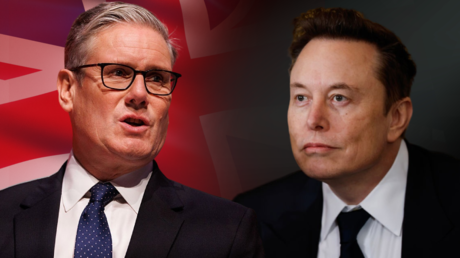
When UK Prime Minister Keir Starmer traded public blows with Elon Musk over civil unrest, the media immediately fell into its comfortable, lazy narrative. On one side, you have the responsible state actor trying to maintain order against online radicalization. On the other, the absolutist billionaire championing free speech against government overreach.
This framing is entirely wrong.
Starmer and Musk are not opposites. They are two sides of the exact same coin. Both are digital attention merchants using high-stakes conflict to centralize their own power. The public spat wasn't a defense of principle; it was a masterclass in mutual political validation.
By treating this feud as a ideological war, commentators missed the actual mechanics of modern political power.
The Symbiotic Outrage Machine
Governments need scapegoats. Tech platforms need engagement.
When political leaders blame algorithms for systemic societal friction, they are shifting responsibility away from decades of policy failures. It is far easier to point at an algorithmic feed than it is to address failing public infrastructure, economic stagnation, or fractured community trust.
Musk, conversely, thrives on the perception of being the ultimate counter-cultural disruptor. Every time a Western government threatens legal action or public condemnation, it validates his narrative to his core user base. It proves his platform is the "only" place where raw truth exists.
This is a classic feedback loop.
[State Failure / Unrest]
       │
       ▼
[Government Blames Platform] ◄───┐
       │                         │
       ▼                         │  (Mutual Escalation)
[Platform Defies Government] ────┘
       │
       ▼
[Increased Engagement & Political Capital]
I have spent over a decade analyzing how institutional power interacts with digital architecture. If there is one constant, it is this: outrage is the most liquid asset on the internet. Starmer gained domestic authority by appearing as the adult in the room protecting the public. Musk gained global eyeballs and solidified his status as an anti-establishment icon.
Nobody lost. Except, of course, the citizens looking for actual solutions to real-world friction.
The Myth of the Absolutist and the Illusion of the Protector
Let's dismantle the two core illusions keeping this media circus alive.
1. Elon Musk is Not a Free Speech Absolutist
The idea that X is a neutral town square governed strictly by the First Amendment or libertarian ideals is laughable. Data shows that compliance with government takedown requests under current ownership has actually sustained a remarkably high rate, particularly in authoritarian regimes or nations with strict local laws like India and Turkey.
Musk picks his battles based on geopolitical leverage and brand positioning. Picking a fight with a center-left British Prime Minister costs him nothing. It aligns perfectly with his domestic political branding in the United States. It is performative defiance.
2. Keir Starmer Cannot Police the Internet
The British government’s belief that it can regulate global digital platforms via threats of fines or turning the dials of the Online Safety Act is anachronistic. It views the internet through a 20th-century broadcast lens.
When a state attempts to suppress digital communication during periods of unrest, it frequently triggers the Streisand Effect. Information—and misinformation—doesn't disappear; it simply migrates to encrypted channels like Telegram or decentralized networks where state surveillance and moderation protocols have zero visibility. By focusing on the megaphone rather than the message, governments ensure they remain permanently reactive.
The Wrong Question: "Should We Censor or Uncensor?"
The public debate always gets bogged down in a binary trap: Do we need more moderation or less?
This is a flawed premise. The issue is not the content itself; it is the structural architecture of algorithmic distribution.
| Metric | Legacy Institutional View | The Reality of Network Effects |
|---|---|---|
| Primary Mover | Individual bad actors posting malicious content. | Optimization loops maximizing for high-arousal negative emotions. |
| Solution | Content moderation, bans, and legal threats. | Protocol-level decentralization and changing economic incentives. |
| Outcome | Whack-a-mole censorship that angers users and fails to stop spread. | True resilience against systemic manipulation. |
When platforms optimize for time-in-app, anger is the most efficient metric to exploit. A user who is calm logs off. A user who is furious replies, shares, and refreshes the feed.
Starmer's focus on policing specific posts or demanding tighter algorithmic controls is like trying to stop a flood by wiping down the counters. The infrastructure itself is built to leak. Musk knows this. He didn't invent the outrage engine; he just bought the factory and turned off the mufflers.
The Costs of the Counter-Intuitive Approach
If you want to actually fix this dynamic, you have to accept a deeply uncomfortable truth: The state must lose its monopoly on defining acceptable speech, and platforms must lose their monopoly on distribution mechanics.
This approach satisfies no one in the current debate.
- For the Statists: It means admitting that the government cannot protect citizens from offensive or disruptive ideas without turning into an authoritarian apparatus itself.
- For the Tech Optimists: It means acknowledging that absolute corporate control over the digital public square—disguised as free speech—is just another form of centralized tyranny.
The actual path forward requires breaking the data monopolies entirely. If users could choose their own algorithmic filters via open protocols rather than being forced into a single, centrally managed engagement loop, the political utility of the Starmer-Musk feud evaporates overnight.
But neither the politician nor the tech billionaire wants that. They need the centralization. They need the giant, single microphone because it allows them to command the entire room.
The Reality of Digital Sovereignty
Stop looking at these clashes as ideological battles. They are jurisdiction disputes.
The modern state is watching its borders dissolve in the digital realm. A billionaire in California can influence the social dynamics of a city in northern England with a single tap of a screen. The state panics because it realizes its traditional levers of control—courts, local law enforcement, national broadcasting—are ineffective against borderless code.
The response from the state is always an assertion of sovereignty through legal threats. The response from the digital sovereign is an assertion of power through code and user scale.
This is a structural clash between territorial power and network power. It is completely decoupled from morality, truth, or the public good.
The Next Iteration of Control
We are moving into an era where these public spats will become automated. Synthetic content and hyper-targeted influence operations will make the current iteration of X look slow and quaint.
When deepfakes and automated bot networks can spin up localized panics in minutes, a government relying on traditional legislative timelines is brings a knife to a laser fight. Conversely, a platform operator relying on personal whims to arbitrate global discourse will find themselves managing an uncontainable dumpster fire.
The solution isn't more laws, and it isn't more billionaire bravado. It is the radical decentralization of identity and curation. Until users own their data and their feeds, they are simply fuel for the fire that Starmer and Musk are using to warm themselves.
The next time a politician accuses a tech mogul of tearing society apart, or a mogul accuses a politician of destroying freedom, look at what they are gaining. They are both trading your attention for their authority.
Stop picking sides in a war where both generals are winning at your expense.



:max_bytes(150000):strip_icc()/how-many-types-of-dwarfism-are-there-2860725-v1-8dae2c531b4b47d9ae36ae404d3308a0.png)