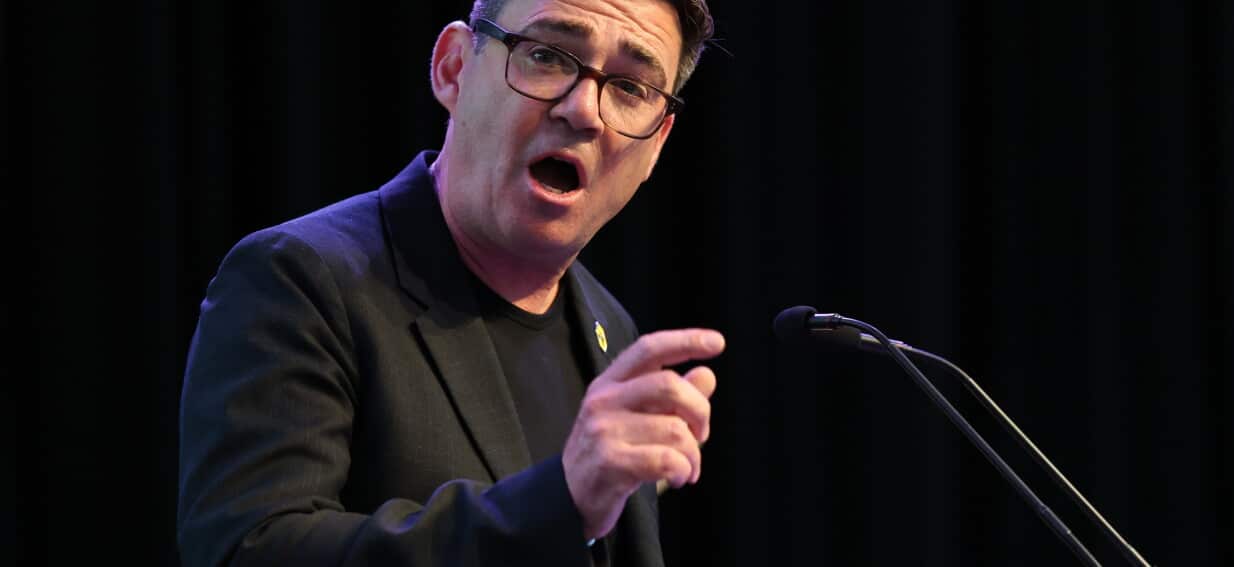
The British public is completely exhausted by Downing Street promises that lead nowhere. Less than two years after a historic landslide victory, Prime Minister Keir Starmer is watching his authority disintegrate in real time. The latest polling from Ipsos shows that a staggering two-thirds of Britons believe Starmer should not lead the Labour Party into the next general election. His personal ratings have cratered, economic growth remains an elusive myth, and the national mood has curdled into deep resentment.
Enter Andy Burnham.
By cruising to a massive by-election victory in the northern seat of Makerfield, the outgoing Mayor of Greater Manchester has successfully weaponised the nation's frustration. He didn't just win a seat in parliament. He secured a massive 9,231-vote majority, taking 55% of the total vote share and crushing the hard-right Reform UK challenge. It was a de facto referendum on who should run the country, and the verdict was brutal for the current prime minister. Burnham ran on an open platform to change the Labour Party from within. Now that he is back in the House of Commons, a bloody leadership battle is entirely unavoidable.
The King of the North Versus the Westminster Machine
Voters are drawn to Burnham because he looks and sounds like everything Starmer is not. Where Starmer appears rigid, hyper-legalistic, and increasingly isolated in London, Burnham leans into a highly performative, soft-spoken regional authenticity. He wears his signature worker jacket, talks passionately about local football, and has spent nearly a decade building a power base outside the capital.
The public response is measurable. Burnham currently holds a massive double-digit lead over Starmer on nearly every major leadership metric. He beats the prime minister by 26 points on having a distinct personality, and by 23 points on being in touch with ordinary human beings.
It is easy to forget that Burnham was once the ultimate Westminster insider. He served as a cabinet minister under Gordon Brown, ran for the Labour leadership twice, and lost badly to Jeremy Corbyn in 2015. He was viewed as a slippery, hollow centrist. His move to Manchester in 2017 was a radical reinvention. By taking on the role of metro mayor, he detached himself from the toxic infighting of the national party and positioned himself as a champion of regional devolution.
When he stood up to Boris Johnson's government during the pandemic lockdowns to demand better financial support for northern workers, his national profile exploded. He earned the nickname "King of the North" and transformed a regional administrative role into a launching pad for the highest office in the land.
What a Burnham Premiership Actually Means for Britain
This is not just a personality clash. The fundamental difference between these two men lies in their vision for the British economy. Starmer has spent his premiership terrified of upsetting the markets, clinging desperately to fiscal caution while public services collapse around him. Burnham represents a sharp pivot toward heavy state intervention.
Allies close to the new Makerfield lawmaker are already drawing up plans for a radical policy shift during his first 100 days.
- Taking Back the Utilities: The immediate priority is the nationalisation of failing infrastructure. This begins with Thames Water, which is currently teetering on bankruptcy as creditors fight over a multi-billion-pound rescue package. Burnham wants a 10-year project to bring massive parts of the water and energy sectors, including the National Grid, back into full public ownership.
- Aggressive Cost of Living Relief: To ease the financial misery of working-class households, his team is pushing for an immediate national rent freeze alongside a structural shift that moves green levies off household energy bills and into general taxation.
- Scrapping the Westminster Model: Burnham wants to aggressively decentralise power, moving departments out of London and forcing the Treasury to change its strict funding formulas that historically favour the south of England.
This agenda terrifies the Labour right, who fear it will trigger market panic and alienate moderate suburban voters. But for millions of people who feel completely abandoned by the political status quo, it sounds like actual, tangible change.
The Brutal Mechanics of a Leadership Challenge
Starmer has insisted that he will fight any internal challenge to his position. He has even tried to neutralize his rival by offering him a prominent cabinet position, which Burnham promptly rejected. The prime minister cannot simply ignore this threat, but unseating a sitting premier who refuses to resign is an incredibly messy business.
Under current Labour party rules, a challenger needs the signatures of a significant percentage of Labour lawmakers to trigger a formal leadership contest. Behind the scenes, the party is already fracturing. Figures like former Health Secretary Wes Streeting, who resigned from the cabinet expressing a deep lack of confidence in Starmer's vision, are circling the wounded leader.
The political pressure will likely become unbearable before a formal vote is even called. Senior party figures are terrified that sticking with Starmer will result in a catastrophic defeat at the next general election. If a delegation of senior cabinet ministers visits Downing Street to tell Starmer that his time is up, the end could arrive within days.
Your Actionable Guide to Tracking the Labour Power Struggle
The civil war inside the governing party will directly impact British public policy, currency markets, and corporate investment strategies over the coming weeks. To understand where the power is shifting, you need to monitor specific indicators rather than listening to vague political spin.
- Watch the Shadow Whipping Operations: Track the public statements of backbench Labour lawmakers from northern "Red Wall" seats. If a steady stream of these MPs begins praising the "Makerfield test" or echoing Burnham’s language on regional neglect, it means the numbers required for a formal leadership challenge are being quietly secured.
- Monitor the Greater Manchester Mayoral Succession: Burnham’s move to Westminster leaves one of the most powerful regional offices in the country completely vacant. A massive mayoral election involving two million voters is scheduled for July 30. The choice of the Labour candidate will reveal whether Burnham retains absolute control over his old regional machine.
- Follow the Thames Water Crisis: The government's handling of this specific corporate collapse is the ultimate ideological bellwether. If the environment department moves to nationalize the utility rather than bailing out private shareholders, it is a definitive sign that Starmer is capitulating to Burnham's economic agenda to save his own skin.


